Pharrell Williams designs for tomorrow morning
On the first day of 2026, I was sitting by the bank of the Chao Phraya, doing what I do best when I travel. I was people-watching, letting the afternoon slip by like a balm to my senses. Watching Bangkok move at a pace that feels humid and deliberate at the same time, I noticed him. A middle-aged European man, unbothered by the heat, in a pristine white linen shirt with the sleeves folded just enough to suggest intention, not effort. His muesli-toned shorts and calfskin espadrilles in classic beige completed the look, exuding the charm of someone who had long stopped negotiating with trends.
I turned to a friend and said, half-joking, only to realize I had made a decision by way of New Year’s resolution, “I want to look like that when I grow up.” Right there, something clicked in the way decisions arrive when they are overdue. I decided that for 2026, I would stick to earth tones. New clothes, if I must buy them, must come only in earthy neutrals or complex creams. Clinical white would be allowed, but only when necessary, just to reset the eye. I would avoid chasing novelty or buying things that only make sense in photographs. I would just go for clothes that live well, age honestly, and stay useful beyond the season that sold them.
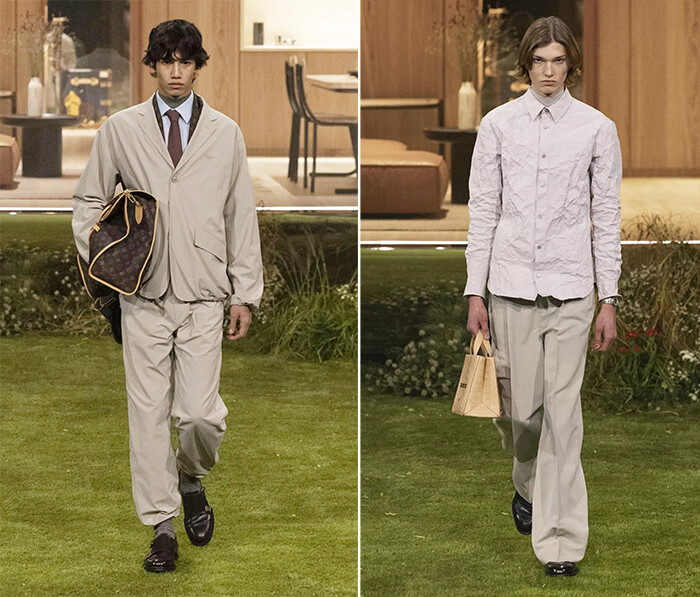
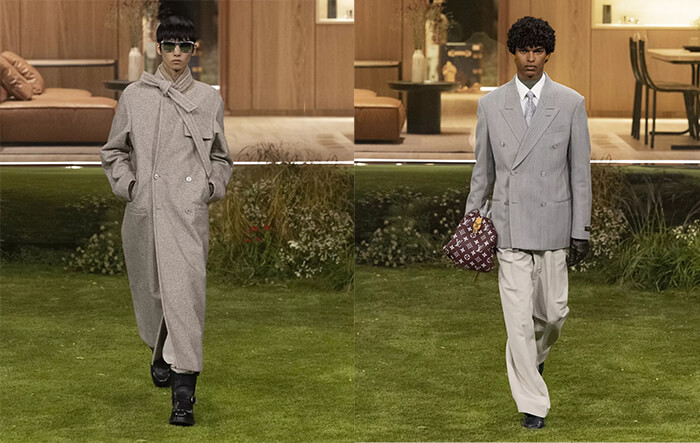
Then Paris Fashion Week happened, where Louis Vuitton’s menwear for fall/winter 2026, as envisioned by Pharrell Williams, was unveiled. Suddenly, that man by the river, no longer a private fantasy, became a point of entry.
What struck me first was not the theatrics, although the Drophaus, a prefabricated home arriving in a wooden freight crate at the Jardin d’Acclimatation, certainly knew how to hold a gaze. The insistence on timelessness as something active is what stayed with me. Instead of nostalgia or reverence, what emerged was a future already underway. The clothes were designed to endure rather than expire. It was luxury measured by utility, garments engineered to breathe, protect, and adapt, fashion that assumes a body in motion, a climate that shifts, a life that does not pause for outfit changes.
There is something deeply adult about that idea, a sense of knowing what you need and exactly what you no longer have patience for, far removed from anything joyless or rigid. I thought again of that man in Bangkok. He had moved beyond the desire to impress, choosing instead to exist comfortably in the world he was already in.
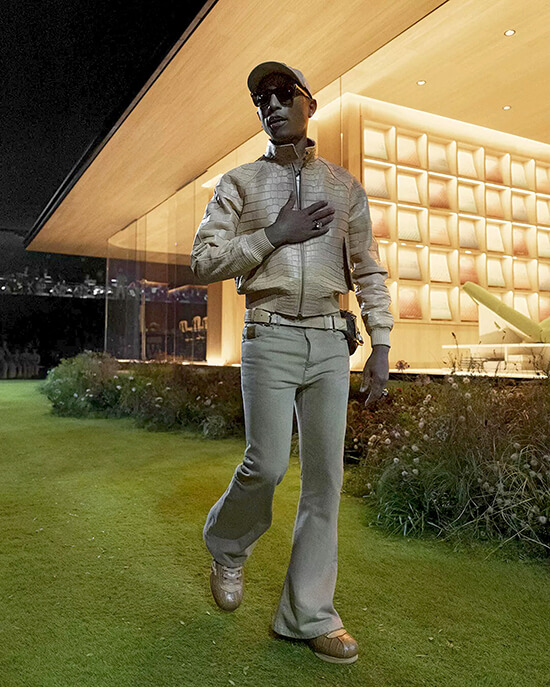
The collection’s emphasis on what Louis Vuitton called “Timeless Textiles” made that philosophy tangible. Heritage menswear patterns like houndstooth, herringbone, and checks had been re-engineered with technical yarns that caught light unexpectedly. Pharrell treated denim as a living surface rather than a fixed statement, while his silk and chambray shells were designed to adapt to the heat, offering a water-repellent finish without the stiffness that usually betrayed performance fabrics. Aluminium-bonded textiles responded to movement, shaping themselves to the body rather than forcing it to comply.
This is where earth tones stop being safe and start becoming intelligent. Nothing neutral about the browns and the grays that changed their register depending on light. The creams felt layered, not flat. Even when the collection broke into reds, oranges, and blues, the color behaved like punctuation rather than prose, providing a moment of emphasis, not a demand for attention.
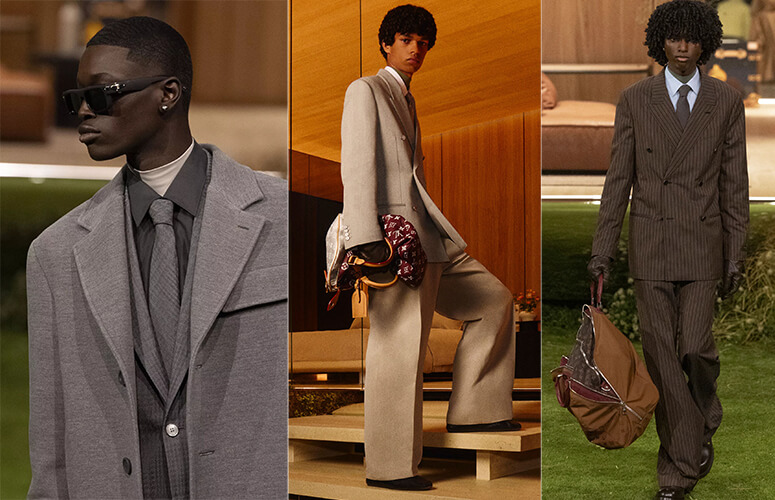
Pharrell’s future dandy was no peacock, but rather someone who understood that elegance could be nonchalant. Tailoring remained sharp even as it relaxed its grip, and while volume did exist, it never dominated the silhouette. There was a faint retro-futuristic current, a nod to the 1980s idea of what the future might look like, but filtered through present-day needs for comfort and versatility. Reversible suits, softly structured parkas, and mock-neck underlayers sat naturally beneath tailoring, revealing clothes that recognized formality and practicality as collaborators rather than enemies.
The use of trompe l’oeil throughout the collection felt less like a trick and more like a low-key argument, where vicuña pretended to be workwear, silk passed as nylon, mink disguised as towelling, and wool resembled neoprene. They proved that value was no longer found in instant recognition, but rather in proximity, touch, and the luxury of time spent.
The droplet motif running through the collection served as more than decoration, suggesting instead a process of accumulation and the small interventions that could create lasting change. Crystal raindrops were scattered across coats, while soles were molded like ripples. A sneaker was even designed to resemble the aftermath of a drop rather than the splash itself.
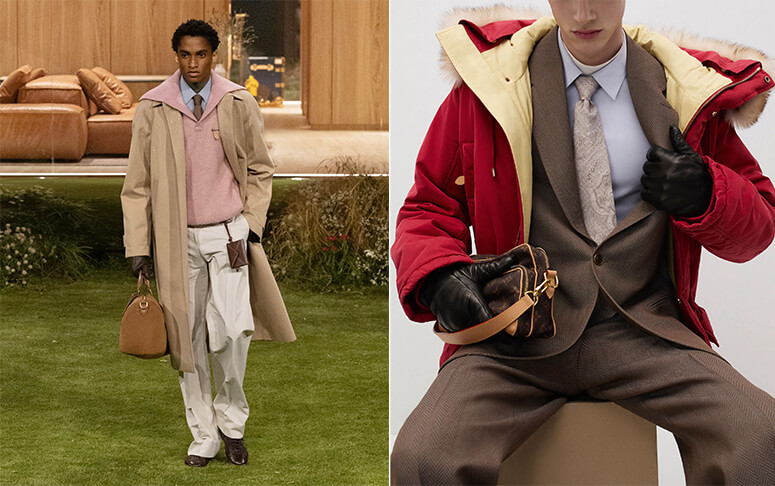
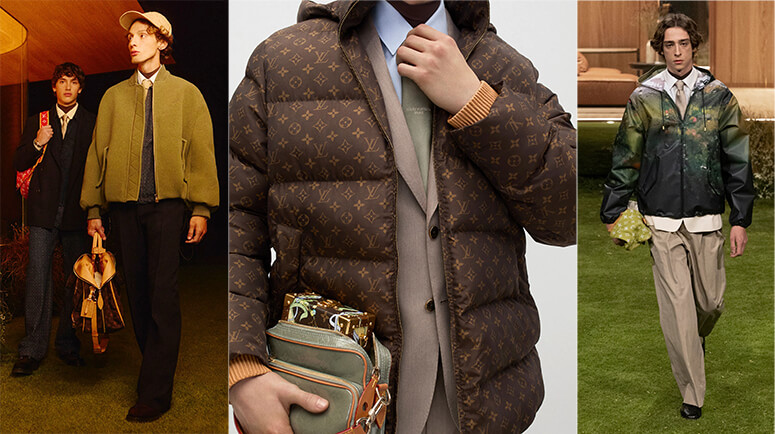
What grounded the collection was a refusal to separate clothing from living. The Drophaus served as more than just a set, acting as a proposition for how clothes, furniture, scent, and space might coexist. Inside, the Homework furniture felt deliberately tactile and visibly marked by the human hand, while the scent developed by Jacques Cavallier Belletrud captured the surrounding garden.
Even the bags followed that logic, with suede that revealed its monogram only when touched by rain and canvas that flashed under the glare of a camera. Leather illusions prioritized lightness and flexibility, framing travel as a constant state of movement, a condition far more permanent than a mere escape. These were pieces built to age and react, carrying the memory of the journey within the grain of the skin.
I kept returning to my resolution of earth tones, complex creams, and clinical white used sparingly. I wanted clothes that forgive repetition and do not panic when trends shift, pieces that assume the body, the climate, and the world will all eventually change.
Pharrell’s Louis Vuitton man does not dress for a speculative future. He dresses for tomorrow morning, for rain that might arrive unannounced, and for a day that might include work, transit, waiting, walking, and dinner without a reset in between.
Back on the bank of the Chao Phraya, that man in linen did not know he had sparked a resolution or a line that would later connect to a runway in Paris. But that is how style works. It arrives as a form of recognition, an internal click that ignores the very idea of instruction or compliance. You see something that makes sense, and you follow it home. If this is what growing up looks like, grounded and breathable and attentive to time, then I am content to keep growing. Or have I grown enough?