
In search of the big 5 at Maasai Mara
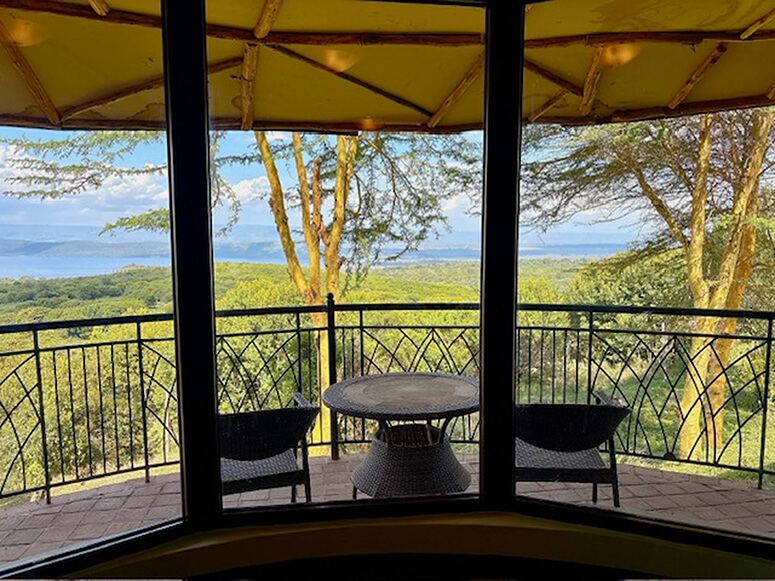
MAASAI MARA, Kenya—After watching the sun rise from our balcony at the Sarova Lion Hill Game Lodge, we set off and reached Maasai Mara around lunchtime. Maasai women garbed in colorful fabrics swarmed our vehicle to sell us local jewelry and crafts. (Pro tip: Try not to buy any souvenirs before meeting these Maasai women, who will sell you bunches of them for US$10, versus stores by the road where the same price will get you just one small item.)
The jewel in the crown of Kenya’s wildlife viewing areas, Maasai Mara is 1,510 sq kms in size—not the largest in Kenya (that would be Tsavo National Park). In fact, it’s one of the smallest reserves in Africa—a 10th of the size of the neighboring Serengeti in Tanzania, but it’s one of the densest in terms of wildlife populations, boasting a high density of lions and the wildebeest that lead the Great Migration every year.
Elephant walk
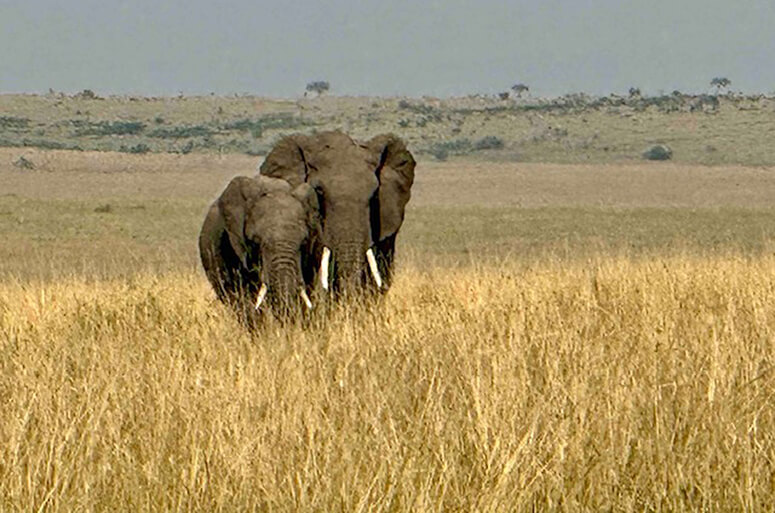
After checking into the Sarova Mara Game Camp, for the next two days from 4 to 6 p.m. we’d go on a game drive with our guide Max in a Land Cruiser, the roof of which lifted for safe viewing of the animals. Out in the wild we never left the vehicle; when we or Max spotted something interesting, he would drive up close, open the top, we’d stand on our seats (in our socks) and take as many photos or videos as we wanted. Max told us to say, “Sawa, sawa (okay, okay)” when we were done, which was easy for us to remember because it means pretty much the same thing in Tagalog.
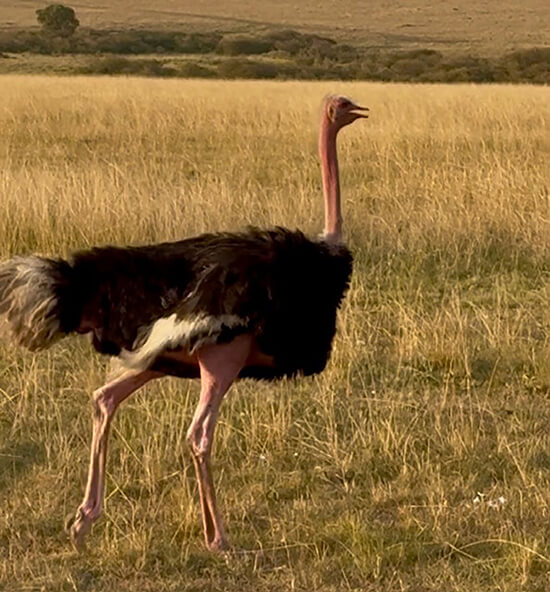
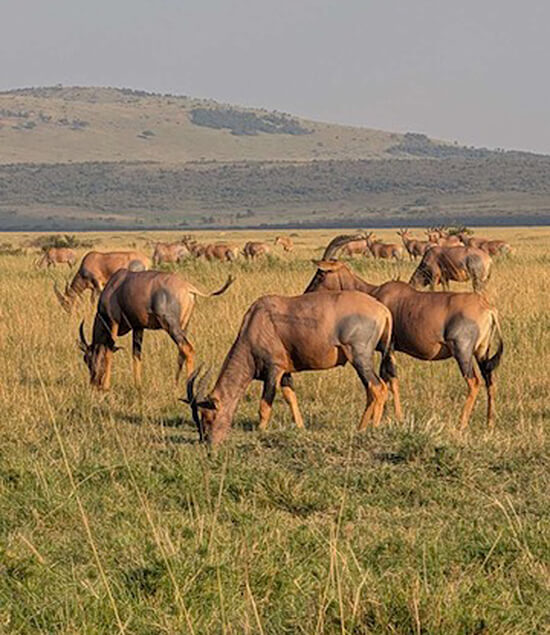
Our second day the big sighting was an elephant mom and her baby drinking from a watering hole, which was moving to see. We also saw wildebeest, Topi (a type of antelope with black patches on its legs that the derms dubbed “Mongolian spots”), warthogs (which we called Pumbaa, after The Lion King; Max said “pumbaa” means “stupid”), and a fierce-looking ostrich striding across the plain. Our last reward of the day was seeing a herd of elephants and getting right up close to one, which swaggered in front of our vehicle slowly and gracefully.
Soaring over the Savanna
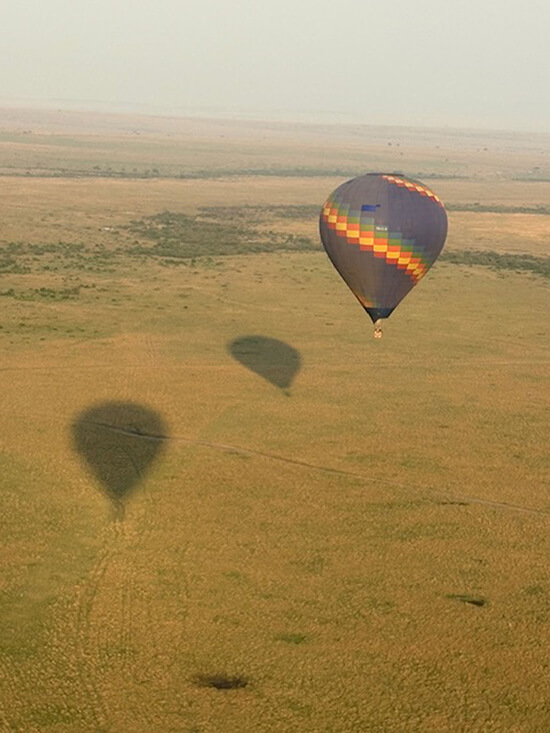
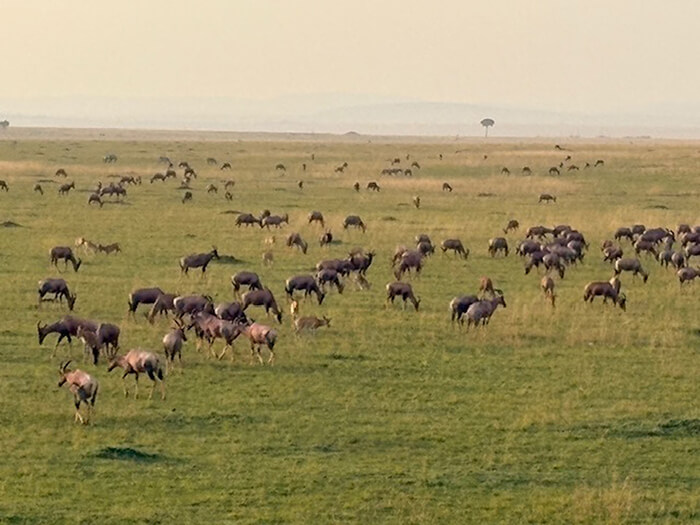
We signed up for an optional hot-air balloon ride over the Mara plains, so we woke up at 4 a.m. and took off at dawn, gliding peacefully over the grasslands. Though the pilot exerts some control, the winds will take you where they may. The captain told us to share our sightings, though being newbies, we couldn’t contribute much. Plus, he had binoculars. (Tip: Bring your own binoculars.) We saw a couple of jackals, Thomson’s gazelles leaping across the veldt (distinguished by a black stripe running across their tan flanks) and dozens of grazing wildebeest, giving us an inkling of what the Great Migration might look like from above.
Our best sightings were a baby giraffe running across the plains to join its mother and the two walking towards the rising sun; and a majestic herd of elephants traversing the green jungle, flashing their long, ivory tusks.
Our guide Max promised we would see a lion before we left Kenya. I noted that he didn’t make any such promise about a leopard.
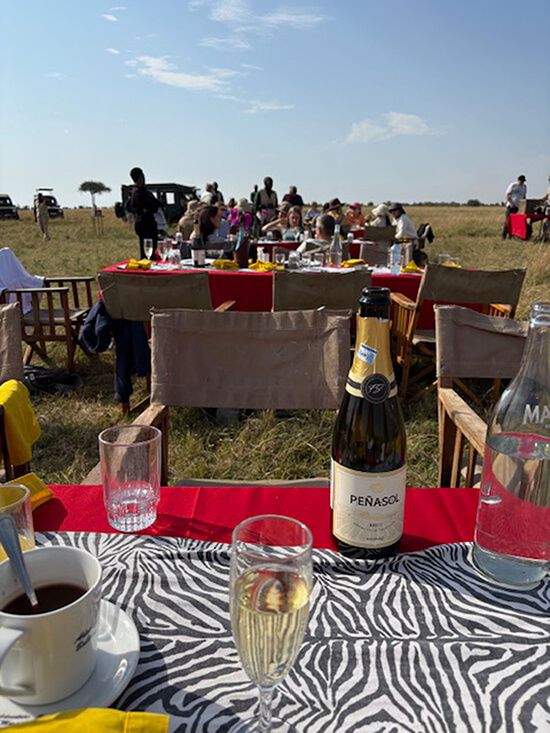
Our balloon flight lasted an hour, which was the perfect time to achieve a sort of Zen calm. When we touched down, vehicles took us to a site where we had a luxurious champagne breakfast outdoors, with zebras and Topis running by.
The morning of the big cats
Max picked us up after breakfast for a morning game drive. It was our last safari day before heading back to Nairobi and we still hadn’t seen a lion or leopard, so we were getting a bit anxious. But Max promised we would see a lion before we left Kenya. (I noted that he didn’t make any such promise about a leopard.)
Safari guides often share information about sightings via radio or simply stopping to chat with another driver. Intel also comes from the park rangers. Sometimes it can be as simple as seeing a group of safari vehicles clustered around something, which we noticed this morning, so Max drove over to see what they were looking at.
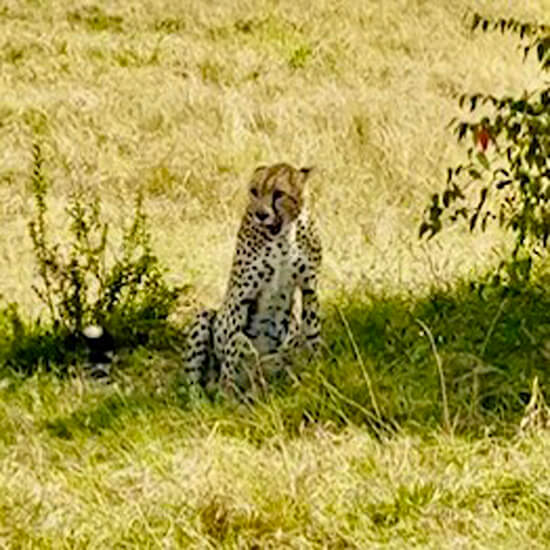
Turns out it was a cheetah relaxing under a bush, tail waving lazily in the wind. The cheetah is the fastest land animal on earth, capable of accelerating from zero to 100 kph in three seconds. Its slender body is built for speed, and its spots are solid black, unlike the leopard, which is stockier and has rosette-shaped spots. So, to catch such a fleeting creature at rest I felt was a blessing.
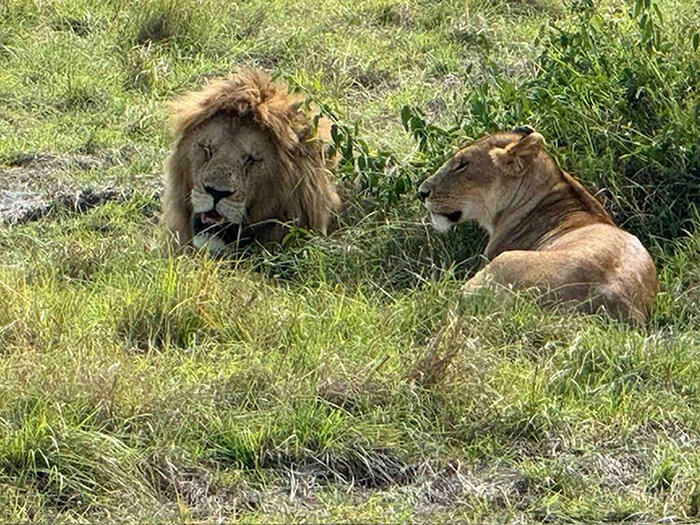
Soon after, we saw more vehicles clustered around a lion couple lying in the grass. Finally, not just one lion but two, and a male and female, at that. They got up and slowly walked to a bush that offered more shade and seemed to be communicating with each other before the male mounted the female and we were treated to one of nature’s most, er, natural acts. Their mating lasted less than a minute, after which the female butted the male under the chin as if to say, “Get off,” then proceeded to roll around on her back, paws in the air, to ensure conception.
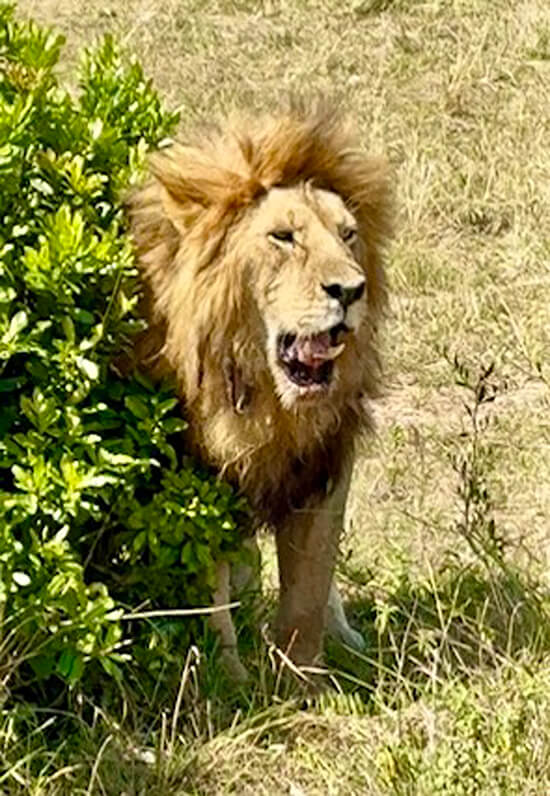
As if that wasn’t enough, we drove to yet another cluster of vehicles to see that a different male lion had decided to take a nap under a Land Cruiser. “He likes the shade,” Max noted, informing us that lions are quite lazy by nature and only active four hours a day. The driver of the vehicle finally decided to wake the lion up by revving the engine and starting to back up slowly. The lion did wake up, looking a bit put out, got to its haunches and stalked away. I got a wonderful closeup video of its face as it scratched its head on a bush.
We ended the day with yet another lion sighting: this time three lionesses were out hunting at dusk. At first, we thought they were after a herd of buffalo, when we saw a warthog run by, trailed by her baby, which was running for dear life on its tiny legs. While praying that I wouldn’t see the baby killed right in front of my eyes, our group saw that one of the lionesses already had a baby warthog in her mouth, a sibling of the one running. She didn’t share with the other two lionesses and stopped to feed right then and there, tearing off bits of bloody flesh between her jaws. That day nature showed us the cycle of life, from conception to death, and how sometimes there isn’t much time in between.
The Maasai experience
Next day was our last in Kenya before flying out. We were driving back to Nairobi, so hopes were dim for seeing a leopard, which hunts at night. Game drives usually end at 6 p.m. so safaris won’t interfere with the hunting patterns of nocturnal predators like leopards. Max told us it was a good enough reason to come back.
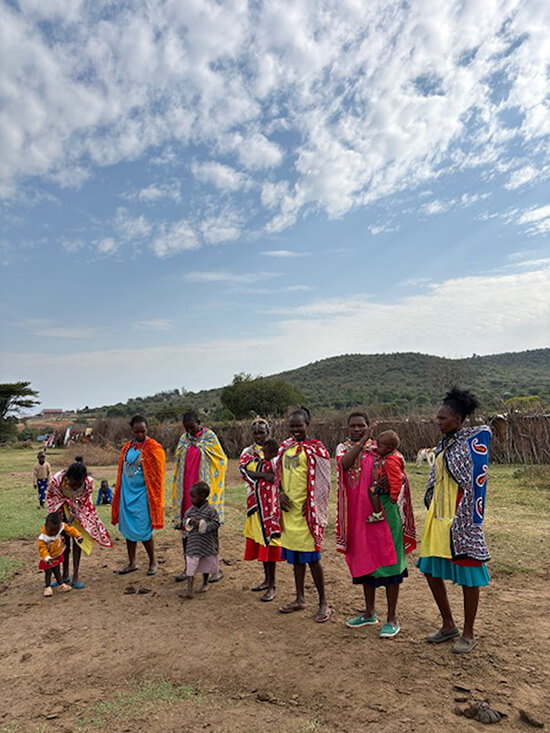
We consoled ourselves with a visit to the Maasai village, which is a glimpse of what Africa must have been like before the colonists came. The men wear red because it’s a color that lions hate and stay away from. It also helps them see each other at a distance on the plains. Maasai are the only men allowed to carry weapons because they live in the bush and need to defend themselves from wild animals.
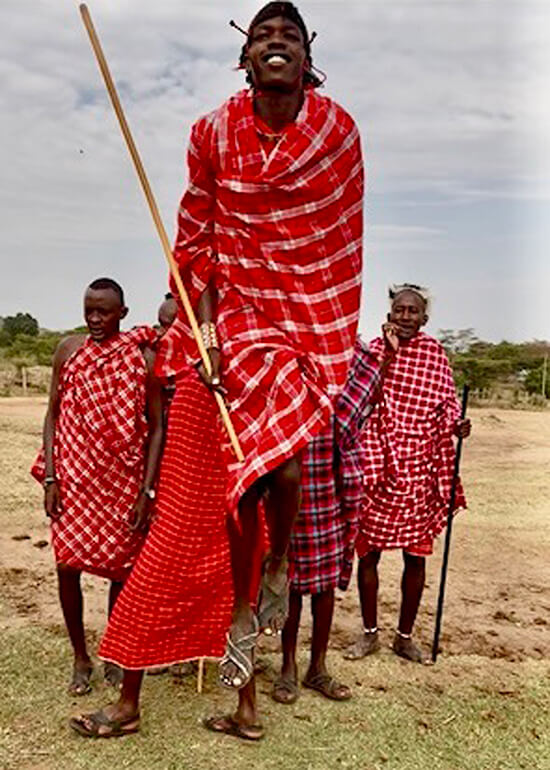
In the old days, the rite of passage to manhood for these proud warriors was slaying a lion. Today they just tell stories about it. Their livelihood now is tourism, and they put on a show for us, singing, dancing, and jumping. Fun fact: In Maasai culture, the man who jumps the highest gets the most women (they’re allowed to have more than one wife).
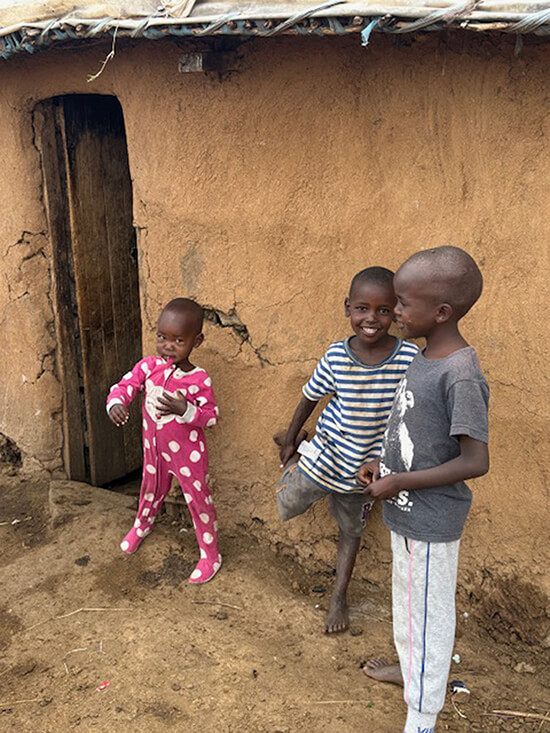
Their unofficial chief, Ben, ushered us into his home for a chat. The Maasai live in very humble huts made of ash, branches and cow dung that are built and rebuilt by the women every 12 years. All the money they earn goes into supporting the village and sending their kids to school. Consequently, they are literate and speak very good English.
They run a market where I would advocate you buy most of your souvenirs. A Maasai man was assigned to each of us to “carry our shopping.” There are no price tags; you choose the items you want, then your personal shopper will take you aside to bargain with you. How they do it you’ll never experience anywhere else: my guy wrote down his price on the inside of his arm with the pointy end of a twig, then I wrote down my price below his using the same twig (Max had taught us how to haggle the day before), and so on until we met at a price we were both happy with. Then we shook hands and I paid in US dollars. (Note: Since the rate of the Kenyan shilling varies so much day to day, they prefer to be paid in US dollars, cash.)
Lunch in Tanzania
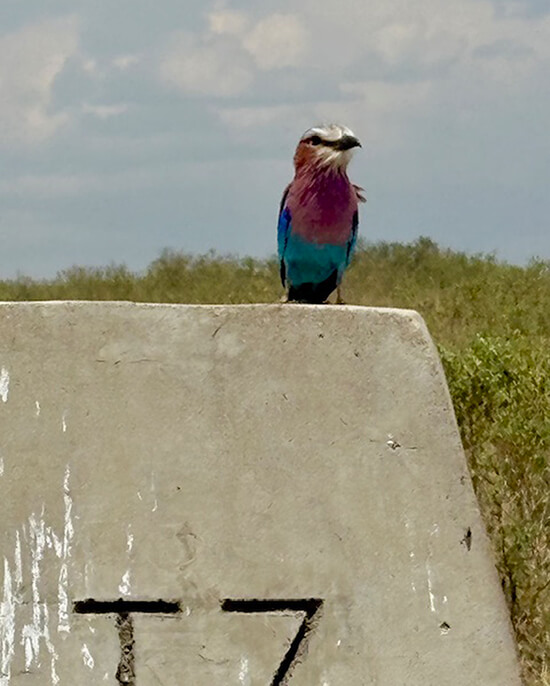
Max had one final surprise for us before we headed back to Nairobi. He drove us to the border of Kenya and Tanzania, which is unfenced (since migrating animals don’t recognize borders), but lined with stone markers. Past the border, the Mara plains turn into the great Serengeti, which on this sunny day looked even more green and paradisiacal than our Kenyan viewpoint. Max drove over the border and under the arching canopy of a fig tree. We spread colorful Maasai blankets on the grass and had a picnic (illegally) in Tanzania, accompanied by superb starlings, a marabou stork and a lilac-breasted roller, Tanzania’s national bird with its colorful plumage of olive, burgundy and lavender.
During the Great Migration every July and August, millions of wildebeest, zebras and gazelles cross from Maasai Mara to the Serengeti in search of greener pastures and back again, following a clockwise, circular route they’ve traveled for centuries. I seriously considered coming back to view this wildlife spectacle—one of the greatest in the world—maybe from Tanzania next time. Who knows? I might finally see a leopard as well.