
Stalking the big 5 (and the ugly 5) in the birthplace of the Safari
NAIROBI, Kenya—Did you know that, before I shifted to journalism, I was a pre-med student studying Zoology? While that career path obviously didn’t pan out, being a Zoo major left me with a lifelong fascination for animals.
So, when I heard that my sister Jasmin and her derm group were going on safari in Kenya, I hopped on her trip as quickly as a lion pounces on a warthog. After all, Kenya is the birthplace of the safari—an expedition to view (or hunt, back in the day), the wildlife of East Africa.
Landing in the dark continent
In the 19th century, Africa was known as “The Dark Continent” because it was largely unexplored and therefore mysterious, but today, very few corners of the earth are unilluminated by the screens of social media. Not wanting to spoil any surprises, I stayed away from Instagram and instead looked to Jane Goodall for my info.
In addition to the iconic Big Five, African safari guides have compiled an unofficial list of the five ugliest animals on the continent.
After 14 hours of flight time (nine from Manila to Dubai, five from Dubai to Nairobi), I landed at Jomo Kenyatta International Airport, named after Kenya’s first president, who turned the British colony into an independent republic.
My first impression of Nairobi was that it looked a lot like Baguio. The weather was a cool 20 degrees Celsius (70 F), and the city is at a higher elevation than our own City of Pines. The level of modernity and development is about the same. My driver told me that China was developing Nairobi’s highways, and indeed, their work is impressive, especially compared to the bumpy dirt roads we would soon be traversing on our safari.
The Big Five
The first word you’ll learn in Kenya is “jambo,” which means “hello” in Swahili. “Thank you” is “asante.” Through a local travel agent, we got a safari on Silver Africa Tours, which provided our group of five with a Land Cruiser driven by our guide, Max, a Luo tribesman who speaks excellent English.
The morning after our arrival, we started our journey towards Maasai Mara, Kenya’s legendary wildlife reservation, in hopes of seeing the Big Five: the lion, leopard, elephant, rhinoceros, and Cape buffalo. I thought the Big Five were the most iconic animals that were the hardest to spot; turns out, they were the five that big-game hunters during the colonial era found the most difficult and dangerous animals to hunt on foot.
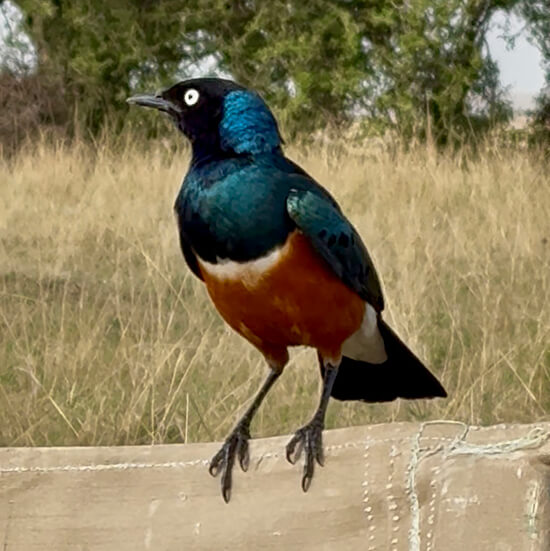
By land, Maasai Mara is about a five-hour drive from Nairobi, with interesting sights along the way. We drove through the Great Rift Valley—a place I’d only read about in books—to get to our first stop, Lake Naivasha, where we took a boat ride to see hippos. At least, that’s the main attraction. The lake is also home to a large variety of birds, like the African fish-eating eagle, brown-plumed hamerkops, sacred ibis—so named because of its link to ancient Egyptian religion—great cormorant, and Superb starling, which boasts iridescent blue-green feathers and a rust-colored breast.
The ‘Ugly Five’
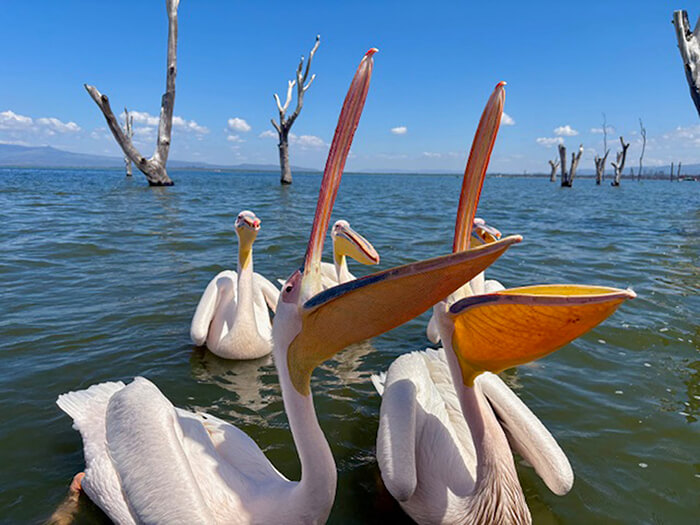
Our guide bought fish from another boat to feed pelicans, and it was a thrill to see the giant birds swarm around our boat and open their large bills to swallow the tilapia whole.
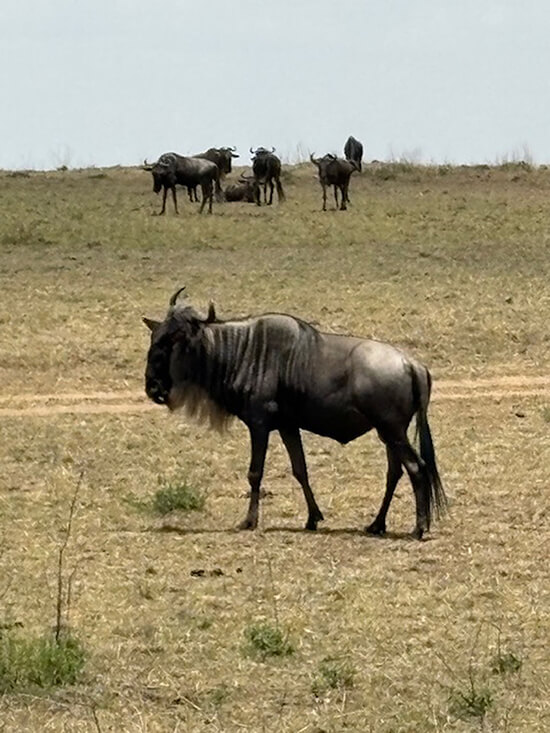
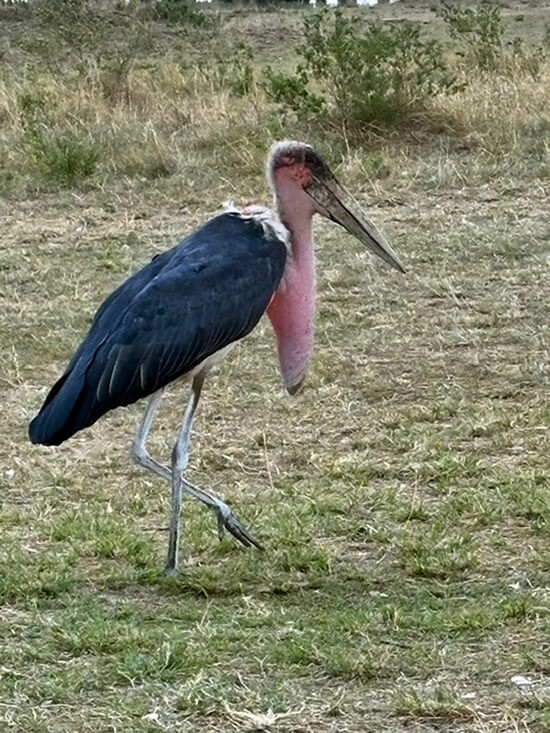
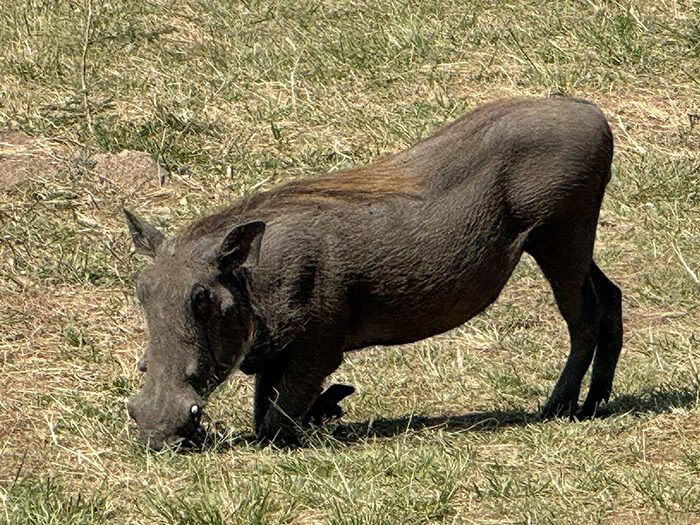
We saw an odd bird whose folded black wings resemble a vampire’s cape. Our guide identified it as a marabou stork, one of Africa’s five ugliest animals (according to an unofficial list compiled by safari guides). The other four include the spotted hyena, often seen as villains due to their eerie laugh and slumped appearance; wildebeest, which are stunning when they head the Great Migration but individually are awkward-looking with long faces and wispy beards; the warthog, with its wartlike facial growths and protruding tusks; and lappet-faced vulture, with its bald head and wrinkled pink neck. (Disclaimer: Though not conventionally attractive, all are important members of the ecosystem.)
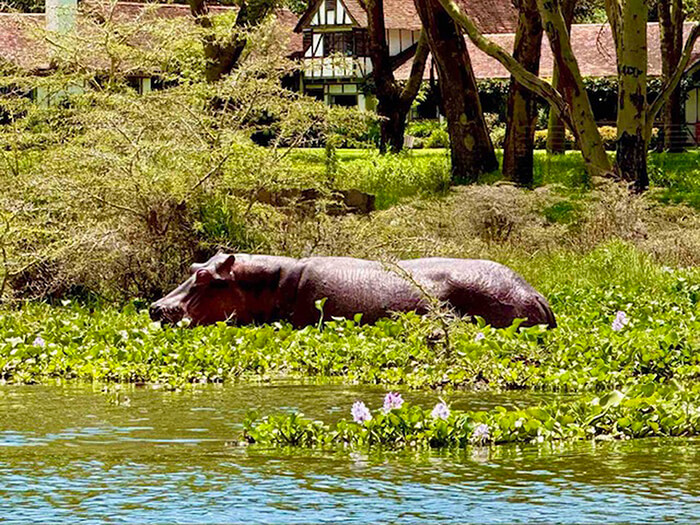
Our guide also noted that climate change has affected Africa’s lakes, making water levels rise dramatically. We were sad to see restaurants that were operational three years ago now half-underwater and abandoned, but happy to spot hippos surfacing in and out of the water. We also saw waterbucks, a horned relation of antelope, and were finally rewarded with sighting a full-grown hippo on the lake bank, its huge flanks glistening under the sun.
We checked in at our crib for the night, the Sarova Lion Hill Game Lodge, which offers spectacular views of the lake and national park from 67 chalet-style rooms with terraces. As a youngster, I’d always wanted to sleep in a four-poster bed, and my dream came true here.
After dropping our luggage, we had lunch. While all our lodgings offered full international buffets, they would also serve a few Kenyan dishes, which were as rustic and comforting as home cooking. One breakfast I tried Warinubu, a sweet porridge made out of taro. On another occasion, I had a full Kenyan meal of stewed chicken, creamed organic greens, and Ugali, a flavorless cake made out of millet. Our guide Max is from a tribe of fishermen, so his favorite dish is wet-fried fish freshly caught from the lake near his home.
Think pink flamingos
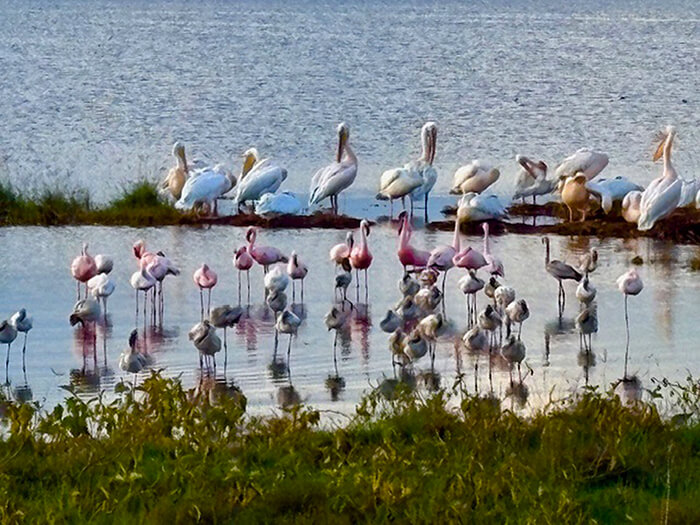
In the afternoon, we headed to Lake Nakuru, also known as Pink Lake, thanks to the pink flamingos that feed there, creating a stunning, shifting display of pink.

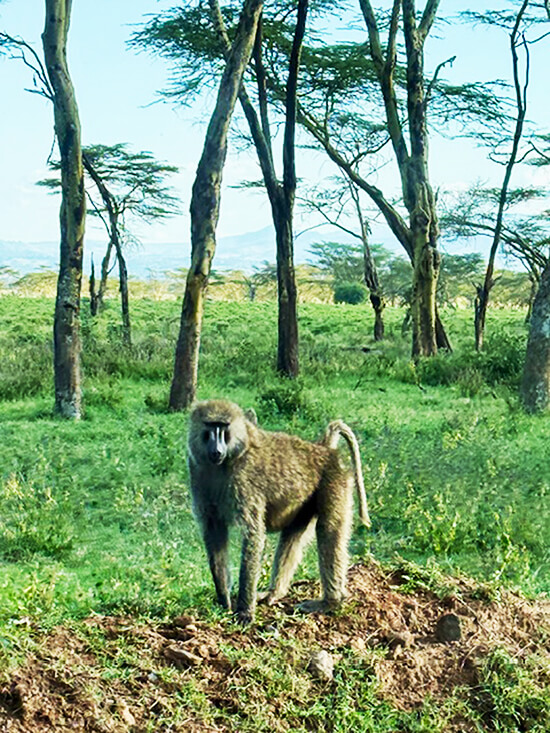
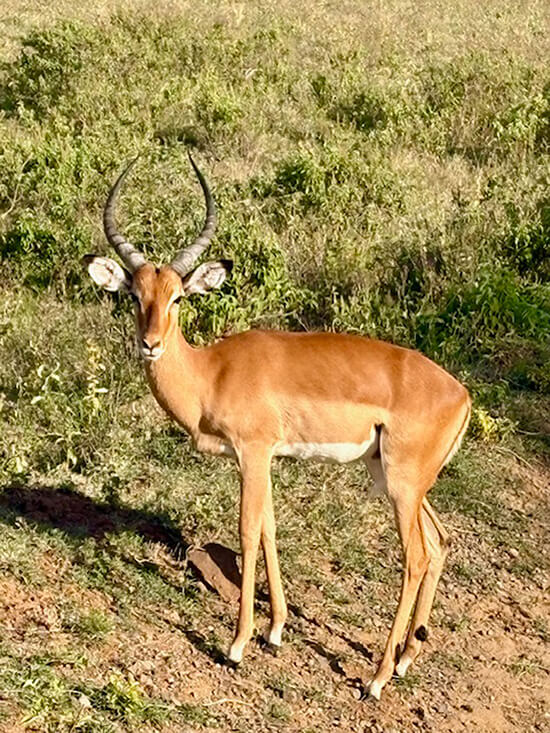
On the way, we were thrilled to see our first animals in the wild: a troop of baboons picking lice out of each other’s fur; graceful, horned impalas; and herds of zebras grazing by the side of the road. They all looked healthy, vibrant, and well-fed, unlike the miserable specimens you see in zoos. In fact, Kenya’s savanna looks like I imagine the Garden of Eden to be—lush and unspoiled, with enough resources to feed every creature.
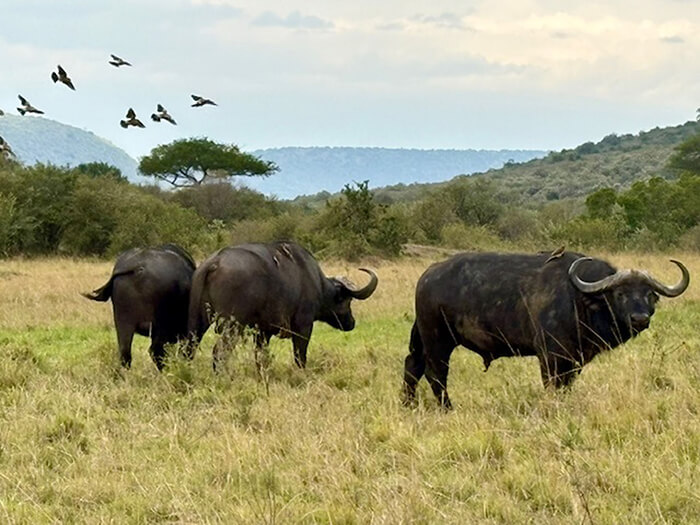
We stopped at the picturesque Malaika Waterfalls and saw the first of the Big Five: Cape buffalo, which are black like our carabaos but have short, up-curling horns that look like elaborate hairdos. Their placid appearance is misleading. They’re the deadliest threats to humans because they can attack unprovoked, as many hunters have had the misfortune of finding out.
We reached Lake Nakuru close to sunset and, as stunning as it is, the lake is another victim of climate change. Because of the high water levels, many of the pink flamingos have moved to better feeding grounds. We were lucky to see maybe a dozen or so wading with pelicans and ibises, and their blush pink, mingling with the pelicans’ white and the sun’s orange reflection on the water, created a spectacular African vista I’ll never forget.
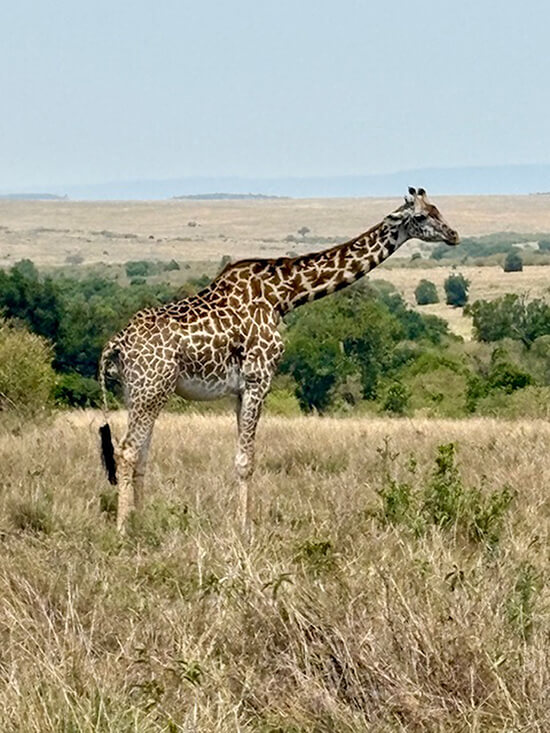
On the way back to the lodge, the thrills didn’t stop coming. We saw a giraffe emerge from a thicket of yellow-bark acacias, the most common tree in the savanna (the one you always see in photos and documentaries), and then Max spotted another of the Big Five: two rhinos feeding in the bush. While the African black rhino is critically endangered, white rhinos are more common, with “near threatened” status. The ones we saw were white. Rarely seen in the open, we felt extremely lucky to have encountered them on our first day.
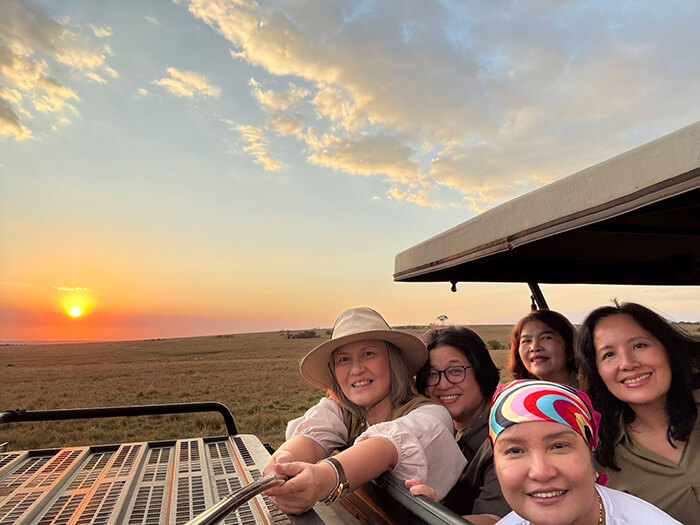
Dr. Angeli San Pedro (front) and Dr. Judith Eusebio
That night, we went to sleep to the sound of baboons calling in the trees.
(To be continued)