

Ternocon soars with the spirit of Filipino sport
Palaro was a bold move for Ternocon: Turning the SM Mall of Asia football pitch into a runway and reimagining Filipiniana as athleisure fashion. It was the first time to do one of its special edition shows en plein air, on a huge stage at that; and after seven years of holding workshops and competitions to mentor emerging designers on the right way to make our national dress, it zeroed in on the latest trend that targets the youth.
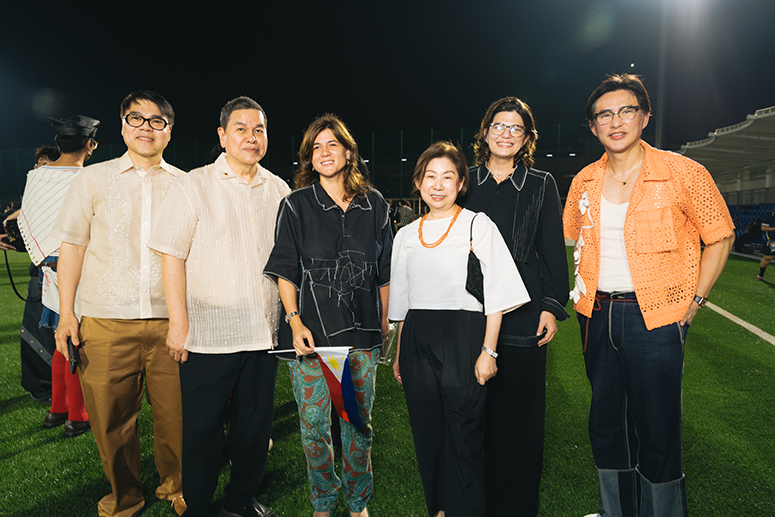
Ben Chan, chairman of Suyen Corporation, whose brand, Bench, spearheaded Ternocon together with the Cultural Center of the Philippines, shares that “Filipiniana is no longer confined to formal events, but is a living, breathing form of national identity that can be worn anywhere, by anyone.”
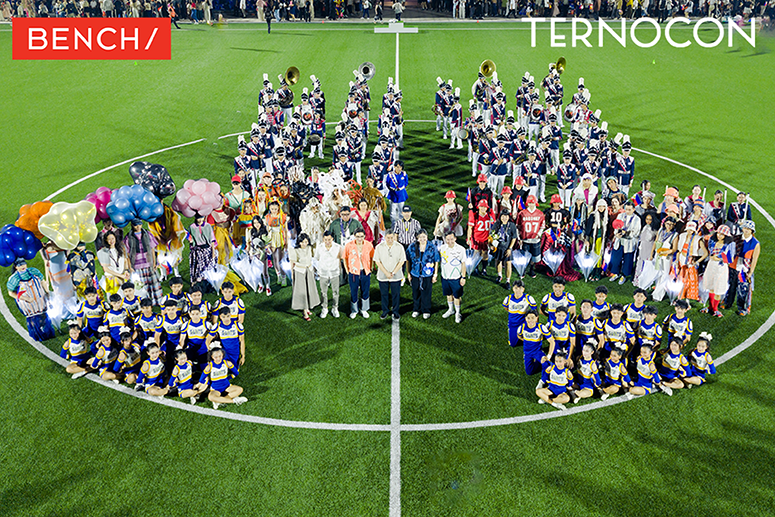
After the first Ternocon in 2018, Bench has, in fact, already been making our national dress accessible to the young (and the young-at-heart) through affordable, easy pieces like bolero ternos in denim and fashionably-cut embroidered polo barongs in cotton. With the advent of athleisure during the pandemic, Ternocon can only adapt in order to stay relevant and be part of the cultural conversation as it always has.
For heritage to stay alive, it has to be part of our daily lives. And it was certainly ever-present and ever-inspiring at Palaro that evening as Len Cabili, Carl Jan Cruz, Hannah Adrias, Glyn Alley Magtibay, Renz Reyes, and Jo Ann Bitagcol, six forward-looking designers, reconceived the terno, the balintawak, the kimona, and barong as we have never seen them before—through the prism of sport and movement.
Would our ancestors have approved of what has been done with their beloved terno that has turned into a midriff top? The fashionable ones, for sure. Remember, the terno was once a traje de mestiza with multiple parts until it was modernized into one piece for the modern, active Filipina. With global warming, athleisure Filipiniana may just be the way to stay close to our roots and keep our national identity.
Len Cabili
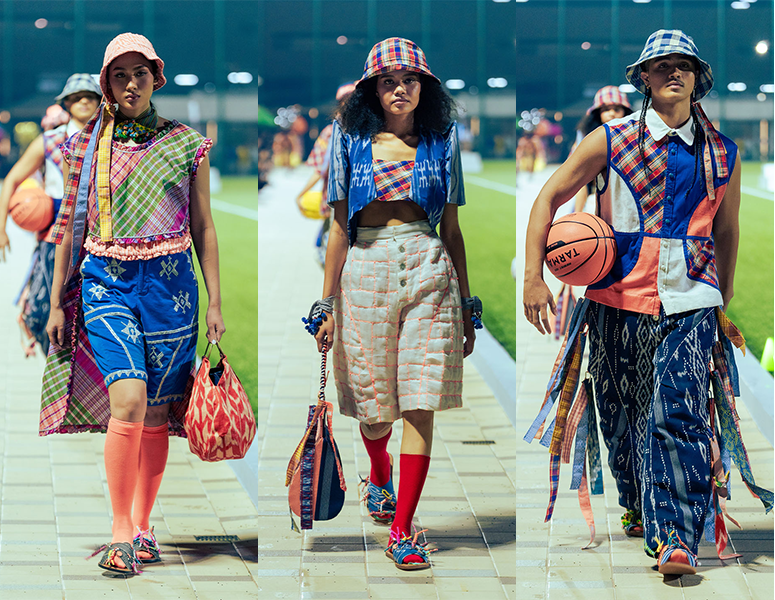
In “Basketball Parabola,” Len Cabili, founder of Filip+Inna, taps into the Philippines’ favorite sport, which she shared with her father, while infusing elements of our culture. The curved line trajectory of the ball’s movement is manifested in construction and patterns utilizing handwoven fabrics and craft techniques from indigenous communities. Patchwork barongs go sleeveless while multi-plaid diagonals mixed with tribal weaves update kimonas and cropped terno tops matched with stitched quilted bermudas and knee-high neon socks.
Carl Jan Cruz
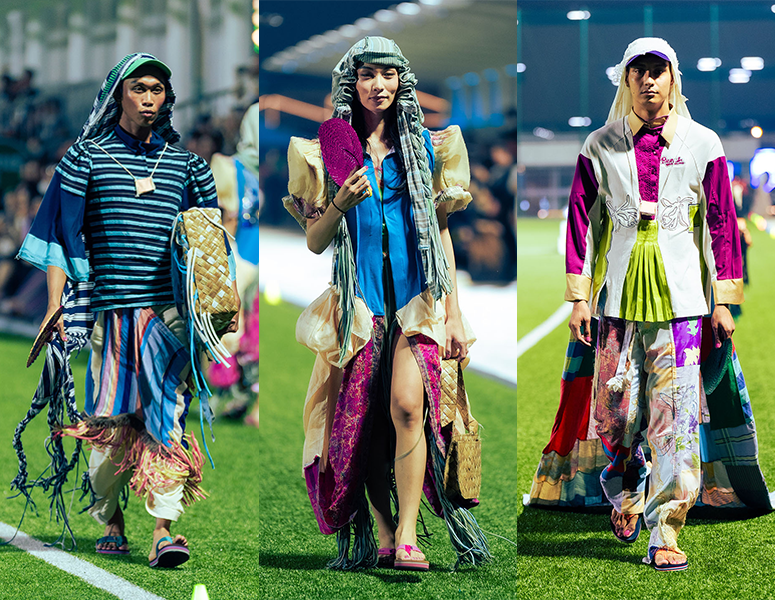
The works of Carl Jan Cruz are metaphors for Ternocon itself—how they respect the cultural origins of found objects and textiles while totally transforming them into astonishing creations through unexpected combinations, cuts, silhouettes and fabric treatments. Archival Bench T-shirts, vintage pieces and Philippine-made garments compose a barong, made regal through a headpiece with flowing train. A terno turns into a maxi coat with a trompe l’oeil swimsuit, while a striped tennis shirt has the bell sleeves of a baro to go with a fringed saya.
Renz Reyes
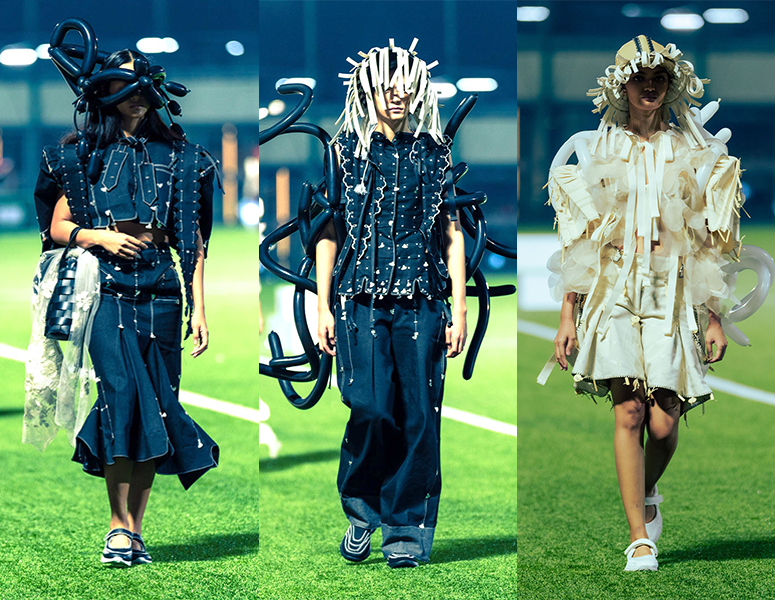
Renz Reyes, a Bench Design Awards winner and Ternocon finalist, has further honed his passion for pattern making and craft to create amazing streamlined pieces where the embellishment is a result of the ingenious cutting, construction and stitching which becomes decorative embroidery, as seen on denim sleeveless barongs, cropped kimonas with extended shoulders ala rugby uniform, and gourd skirts. When he does add frills in a cream terno, the petals are lovingly cut and stitched by hand.
Jo Ann Bitagcol
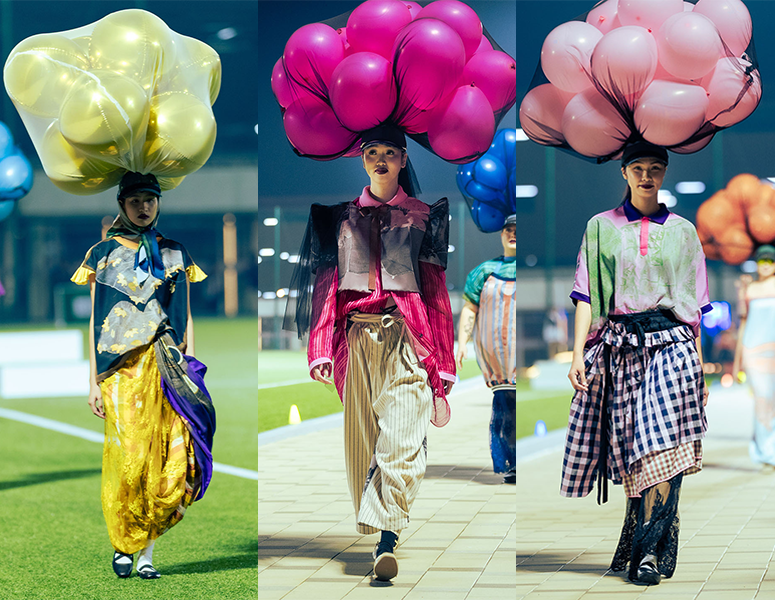
Jo Ann Bitagcol’s multihyphenate career has made her the quintessential athleisure designer who creates easy pieces that span a wide range of demographics—super cool for the young but still elegant for women of a certain stature. It’s a marvel how she exquisitely layers prints, colors and textures—tulle over a silk terno bolero with prints of her photos, over a striped camisa with the surprise of a tennis collar; a lace saya with a ruffled mini as tapis; embroidered pińa appliques on a kimono paired with a bubble saya that is amazingly reversible to allow the cola to serve as hip accent.
Hannah Adrias
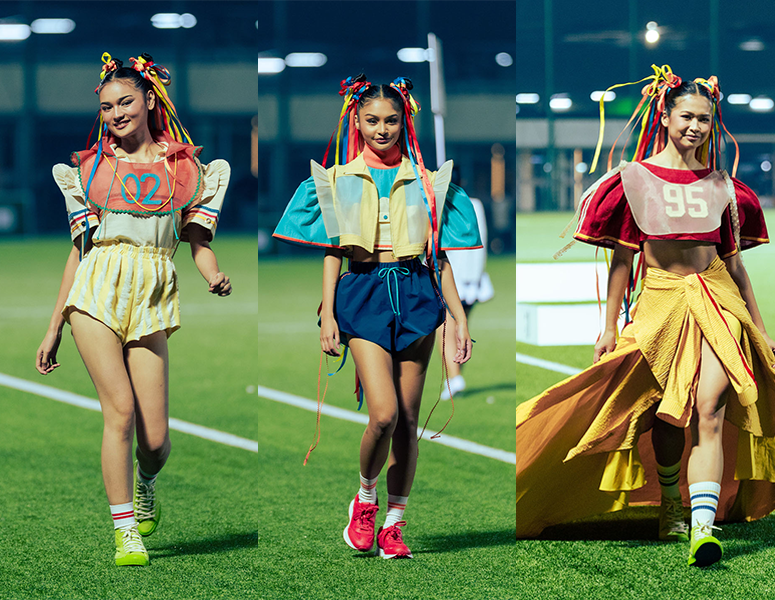
Hannah Adrias, gold medal winner at Ternocon 2020, channeled the exuberance of a high school class from the ’80s to the ’90s to come up with fun pieces that reference our heritage with a youthful wink while displaying virtuosity in tailoring. Terno tops go athletic with striped butterfly sleeves or go hybrid over a baro matched with shorts or a saya topped by a tapis of a knotted varsity jacket to slip on for cooler evenings.
Glyn Alley Magtibay
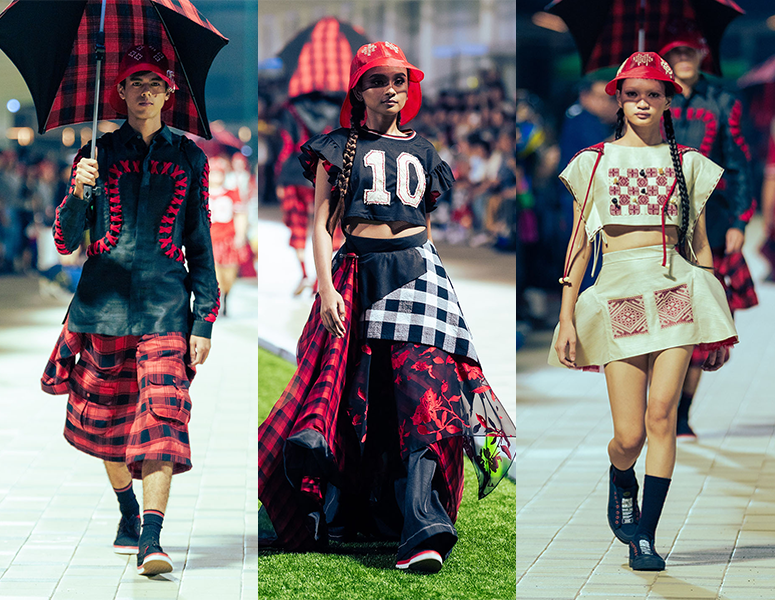
Glyn Alley Magtibay, a finalist at Ternocon 2023 where her ternos with X-ray films were snapped up by celebrities, came up with a collection just as stunning—inspired by the energy of college muses and star athletes in “Intramurals,” fusing traditional Filipino textiles with sportswear fabrics: A mesh cropped kimona tops a denim skirt with a tapis of plaids and lace or goes neo-Baroque pannier with a chess-board pattern in yakan weave studded with actual chess pieces. Barongs have hand-stitched snaking patterns or are layered under numbered piña jerseys.