

Marie Antoinette’s style that sparked a revolution
LONDON—Just as “Marie Antoinette Style” at the Victoria & Albert was opening, the streets of Manila were filling up with protests against corrupt politicians, echoing what revolutionists in 18th-century France were demanding to be done with their queen: “Off with her head!”
The exhibit is timely as the world’s ruling classes are generating opprobrium for their display of wealth amid widespread poverty and steepening inequality. Our Asian neighbors have also taken to the streets over government abuses: Indonesian protests have turned to full-blown violence; Nepali demonstrators even burned the residences of erring political leaders, sparked by the social media flexing of nepo babies who post images of their luxury items like a Christmas tree of branded shoes—not unlike the OOTDs of our own local versions which have been reposted by netizens with dollar totals to match.
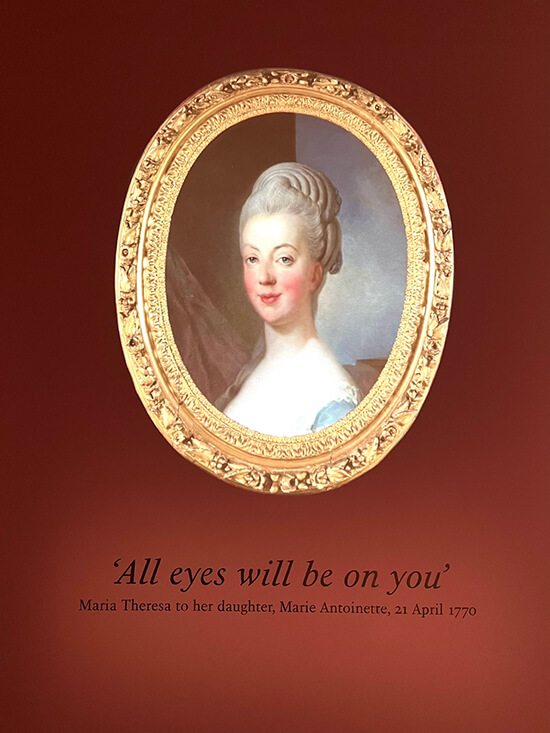
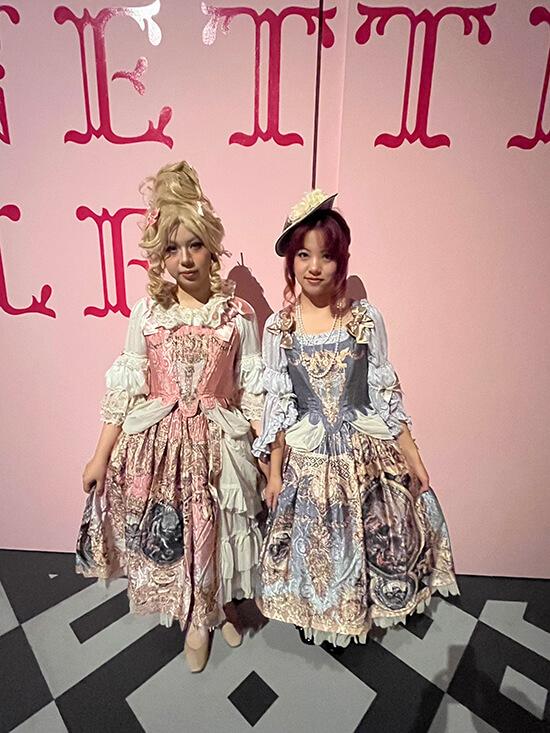
At the exhibit, we spotted a pair of teenage Chinese tourists who were dressed like the ill-fated French queen, walking reminders for their agricultural chief on trial for bribery (he has just been sentenced to death.) The duo couldn’t have been more perfect against the opening display: a portrait of Marie Antoinette at age 14 when she was betrothed to the future Louis XVI. Underneath her image is a quote from her mother, Maria Theresa, telling her daughter on that occasion: “All eyes will be on you.”
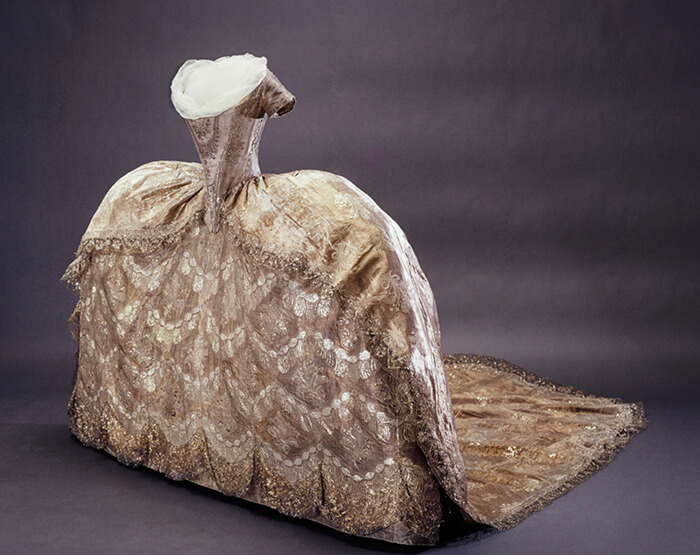
And they have, indeed, as the show explores her life and style, from that moment till today. Dress is certainly a potent tool of expression and a recorder of history with all its social and political indicators. Maria Theresa made sure of that, gifting her daughter with a wedding dress that spoke highly of the Austrian court, affirming that her daughter was the perfect match: a dazzling silver gown with a profusion of diamonds. From then on, every aspect of her dress and appearance would be scrutinized, discussed, and copied.
The young queen’s entry into a court of intrigues was not easy during a time when the French had just finished a war with her country. To top that, she was childless for the first eight years of her marriage, making her status precarious. She remained defiant, expressing her confidence through spectacular fashion. From diamonds, she segued to sapphires to embellish her dress for the coronation of her husband. It was really a way to boost her image, something which former queens—secure as domestic figures—did not need to. Marie had to work harder, just like the mistresses of kings before her. Madame de Pompadour, in particular, was always up-to-the-minute in style trends.
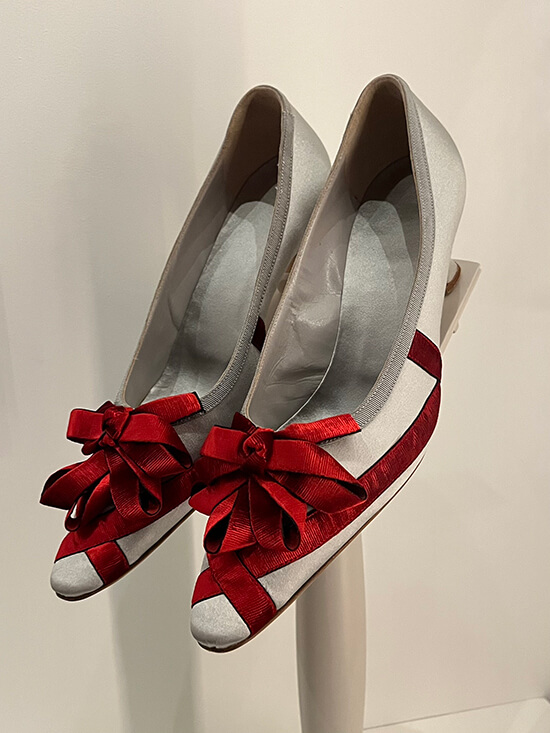
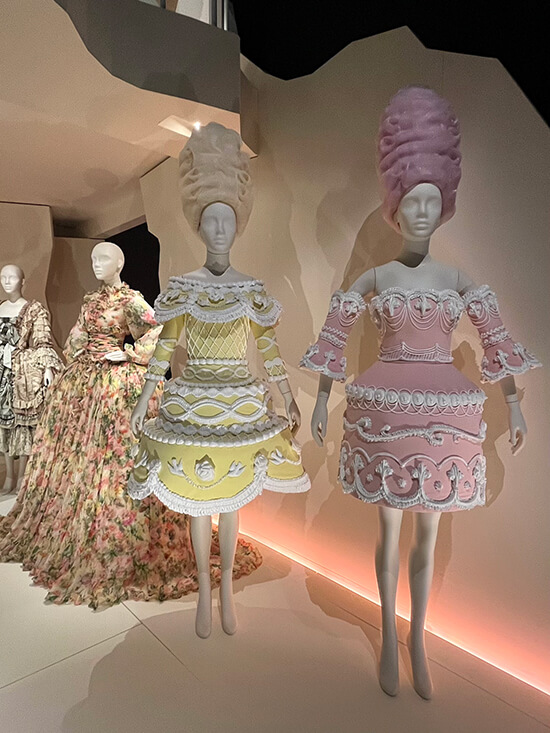
She rebelled against the French court’s rigid dress codes, exemplified by the formal grand habit, by introducing new silhouettes inspired by foreign styles and the latest Parisian looks. Rose Bertin, her dressmaker and chief collaborator for image-making, was dubbed “minister of fashion” by the press who followed their trends—from Rococo pastels and wedding-cake gowns with embroidery, ribbons and ruffles to lavish dinners with the most ornate Sèvres porcelain service in a pattern of pearls and flowers.
Sometimes, her choices were more subtle. In a 1785 portrait by Madame Le Brun, she put a twist on the required emblems of royalty—the velvet mantle and crown—by wearing plain white silk satin to look stylish and contemporary.
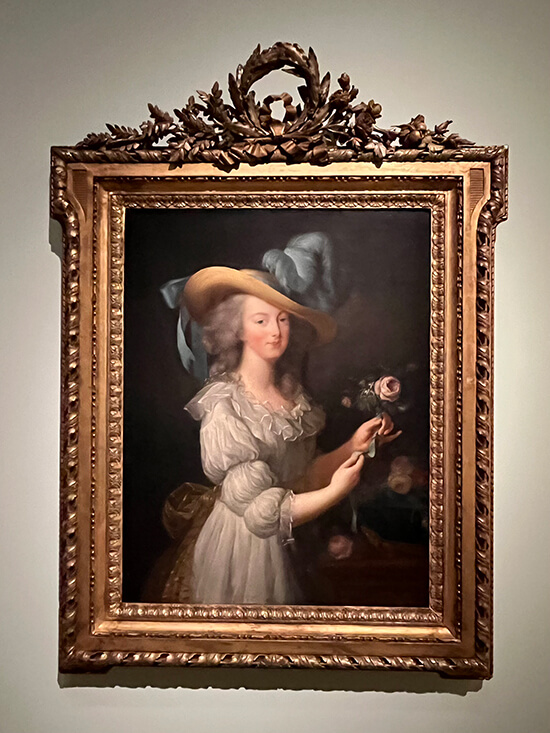
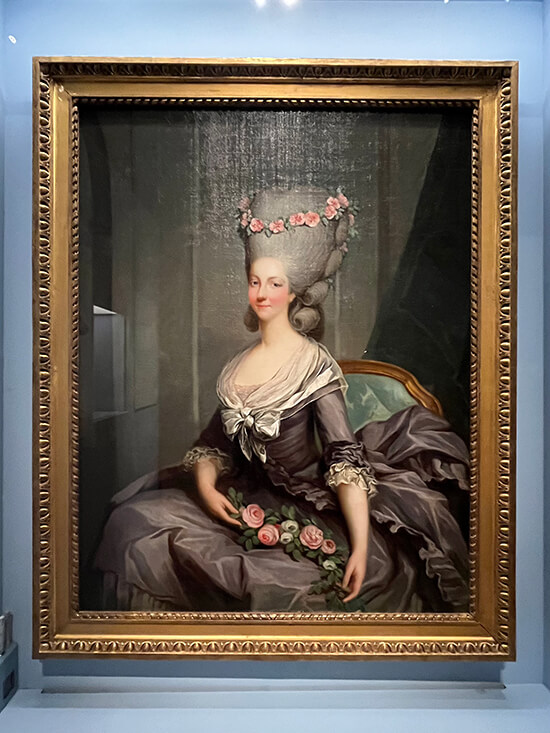
Her fashion would no doubt create scandals. A portrait of her wearing a muslin dress, exhibited at the 1783 Paris salon, raised an uproar because the garment looked like underwear. Still, the chemise à la reine ended up becoming the must-have dress. Her three-foot-high poufed hair, for which she was chastised by her mother because dresses could no longer pass through her head, also started a fad of towering coifs that even had objects like ships to commemorate events.
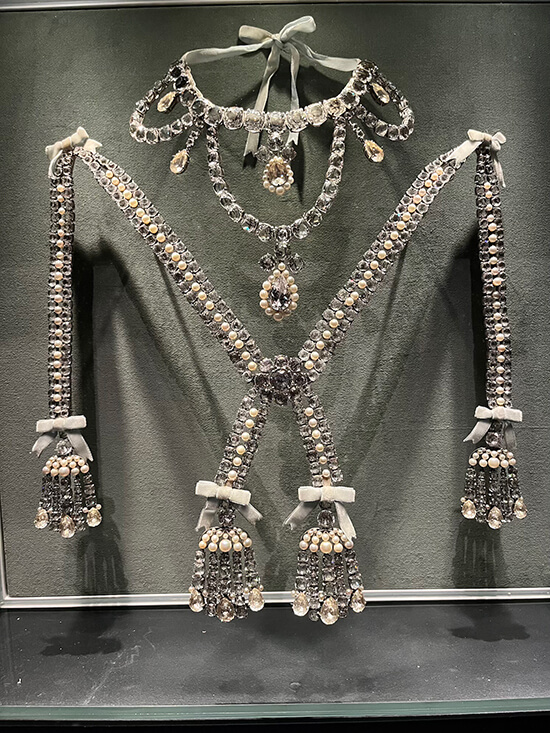
As the country devolved into a financial crisis, she became the easy target to blame since she reportedly spent 750,000 livres on diamonds and almost a million on porcelain during a time when the average daily wage was three livres. Misogynistic attacks and vile propaganda proliferated, many of them in the form of humiliating caricatures and pornographic illustrations of her alleged affairs, including one with her lady-in-waiting.
All this was enough for her to seek refuge in the Petit Trianon, an enchanting escape that she redesigned in an elegant and unaffected style— from the interiors of the jewel-like chateau to its meandering English gardens and rustic village hamlet. She also adopted streamlined fashions, a lifestyle that paid homage to the pleasures of the countryside; and commissioned music, staged entertainment, and concerts. This retreat into a rural fantasy, however, only fueled public resentment, reinforcing perceptions of royal detachment.
With the outbreak of the Revolution in 1789, her excessive style was condemned and cast aside, together with other symbols of the ancien régime, in favor of an aesthetic that reflected the new order. Marie Antoinette and Louis XVI tried to flee Paris in 1791 but were discovered and arrested, further fueling public hostility. The monarchy was abolished the following year, and the royal family was imprisoned. Versailles was looted, including all of the queen’s wardrobe, jewelry, and personal effects.
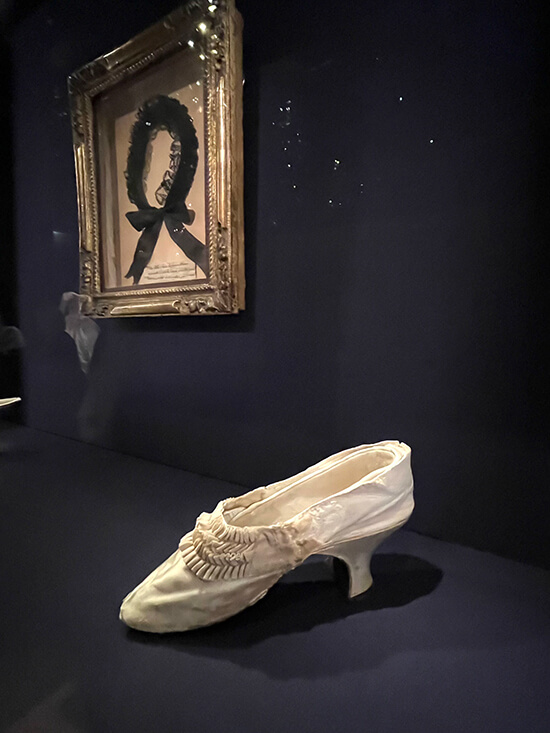
Only fragments of her gowns remain. A complete garment that was saved was her plain linen chemise, a rare survival from her incarceration at the Temple prison in 1793 before her death. After all the sumptuous gowns, dazzling jewelry, and exquisite objects in the previous rooms, this stark symbol of her diminished circumstances, showcased in a blood red room, shocks you into her tragic fate, which is made even more chilling by the display of the guillotine blade that ended her life.
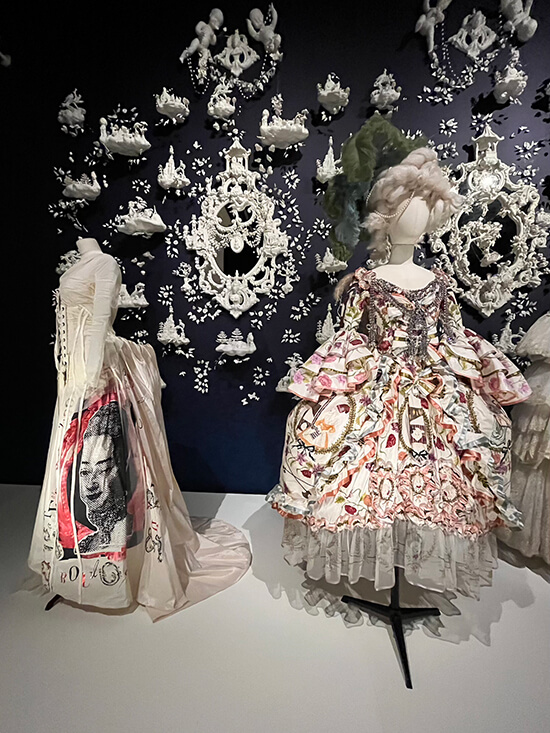
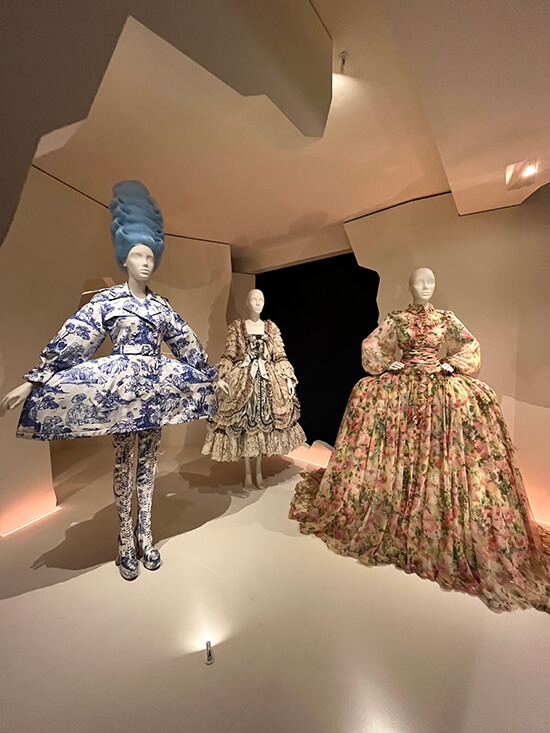
What follows is the rehabilitation and restyling of her image, from the 19th-century gowns of Empress Eugénie, who emulated her, to the Art Deco robe de style of Lanvin, to Madonna, Princess Diana, books, films, and all the couture collections that thrive on her spirit to this day. In the end, the style that caused her downfall also made her immortal.