
Fashion history: Dior in Singapore
I was witnessing fashion history as I walked into Singapore’s New Art Museum. The relevance of Christian Dior to the fashion world, and even to France, is significant. So it was fantastic to experience the “UBS House of Craft x Dior” exhibit firsthand.
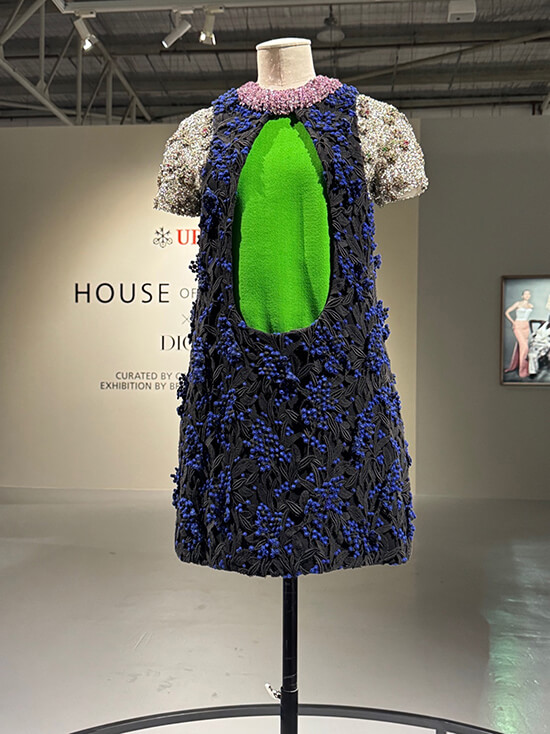
Curated by Carine Roitfeld, this fashion and photography exhibition, conceived by Brigitte Niedermair, featured previously unseen photographs, archival gowns and visual references from the Dior Atelier, all displayed in Asia for the first time. The exhibit dedicated eight decades of Dior to rooms that featured their creative designers starting from Christian Dior himself, Yves Saint Laurent, Marc Bohan, Gianfranco Ferré, John Galliano, Raf Simons and Maria Grazia Chiuri. A work of Kim Jones was featured as well.
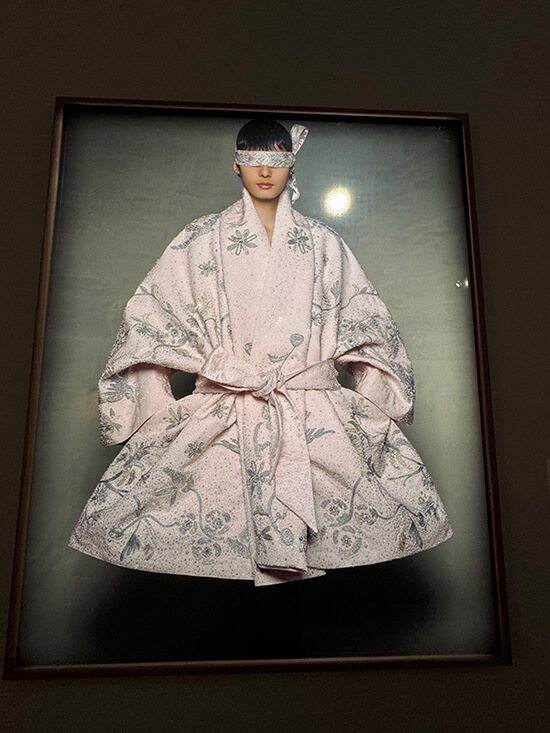
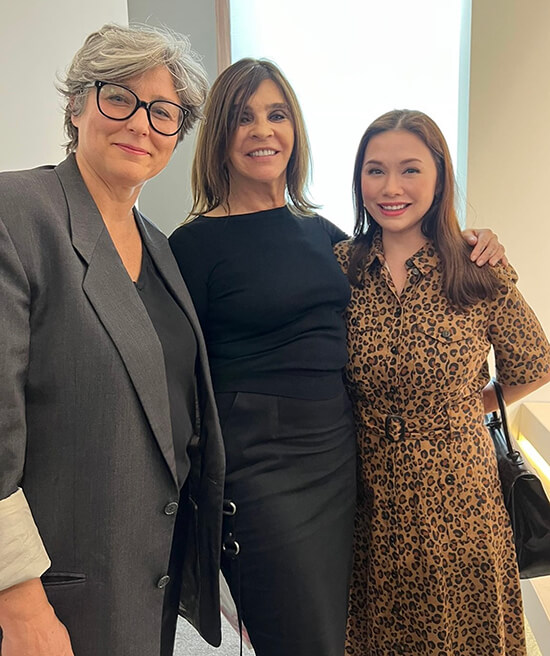
Carine and Brigitte walked us through the historic pieces and the photographic images depicting the different eras of Dior, and discussed the creative process in each of the impressive installations. Both Carine and Brigitte’s work is so cool, somewhat rebellious, a little rock and roll, a bit edgy, and a whole lot creative. In the photographs, they reimagined the clothes but also somehow kept their essence, just presented them in the “now.” There were back stories too, which were so captivating.
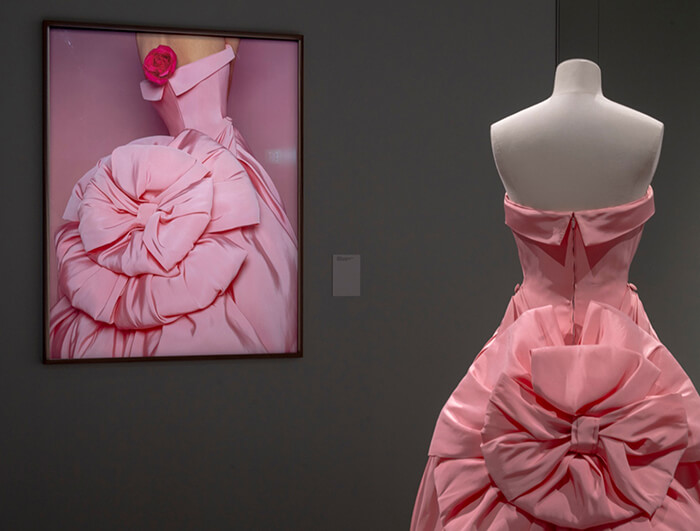
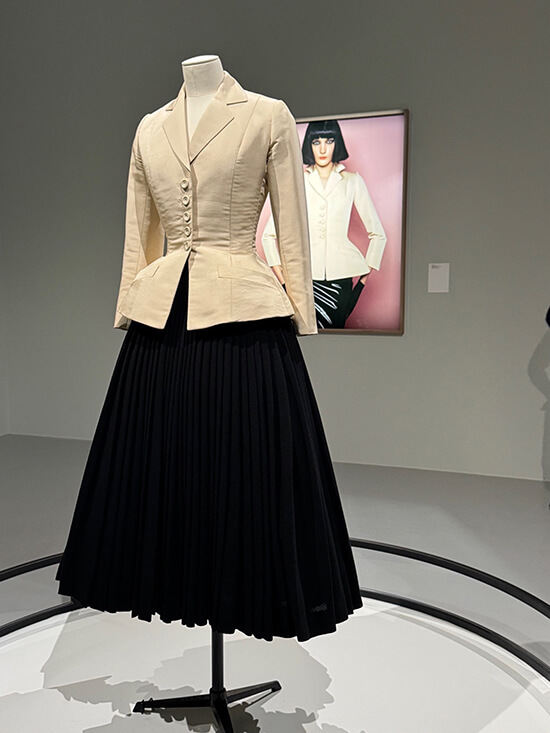
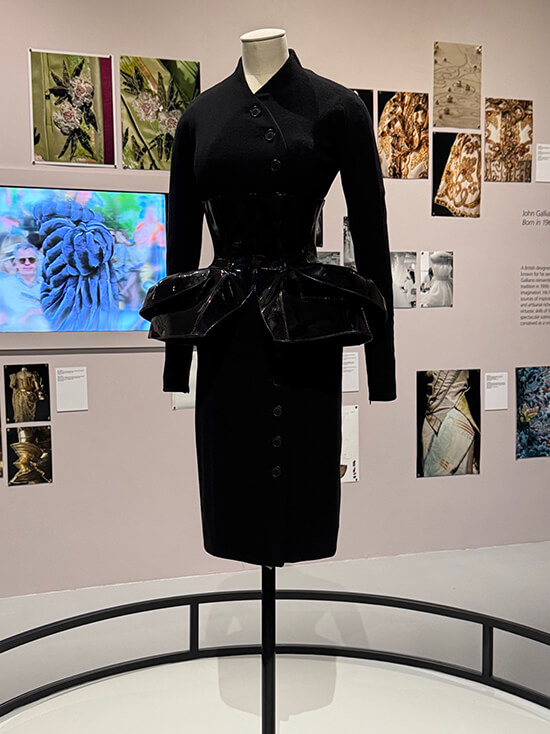
I was in awe of seeing original pieces such as the Bar Jacket, which revolutionized fashion in 1947 with its curvy shape. Apparently, it was called the Bar Jacket because it was intended for use after work when ladies would go bar hopping in the local square. It’s an interesting and fun anecdote. As an extension to this, there’s a display of a re-created Bar Jacket by John Galliano, which adapted its shape into a corset-like belt added to a black figure-hugging silhouette dress. Another amazing archival piece by Christian Dior was a pink Opéra Bouffe short evening dress in pink faille with a giant rose bustle.
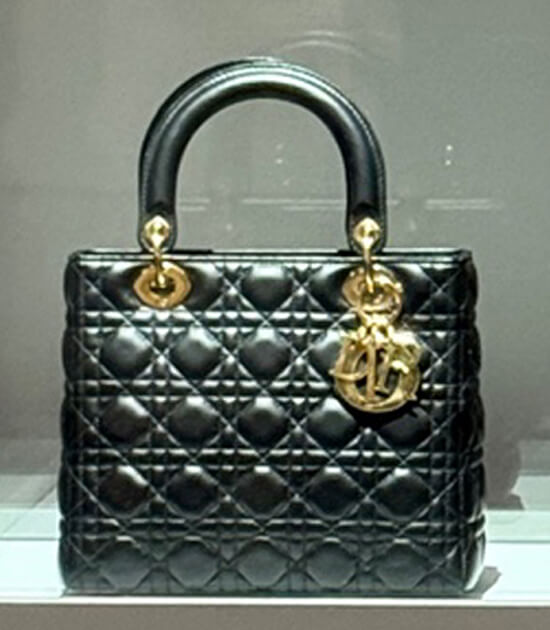
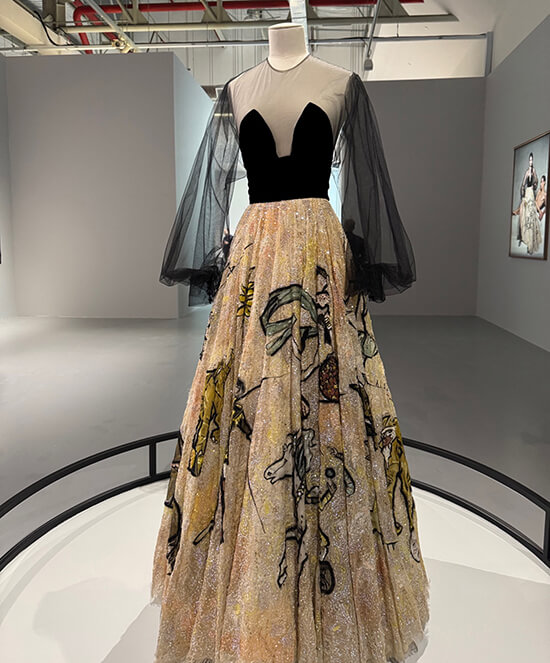
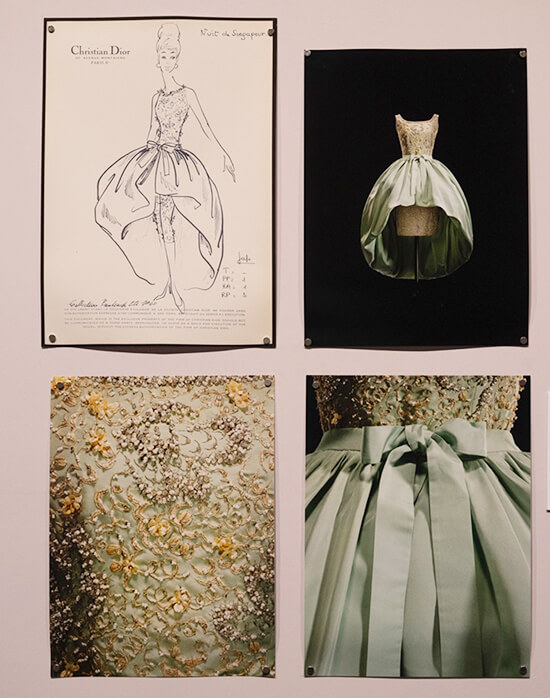
The first Lady Dior bag designed by Gianfranco Ferre in 1996 was also featured. A vignette of sketches of Nuit de Singapour, an ensemble inspired by the country by Yves Saint Laurent (YSL), was a delightful touch. There was an eighties Marc Bohan-designed dress showcasing a Jackson Pollock artwork, captured in an image by Brigitte, styled with punk rock vibes. An ethereal gown by Maria Grazia Chiuri seemed to float, while a photo of the same dress added a sexiness to the design. Dior Atelier artisans made an appearance as well, showing how they expertly sew and embroider their garments, demonstrating the painstaking techniques behind couture.
An intimate talk between the two creative collaborators Carine and Brigitte, which included Perrine Scherrer, director of Dior Heritage, enlightened us about Mr. Dior and the House’s legacy. Fascinating stories behind the fashion brand made me realize that the House of Dior’s story runs parallel to the history of France itself.
With this exhibit, Singapore stepped confidently into the global couture conversation. “Singapore is a city that understands excellence,” said Jin Yee Young, UBS managing director and country head of Singapore. “It is a place where precision and creativity coexist, a philosophy that lies at the heart of both haute couture and sophisticated wealth management. Launching the Asian premiere here is not just symbolic. It reflects our belief that Singapore is an epicenter of innovation, culture and global dialogue.”
“The Singapore edition of the exhibit expands our story,” Jin added. “It offers people here—our clients, the creative community, the public—a direct conversation with Dior’s evolution. It highlights how inspiration flows across borders, how craftsmanship thrives when ideas travel.”
Jin also underscored UBS’s intention behind “House of Craft”: “At UBS, we talk about banking as our craft because we approach our work with the same discipline, creativity and respect for heritage that couture demands. Craftsmanship isn’t just about perfection, it’s about intention, about understanding what truly matters to the people you serve.”
She added: “What I hope visitors take away is the understanding that mastery, whether in a garment or a financial solution, is intentional, principled, and deeply human. That is the heart of both Dior and UBS. That is what this collaboration celebrates.”
It’s not a surprise that the Asian premiere of “UBS House of Craft x Dior” was a resounding success drawing widespread acclaim. The event marked a new milestone in UBS’s evolving global platform, offering the public complimentary access to a fashion and photography exhibition, alongside a series of intimate conversations, panels and live craft demonstrations. It was held from Nov. 21 to 23 at the New Art Museum Singapore, part of Whitestone Gallery.
Q&A with Carine and Brigitte
After shaping the visual language of modern fashion for decades, Carine Roitfeld brings her instinctive, rebellious eye to “UBS House of Craft x Dior.” Her curatorial approach infuses heritage with immediacy, ensuring that Dior’s archive doesn’t sit behind glass. It breathes, provokes, and inspires. Below, she speaks about translating Dior’s 80-year story into a living, emotional experience.
PHILIPPINE STAR: You’ve shaped how the world sees fashion for decades. How did you translate Dior’s 80-year story into an emotional experience rather than just an exhibition?
CARINE ROITFELD: The goal was clear to me right from the start: I wanted people to see these archival masterpieces and instantly think, “I want to wear that today.” We knew we had to make these pieces feel urgent and alive.
I’m naturally spontaneous and I don’t like to overthink things. Working with Brigitte Niedermair, who is so thoughtful and methodical with her approach, created a necessary and beautiful tension. She brought precision and structure, giving each piece the reverence it deserves as a work of art. My role was to keep (the pieces) alive, relevant, and a little rebellious. I sought garments that are adaptable and wearable for the modern woman, and still feel contemporary. Through this approach, we highlighted the brilliance of each creative designer across Dior’s legacy, showcasing pieces that transcend decades. Everything in the exhibition had to be connected to the present. Nothing could look démodé.
I also wanted people to understand the humanity behind the craft. When you talk to the French about Dior, it’s not just a brand. It’s a monument, like the Eiffel Tower. Everyone knows and loves Dior because they first loved the man, Christian Dior, himself. He wasn’t seen as just a designer but as a person with passions, and his warmth is always felt through his work. That’s what made people fall in love, and that love has continued through every designer who followed.
My hope is that visitors walk away understanding that behind every beautiful garment is an imaginative mind, a vision, a story, and a life dedicated to this work. We want them to see fashion not as objects to consume, but as expressions of human creativity and care. It is this connection between the person and the craft, between vision and execution, that makes luxury meaningful. It’s what makes it last. This connection is the emotional experience we aimed to create through “UBS House of Craft x Dior.”
Each Dior era carries its own personality, from Christian Dior’s romanticism to Maria Grazia Chiuri’s feminism. What thread connects them all for you?
When exploring the archives for this exhibition, I found myself returning to the founding principles established by Monsieur Dior himself: a celebration of femininity, elegance and structure. The New Look silhouette, with its cinched waist and full skirt, became not just a moment in fashion history, but a lasting symbol of the House. What I found truly remarkable is how each creative director that followed has reinterpreted these codes while preserving that timeless identity and unwavering devotion to craftsmanship.
Yet Dior’s enduring relevance stems from something deeper. The House has always celebrated a timeless ideal of elegance while remaining fully attuned with the present. It honors its heritage without being confined by it, with each creative director building on a strong foundation of femininity, refinement and bold vision, but never repeats it exactly. For me, it is this balance between tradition and innovation that defines Dior’s DNA. Dior shows us how true timelessness isn’t about preservation, but evolution. That is why an archival piece can feel so alive and modern today, and why Dior will continue to leave a lasting legacy for generations to come.
Fashion moves at the speed of social media. Why does “craft” still matter, and what do you think we risk losing when we forget it?
Craft matters because it is the soul of fashion. Social media shows only the surface or the final product, but couture is about what lies beneath —the thousands of hours, the touch of human hands, and the meticulous attention to detail that bring a garment to life. To me, that is the true definition of luxury.
If we forget craft, we risk losing depth and integrity. Everything becomes disposable and easily replaceable. Craft is the antithesis of that. For Dior, it is what allows a dress from the 1950s to still inspire a generation today, giving clothes meaning beyond the moment. By highlighting craft through this exhibition, we remind the next generation that excellence is attainable, and that audacity and virtuoso artisanship still matter. It is not just about looking back at Dior’s rich history, but about ensuring that this level of skill and ambition continues to thrive.
* * *
Known for her poetic command of stillness and form, Brigitte Niedermair approaches couture like architecture revealing not just garments, but the spirit and labor behind them. Her images for “UBS House of Craft x Dior” invite viewers to step into a dialogue across decades. Here, she reflects on time, heritage, and the philosophy of craft.