Can you ever forgive Mica De Leon?
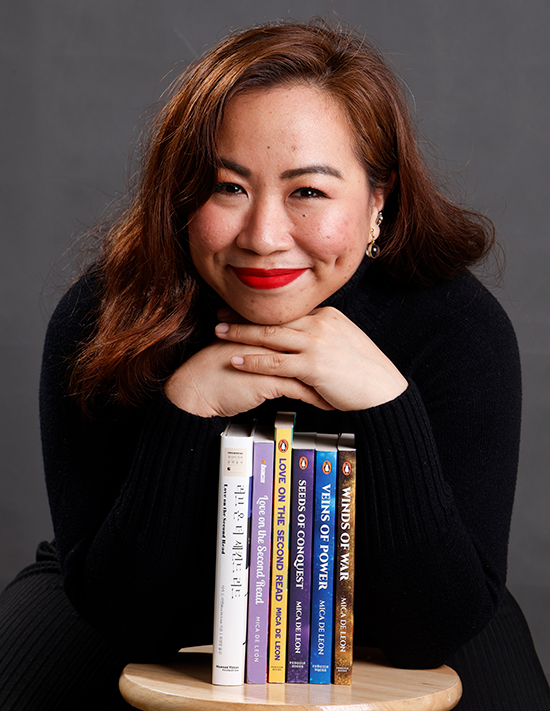
Many know Mica De Leon as a manufacturer of kilig. As an author, they have published two swoony love stories starring Filipino characters. As the editor of a publishing house, they help put dozens of Filipino romance books on our shelves year after year.
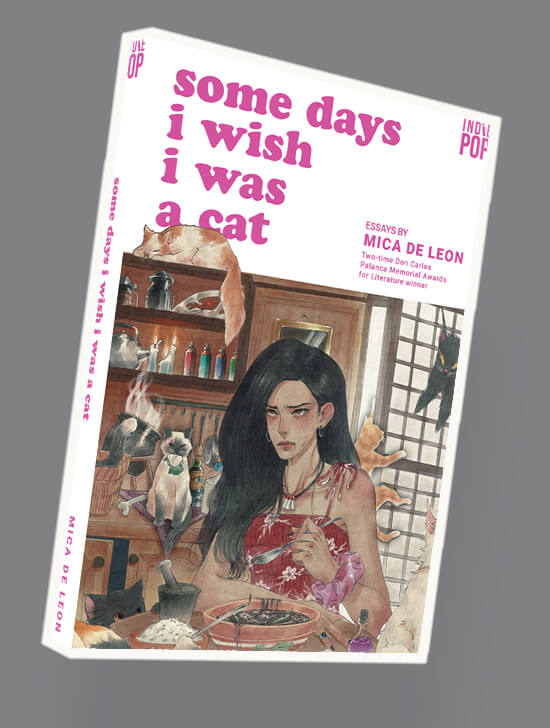
But in their fierce essay collection Some Days I Wish I Was A Cat, their first foray into nonfiction, De Leon pulls back the curtain, not caring if it reveals the messy and imperfect versions of ourselves that we all rush to hide.
In their sharp, exciting voice, De Leon dissects our rigid expectations for women—no matter how much we redefine success, we’re still expected to tie everything up with a nuclear family bow—how the patriarchy trickles down into every date we go on, the ever-fluctuating Filipino identity, and the ever-dismissed importance of the romance novel.
In the essay collection ‘Some Days I Wish I Was A Cat,’ De Leon is exhausted of dating, the literati, and the unattainable Filipino monomyth — but they are also tired of being afraid.
“I try to contextualize (my experience) with bigger issues, like feminism and poverty. It’s a way for me to understand why I’m experiencing something,” De Leon tells Young STAR. “Kasi something must be happening sa macro-level. It can’t just be random na may mangyayari sa’kin na walang cause.”
But Some Days I Wish I Was A Cat promises no answers, only recognition. Only shared frustration, and in turn, power in numbers. De Leon is angry, but they are not hopeless. And they are tired of being afraid.
YOUNG STAR: The book combines newer essays and those you’ve written over the years. Did you have a specific thesis or theme in mind while putting the collection together?
MICA DE LEON: When I pitched this to Summit (Books), I think that was 2022-2023, it began as a different book. I called it Filipino Millennial Monomyth kasi it’s an examination of the Filipino identity.
As I added more essays in 2024-2025, I was noticing something new. There’s this underlying theme na, sure, everything’s hard for everyone, pero there’s a specific way that women experience the world that feels less privileged than men, especially white men, especially wealthy men. It’s me experiencing the world in the context of the patriarchy. It naturally just came out. Even though I identify as non-binary, even though I’m bisexual, because I was born a woman, ‘di ako makawala sa kanya.
I can imagine so many Filipinas feeling the same way, and reading the book, parang nakahinga ako nang malalim. Nararanasan pala ‘to ng lahat, and it’s so weird how we’re bonded by our bad experiences. Was catharsis one of your main intentions from the beginning?
Writing itself is a very cathartic experience. The darker stuff in the book (about sexual assault), that’s where I let it all out. It was the first time I admitted that I had no control over some things that happened to me. Writing it forced me to say the things I was ashamed to say out loud.
I didn’t write this wanting catharsis, but thankfully, it just came out. And after I finished this book, I just felt a little freer from all that burden. I was less afraid, definitely.
Exactly. The patriarchy thrives on silence.
When you’re quiet about (what happened to you), it’s as if it didn’t happen. No one is acknowledging it. No one’s allowing you to process it. But when you talk about it, you give it flesh and bones, so you can see that it actually happened.
I think part of why I can’t read this (book) again, until maybe in another phase of my life, is that I was so honest. A lot of (what I wrote about), I haven’t gotten the closure I need yet. But (the book) definitely helped me face those situations with a clearer eye. This is something I talked about with my therapist: the first thing you should do is forgive yourself for it happening. Because even though it’s not your fault, you’re blaming yourself for it.
It’s also important that you talk about it so you know what’s your fault and what’s not, and you know what you’re forgiving yourself for.
One of the essays also discusses your being an editor of Filipino romance books. What do you think about the current stereotype online that romance is not “real” reading?
I mention this in the book, but once women start dominating a field, it suddenly becomes less important than the fields dominated by men. And because romance is inherently female, it’s not considered serious literature.
But romances now can also be examinations of mental health, female independence, and being seen as equals to men in a patriarchal world. What I like about romance, and why I keep writing it, is that it’s such an intimate look into power dynamics, especially between two gender identities. The context is a lot smaller, so you see the nuances of the relationship (more clearly).
And what’s so wrong about falling in love and reading stories about falling in love? I don’t understand how choosing a partner, an important relationship in our lives, is not serious.
You also said early on in the book that Some Days I Wish I Was A Cat is crueler, very different from your fiction, and something you’re afraid to share. How do you feel now as the book comes out?
It’s so different from the other books that I’ve written. With fiction, I get to add a filter. With nonfiction, it’s really me on paper.
The more books I publish, the less private my life becomes. And one of my paranoias in life is that (people) find out all the bad decisions I made, and they think the bad characters I write in the books are me.
To be misunderstood is one of my greatest fears. That’s why I write a lot of essays; it’s easier for me if I publish where I come from right now. This way, you would understand. I’ll let it all out and then see what happens next.
I wrote this book to be understood, to be forgiven, and not to be seen as some kind of paragon, but someone who’s flawed and just trying to live in this world. I hope (readers) don’t see me as someone who’s a terrible person. I hope that they also forgive me. I hope they find a way to forgive themselves, too, for whatever it is that they feel like they need to be forgiven for.
I hope they find catharsis from this, the way I also did. And I hope they find the freedom to be who they are, regardless of the system not allowing them.
* * *
Some Days I Wish I Was A Cat is out now via Summit Books.