50 golds: A ray of hope for Philippine sports
The historic wins of our Filipino athletes at the 33rd Southeast Asian Games in Thailand provided hope and joy to a nation rocked by corruption scandals. Our athletes went to the Games with the mindset to win, not merely to participate. I have seen how this collective confidence has resulted in sports supremacy and how it has trickled down to our grassroots. With these recent wins, I pray it intensifies.
Fifty gold medals in various sports—more than just a number (Singapore surpassed us by only two golds)—this is a collective win for a nation often told it is too small or underfunded to excel in sports. It is a declaration of budding athletic supremacy that goes beyond basketball. This will likely spark LGUs and private companies to invest in grassroots training in sports beyond basketball, boxing, volleyball, and billiards.
On social media, debates persist over whether athletes are foreign-trained or half-Filipino. We should face reality, though: they are Filipinos by blood, and their skills training abroad does not make them any less Filipino.
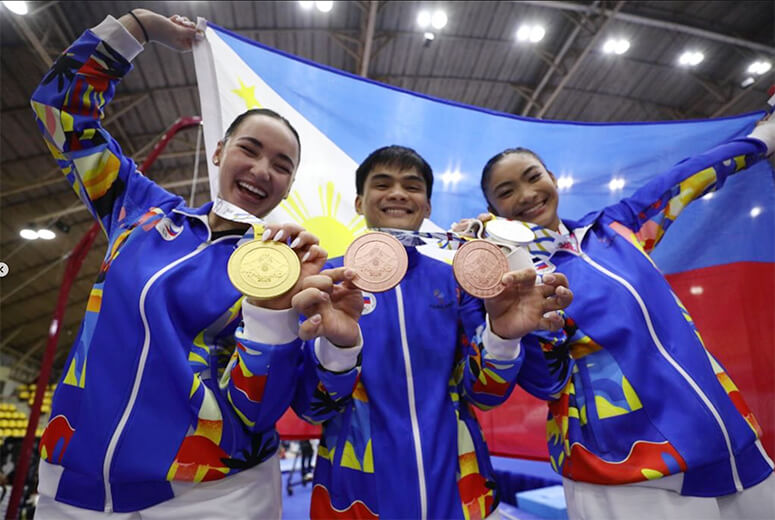
When our athletes train abroad, we are not losing them. They are simply learning from global standards that are not available in the Philippines. If they are selected from local competition—by a team or a coach—to train overseas, it is a stamp of approval that they have the skills and mindset to win. Being trained abroad also helps diminish the inferiority complex that comes from not being exposed to global standards. For those born and trained overseas, it may not have been their choice, but representing the Philippines now is.
A quick survey reveals that about one-third of the gold medalists are half-Filipinos or were primarily trained abroad (such as tennis star Alex Eala in Spain, pole vault legend EJ Obiena in Italy, or most bemedaled swimmer Kayla Sanchez in Canada). We should focus on the positive message: Filipino DNA is not a limitation to succeeding in global sports. Rather, our nation lacks the facilities and sports science experts needed to propel athletes to dominate on the world stage.
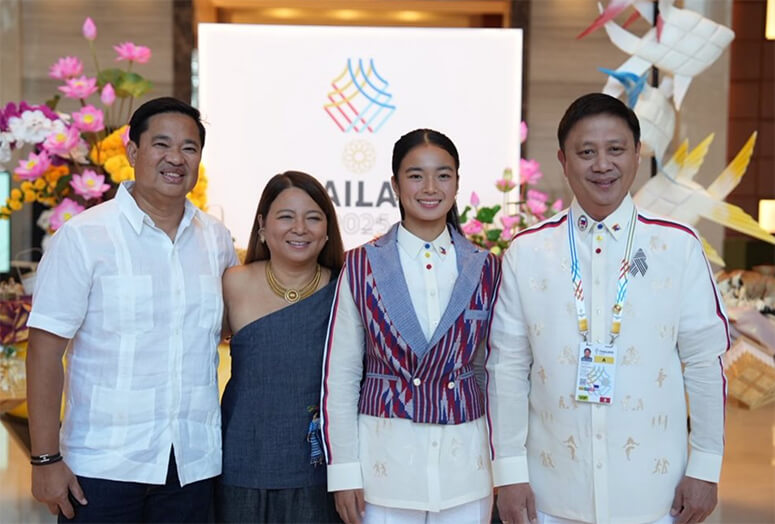
And while the predominantly foreign-trained Filipinas football team bagged their first-ever SEA Games gold, there are also homegrown Alas Filipinas beach volleyball athletes who mostly come from local universities. Sisi Rondina is from the University of Santo Tomas, while Bernadeth Pons is from Far Eastern University. Dij Rodriguez played for Southwestern University, while her partner, Sunny Villapando, adds the global dimension, having played high-level collegiate beach volleyball for UC Berkeley in the United States. Together, they dethroned eight-time champion Thailand. Sisi shared that she saw a post wondering if they could make history by dethroning Thailand before the final match—and it set her on fire to prove that it could be done.
By my last count, the country has fewer than 12 universities offering sports science courses. The United States has the most—and also has the most Olympic medals. There are many areas that require development in our country, from sports education to nutrition, sports psychology, strength and conditioning, recovery and more.

The appointment of John Patrick “Pato” Gregorio as Philippine Sports Commission (PSC) chairman last July was a timely move that helped propel athletes to their SEA Games success. With his vast experience in the PBA and the MVP Sports Foundation, he understood that partnerships with big corporations are vital to creating sports heroes. He immediately upgraded cafeterias at Rizal Memorial and Philsports to offer elite-standard sports meals, established a 24/7 athlete help desk, and mandated that allowances and technical needs should never be delayed on his desk. He also increased the allowance of all national athletes and coaches by P5,000.
His most impactful move, by far, is the decentralization of grassroots training. He has opened regional training hubs—such as weightlifting in Zamboanga, football in Bacolod, and martial arts in Benguet—allowing young athletes to stay longer with their families and communities. This minimizes talent loss due to homesickness or lack of social support.
The success in Thailand is a testament to the wisdom of a holistic approach that combines local grit with global standards—bringing not only medals but also a more inspired and athletic nation. Let it be known that the Filipino athlete, whether trained in Manila or Madrid, beats with the pulsating rhythm of a champion.
The success of the “Global Filipino” training strategy, which also worked for Olympic medalist Carlos Yulo, can be considered a catalyst for grassroots development. Private corporations and benefactors see the possibilities, while local athletes and coaching teams gain inspiration and much-needed technology transfer.
The rise of the two-thirds of gold medalists who are homegrown and primarily locally trained—such as former UST athletes, decathlete Hokett Delos Santos, and taekwondo jin Justin Kobe Macario—proves that the domestic athlete development pipeline is strengthening.
As we close 2025, let us celebrate the athletic heroes who made us proud at the 33rd SEA Games. Let their medals symbolize resilience, grit, and the unwavering identity of a nation that no longer asks for permission to win. Let the chant “Laban Pilipinas” no longer be just a spirited cheer from the sidelines, but a national commitment to invest in sports and athletic development.