

The champions of Cordillera cuisine
Food from the Cordilleras wasn’t always that accessible. For a time, you had to know a local or be allowed entry to someone’s home to get an idea what their everyday staples are. Such isn’t the case these days as more and more people let us into their world and invite us over to their dining tables.
Among them is the recently concluded National Food Showdown (NFS), an annual regional cooking competition where both students and professionals get to showcase their culinary talents and turn traditional dishes like bulanglang as well as local ingredients like rice and bagoong into something worthy of a taste, recognition, and a medal.
Baguio was the year’s third leg, with Cebu and Iloilo (their first time to host) being staged before it, and Cagayan de Oro capping the 2025 run.
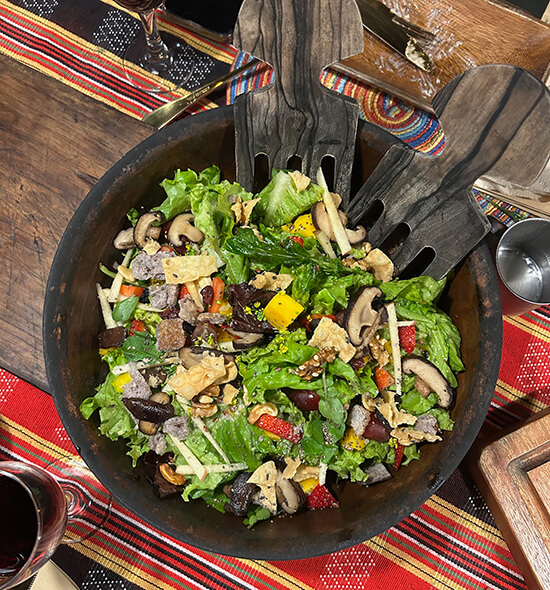
For the 18th installment, founder of NFS and chairman of the board of judges Myrna Segismundo thought it would be appropriate to headline the competition with the theme “Balik Isla: Foraging in the Philippine Countryside.”
“I just noticed that, over the years, the landscape has changed so much. And I felt that it was time to encourage them to raise the bar further and focus on regional cooking, techniques, going back to the roots, and learning our own cuisine. Plus, it’ll be easier for them to relate to because there’s a base to start from.”
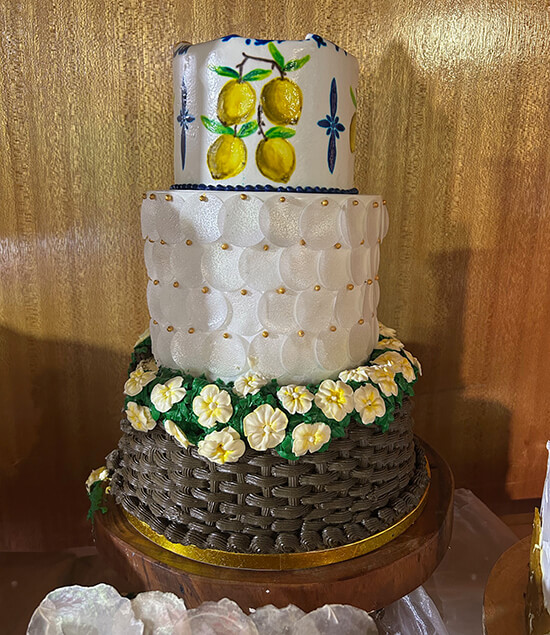
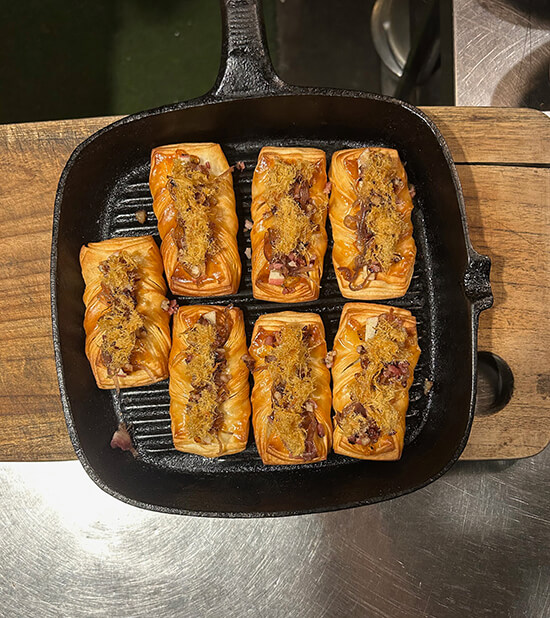
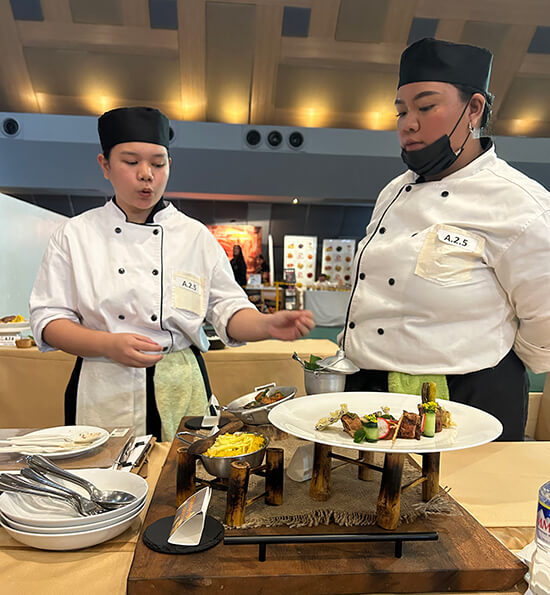
Set at the Baguio Country Club, hundreds of participants gathered to compete in an array of categories, ranging from napkin folding, table setting and flairtending to wedding cakes, event planning, and pineapple flambeing.
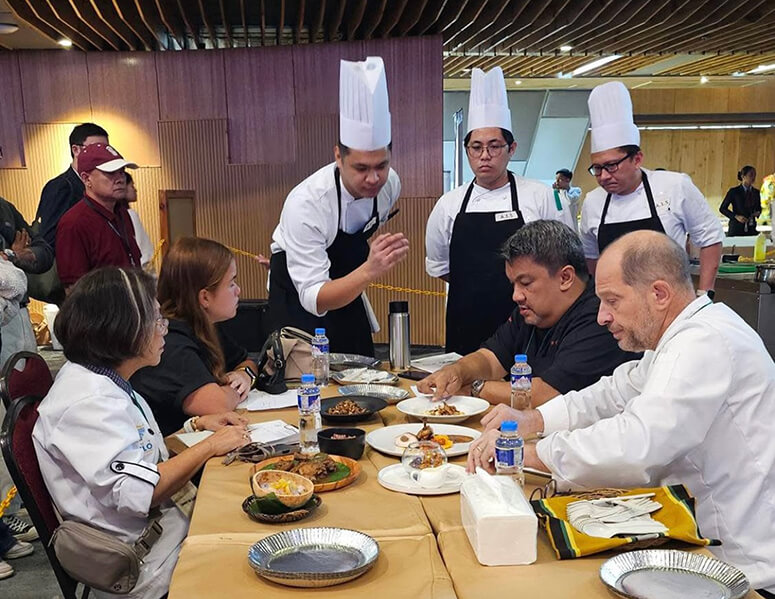
The best of the bunch (not limited to one) took home a gold; those that garnered a score from 80-90 got silver; bronze if 70-79; and a diploma for 61-69. Giving their scores and words of advice were an elusive group of chefs from Manila, including Ginny de Guzman (Tilde), Robby Goco (CYMA), Martin Kaspar (L’entrecote), and Suzette Montinola (Enderun).
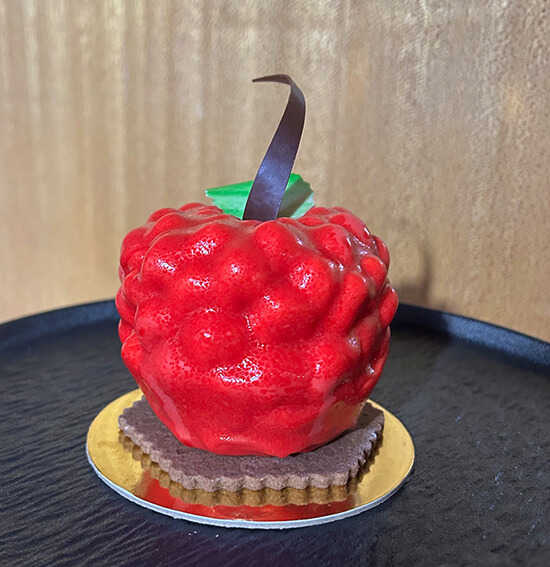
“For me, the most memorable entry throughout the competition was the Kapeng Benguet at Sampinit na Keyk, under the baby cake category of the professional division,” recalls Rhea Rizzo (Mrs. Saldos). “I’m not even a dessert person. But the taste combination and textures were both something that really struck me as unique, surprising and completely out of left field.”
For Tina Legarda of Kumba, it was the winning entry at the Bulanglang category. “The broth was clear as water but we were blown away with the cleanest, most umami-tasting soup. So good that my co-judge cried because it reminded him of his lola’s cooking.”

In the end, the overall champions, those who accumulated the most points, were University of Baguio (school), Fairways and Greens Bed and Breakfast (restaurant), and Baguio Country Club (hotel).
But really, the winner here is everyone who worked together to acknowledge and appreciate local cuisine and produce as well as promising talents. Kudos to the entire league of organizers for all legs, be it in Luzon, Visayas or Mindanao.
Where to eat
Like all the chefs and culinary students, there are also establishments throughout the city that promote dishes originating from the area. Among them is the host of the NFS, Baguio Country Club.

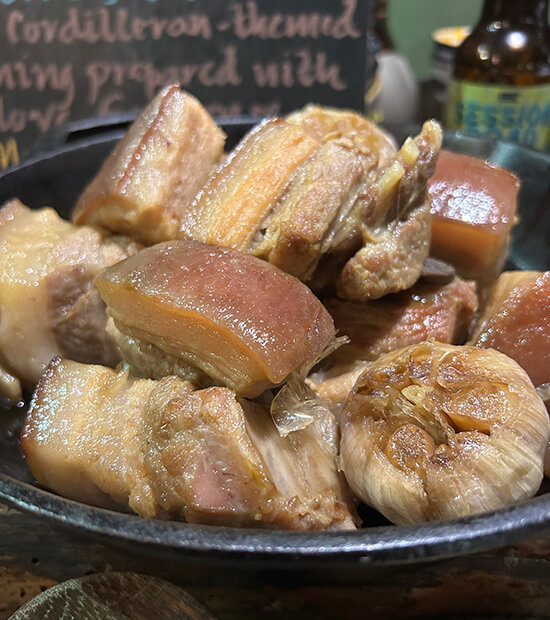
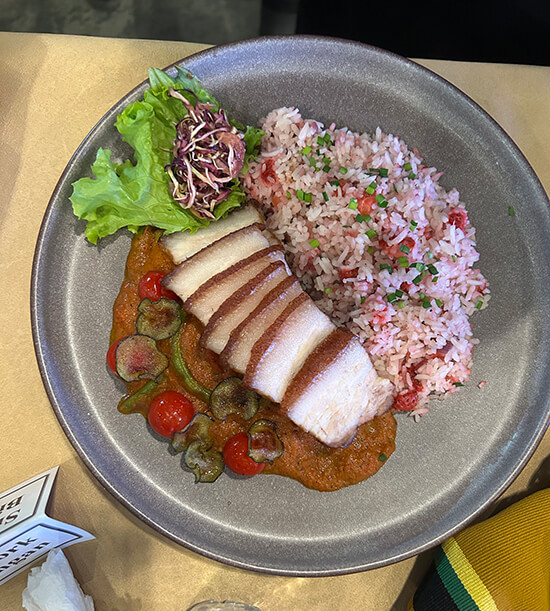
Their Raman di Cordillera menu includes the pinikpikan, chicken soup with smoked salt pork (etag); a highland salad featuring Benguet greens and strawberries; binggaw or roasted mung bean soup in coconut milk topped with kiniing; hinanglag aka native pig confit with atchara; and kiniing, smoked native pork with Cordilleran heirloom rice. These, along with linapet (sticky rice bread filled with peanut) for dessert, are available for lunch and dinner at the Club’s veranda.
Another hotel restaurant serving specialties of the region, though not traditionally, is Brisa del Baguio, housed in SotoGrande Baguio, where 29-year-old chef Roanne Gines crafted comfort food items that feature Cordillera’s famed smoked meat. There’s a carbonara with mushrooms in cream sauce that’s salted with kiniing, a pizza made of the same smoked meat plus pinuneg (pork blood sausage) with olives in a melted cheese sauce; and the bestselling kiniing burger with cucumber, tomatoes and a schmear of rich barbecue sauce.
And then there’s the Mountain Man, one of the most unique and memorable spaces where diners don’t just get to enjoy Cordillera food but also experience local culture. Hidden on the third-floor roof deck of their family’s building, former band member Chavi Romawac and wife Millie, along with nine-year-old son Araw and dog Aioli, welcome a maximum party of 12 to their humble home where they serve guests a range of Cordilleran dishes, ranging from familiar food forms to the very traditional ones.
It starts with an ugayam, or a short ritual to offer some food and tapuey to the anitos as a sign of respect and to give thanks for the meal the diners are going to partake in. Then the party proceeds with some snacks—kinuday, pinuneg, veggie and crackers.
The group then proceeds to the table, right next to the kitchen, to begin the open-fire private dinner. Highlights were the bread spread made with local mushrooms and a Mt. Province sabeng or fermented rice and corn; Baguio chicken rice inspired by the pinikpikan; the Kiangan-inspired hinanglag where chunks of pork are cooked in their own fat; baked salt-crusted whole fish; and a seafood clambake cooked on a bed of watercress and hot river stones.
These are just some of the people who are keeping their traditions alive. Baguio might be home to a bunch of other cuisines such as Korean and American but not to be ignored is its homegrown food, which is as rich and flavorful as its history.