

Milan: The art of reinvention
Three of the major Italian cities—Rome, Florence and Milan—are like siblings that share a common DNA, yet are remarkably different. That DNA is art, but while Rome is steeped in art both ancient and new, and Florence is a jewel box crammed with Renaissance art, Milan has mastered the art of reinvention.
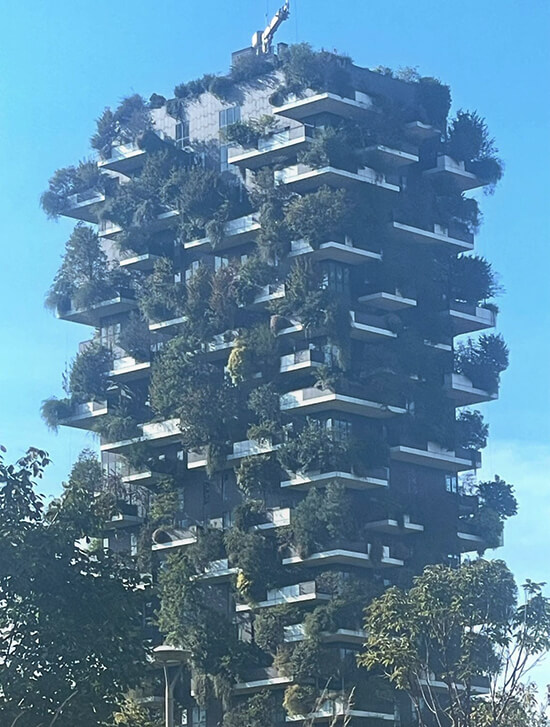
Compared to structures in Rome and Florence that are awash with a warm palette of siennas, mustards, pumpkin and brick, the clear northern light of Milan shines down on buildings of cool grays. But don’t think this city, which is the financial center of Italy, is a dreary industrial hub. Ever finding ways to reinvent itself, stylish skyscrapers have risen, including the Bosco Verticale which incorporates 20 hectares of vertical gardens into its two towers.
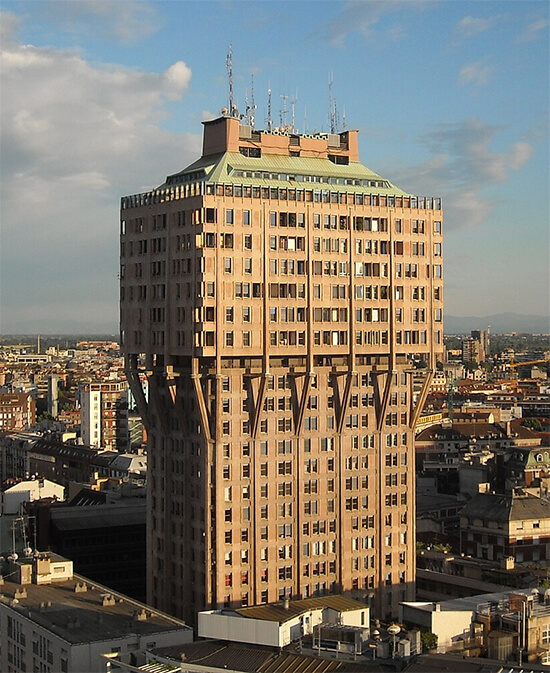
In a city that reinvented itself as the fashion capital of Italy in 1958, it’s only fitting that other structures like the sleek Pirelli building, the brooding Torre Velasca and those rising in the CityLife district make a statement. The combination of the old and new, exemplified even by the tram system where old and new trams run side by side, is a heady mix.
For me and my sister Letlet, Milan was an Italian city indispensable in any fashion itinerary. Back in the ‘80s, when we were traveling for work, Milan meant joyful days taking in the sight of that magnificent cathedral and equally impressive Galleria Vittorio Emmanuel every day. It meant all our other hours hanging out in the Via Montenapoleone and its side streets, collectively known as the Quadrilatero della Moda. It meant having lunch at the Ristorante Bagutta, on the Via Bagutta, because Harper’s Bazaar reported that it was Giorgio Armani’s favorite. But no matter how often we ate at Ristorante Bagutta, now sadly shuttered, we never spotted my favorite designer.
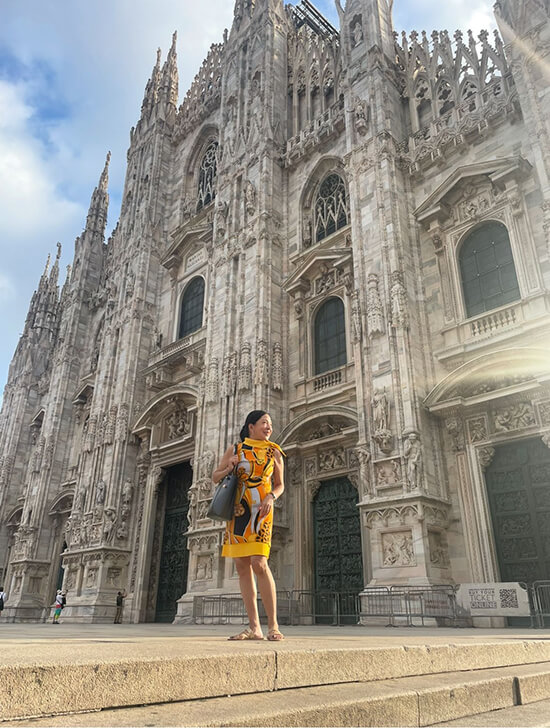
Visiting now with my family instead of my sister, the gothic Duomo is as beautiful as ever and great to photograph in any kind of light. The huge plaza is a gathering place for groups of students, tourists, peaceful protestors and couples in all their wedding finery having photo shoots. Our apartment was conveniently located near the cathedral, where, for the first time, I took a lift to the top to view the city skyline through its gothic spires.
We were just as conveniently located near the Via Torino, which is lined with familiar American brands and local shops. Beauty store Sephora is down the road from Alice (pronounced A-lee-che), which has incredibly good pizza for a chain you can find all over Italy. The street is buzzing, lively, and offers the kind of shops you find not much different from popular shopping streets in other countries, such as Tokyo’s Shibuya or New York’s Broadway.
and homeware.
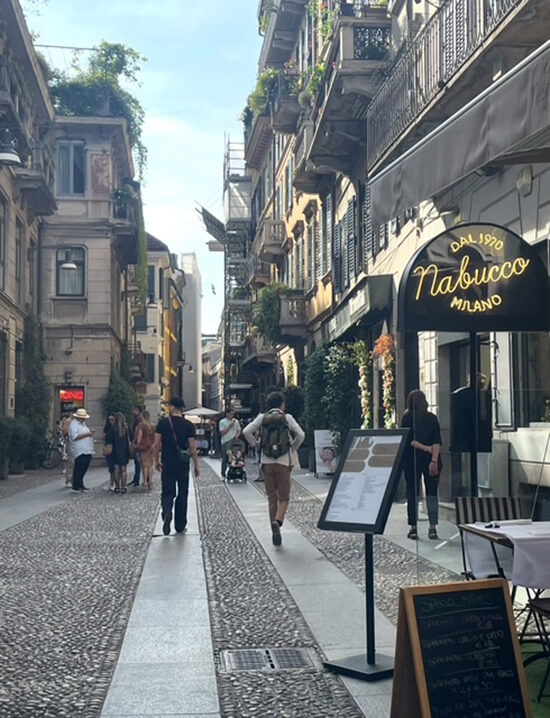
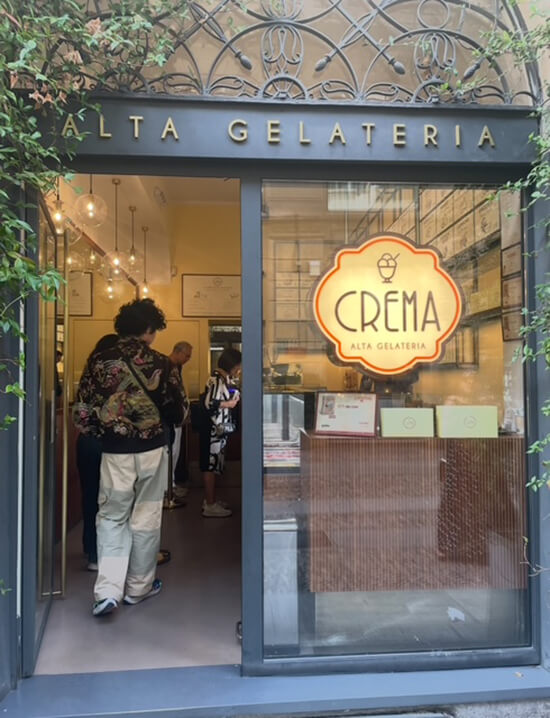
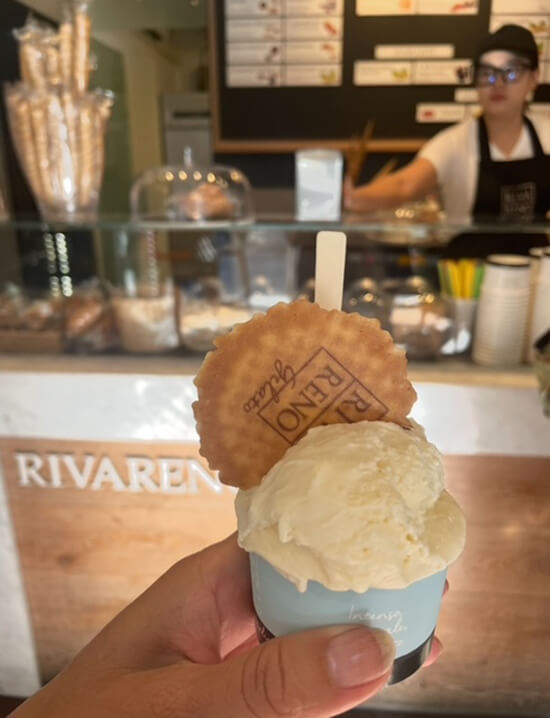
Likewise, the Via Montenapeolone is like Italy’s elegant version of the Ginza or Fifth Avenue. For a charming experience akin to New York’s Soho or Japan’s Kagurazaka, the area to head for in Milan is Brera. Here, a grid of streets focuses less on big brands and more on artisanal fashion plus homeware. Alta is the gelateria not to be missed, and in Italy, my go-to flavor is creamy ricotta. The narrow and pretty streets are enlivened with greens and flowering shrubs. Truly a very romantic kind of place!
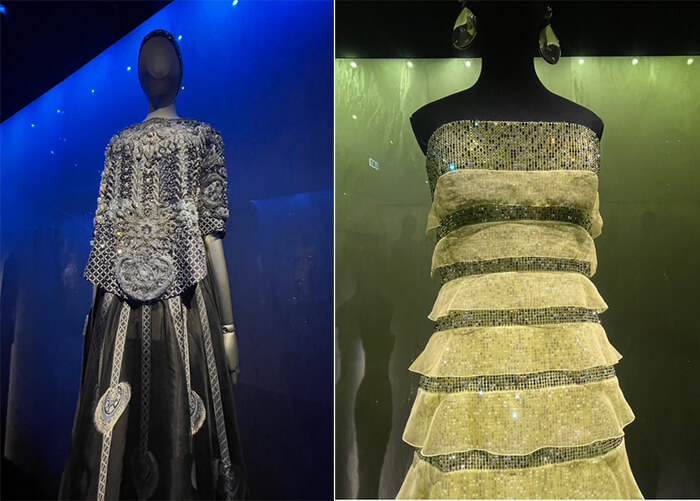
For the serious fashionista, the edgy district is the formerly industrial enclave of Via Tortona. This is now home to Armani Silos, designed by Japanese architect Tadao Anda; the events place Base Milano, the contemporary museum Mudec and Fondazione Prada. Armani Silos has an ongoing retrospective exhibit of Armani that no fashion lover should miss.
Vintage is a huge deal all over Italy, and no less so in Milan. My husband spotted a beautiful, hand-sewn yellow and orange ‘60s dress inspired by Pucci at Vintage Delirium run by two genteel Italians. It is now one of my treasured pieces. As it so happened, one of the best vintage places of all turned out to be near our apartment. At Galleria Unione, you will find the friendly Matthias, from whom we bought a dozen pieces, including three Armanis for me. Also in the building is Napoleone, the oldest vintage shop in Milan.
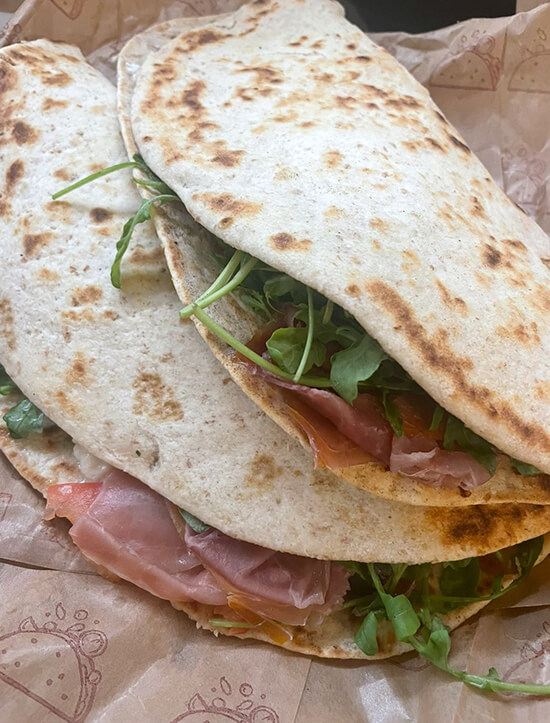
Tracking down all these vintage shops will surely work up an appetite. The food of Milan, which is located in Lombardy, has a certain refinement that translates into risottos and veal dishes. Piadinas or flatbread sandwiches, which are a specialty of nearby Emilia-Romagna, can be found all over. There is something delicious for every budget level. Those with a propensity for fine cuisine can reserve tables at Paper Moon on the Via Bagutta or Il Salumaio on the Via Santo Spirito, both in the fashion district.
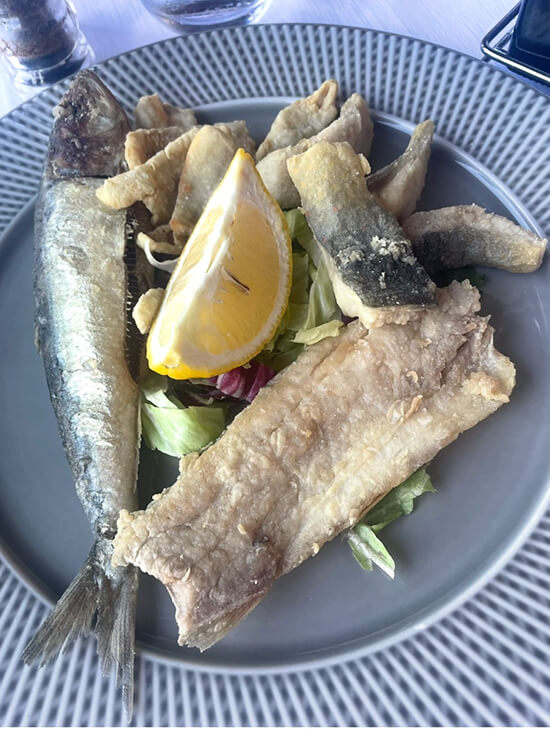
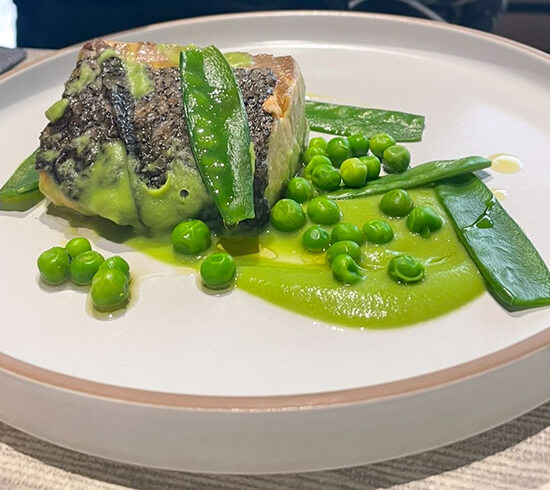
If you do visit Armani Silos, cap your visit with a meal at the chic Armani Cafe. Delicious seafood dishes include the salmon on a puree of green peas or branzino, the fish elegantly plated. The risotto Armani is the best risotto I have ever had. It doesn’t need to be eaten with anything, it’s that good. The verdure grigliate, topped with a few edible flowers, redefines grilled vegetables in my book. The panna cotta featured the sweetest strawberries we have ever eaten. Even the bottles of Armani water, frizzante or still, are so stylish.
For me, an experience of Milan is not complete without a trip to nearby Lake Como. It is almost impossible to communicate in words the grandeur of the mountains that flank a sapphire lake, with charming towns and villages nestled on its slopes.
over Milan.
Back in the day, my sister and I simply hopped on a train and enjoyed walking the narrow streets of the old town of Como. They will lead you down to that lakeshore where you can spend hours staring at the water, the swans, the seaplanes, the mountains with bands of clouds. On this trip, I hired a van to take us around the lake from Como to the very beautiful Bellagio. It is filled with artisanal shops of silk and linen clothing, such as the very lovely Carolina boutique, whose designer is from outside Naples. An outdoor market has stalls of pretty flower accessories where real blooms are set in resin. Even items as simple as painted stones will have you reaching for your wallet.
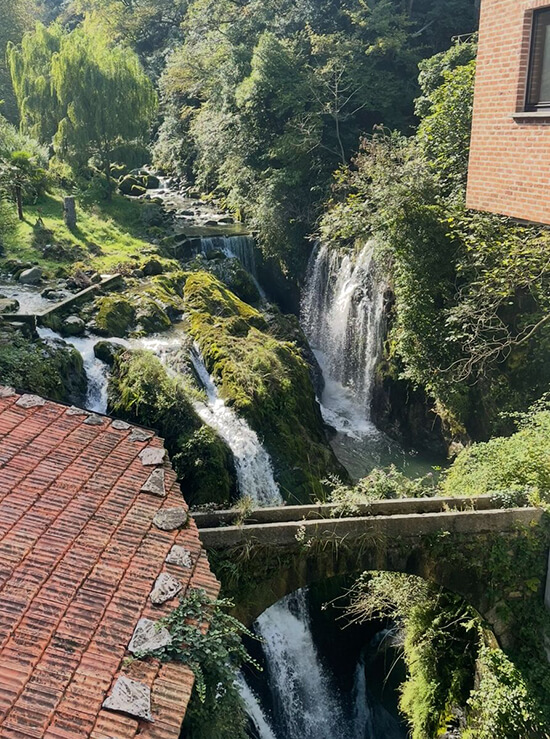
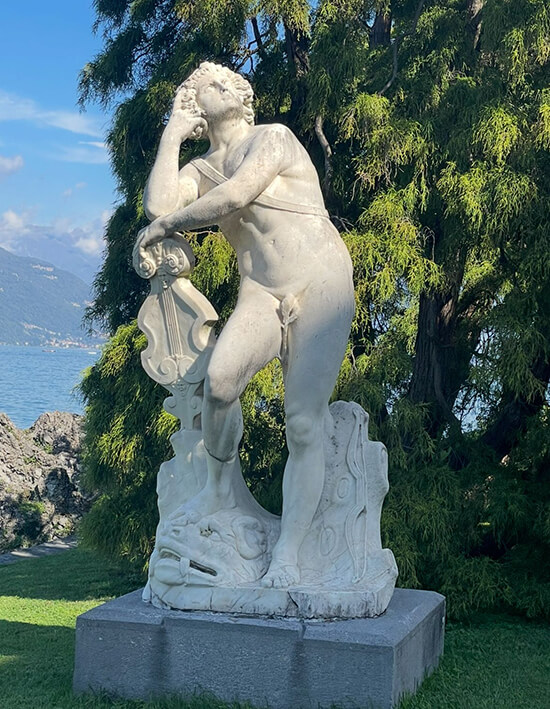
The lakeside Villa Melzi garden in Como is, to me, even prettier than some of the renowned gardens we visited elsewhere on this trip. Como has other towns worth visiting but to see them all, you need to stay overnight. Ferries make crossing the lake easy.
From a building boom in the ‘50s to a fashion hub, from architectural icons to the creation of Salon di Mobile, Milan seeks to lead in innovation. The immensely popular furniture and furnishing event, Salon di Mobile, now draws as many visitors in February as Milan Fashion Week does in September. Both events are accompanied by traffic jams where taxis become scarce while people from all over the world gather to start a conversation on art and its directions.
This month’s Fashion Week is somewhat saddened by the absence of the beloved Giorgio Armani, whose runway shows and retrospective exhibit at the Pinacoteca in Brera will proceed as scheduled. But just as the future of the Armani group relies on some kind of reinvention, Milan moves ever forward while retaining its past.