
Pagtatagpo: When torch, burlap, and imagination meet
The medium is the message and in the case of Pagtatagpo, which will be unveiled on Feb. 3 at Likhang Filipino, three distinct styles and mediums will converge and collide—and celebrate their differences. A tripartite artistic conference, if you will.
“Art Fair sa Likhang Filipino,” in cooperation with Vetted and Salcedo Auctions, proudly presents Pagtatagpo, a three-man show bringing together works by Lynyrd Paras, Marco Santos, and Vien Valencia. The exhibition runs from Feb. 3 to 7, at Hall 1 of the newly inaugurated Likhang Filipino Exhibition Hall (formerly PhilTrade Center) on Roxas Boulevard, Manila, with part of the proceeds benefiting Fashion Aid Philippines.
Translating to “meeting” or “convergence,” Pagtatagpo, according to Jonathan Matti of Vetted, “reflects both a literal and metaphorical crossing of paths—three artists at different stages of their artistic journeys, intersecting through shared space, material inquiry and personal reflection.”
“The three artists were chosen because they approach the Filipino identity from a distinct yet complimentary way. Though their mediums and language of art differ, their shared perspectives are amplified in Pagtatagpo. It is about moments of meeting, shared histories and emotions that converge in a joint statement of unity,” he adds.
Torch
For Marco Santos, Pagtatagpo is an encounter with an artistic self, many times removed from his previous life as a corporate executive.
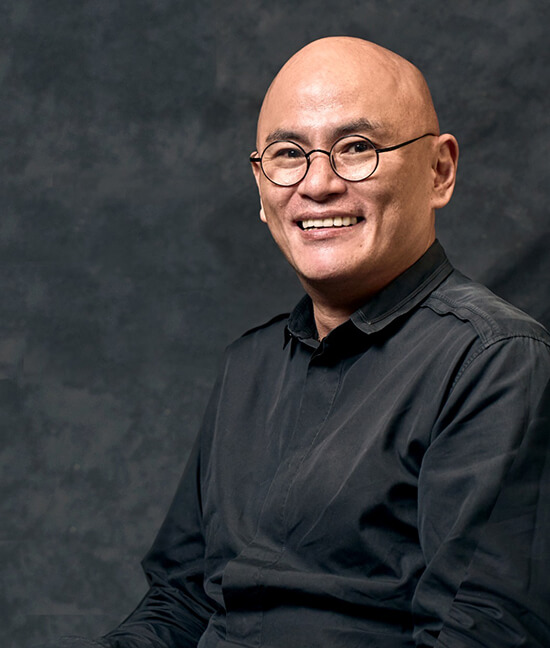
“The torch is my brush,” he declares.
The torch became his flaming wand after seeing piles of empty gin bottles in his home. He began experimenting—burning and painting their surfaces to create unexpected textures and forms. What began as tinkering soon developed into a focused practice.
“The torch was really a discovery,” he shares. “I realized it was my ‘paintbrush,’ I could create with it...”
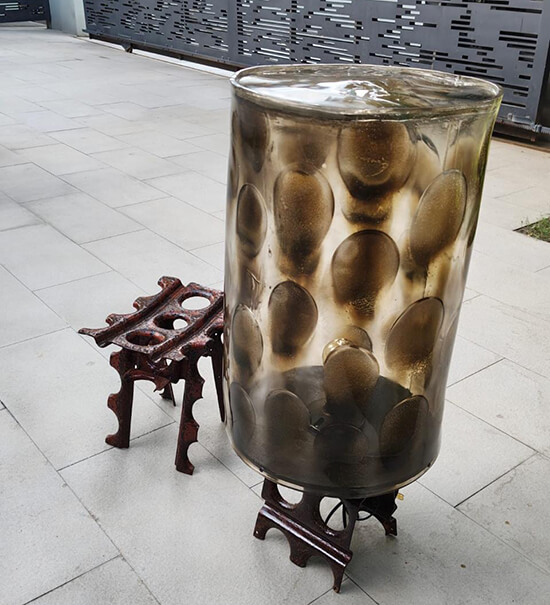
“Fire is not only destructive, but also an additive. It purifies, enhances and forces the medium to evolve into something else,” he muses.
Indeed, he was illuminated by his torch.
Since then, Santos has expanded his materials to include acrylic sheets, wood, glass, and Marston mats, while maintaining a singular technique: drawing with fire. This approach has also led him toward functional art, particularly through his work with Marston mats, where form, utility, and process converge.
Burlap
Vien Valencia, recipient of the CCP Thirteen Artists Award in 2024, also works with found materials—most notably burlap, which he repurposes as a painting surface. Even the burlap itself had no initial purpose when he began collecting it years ago.
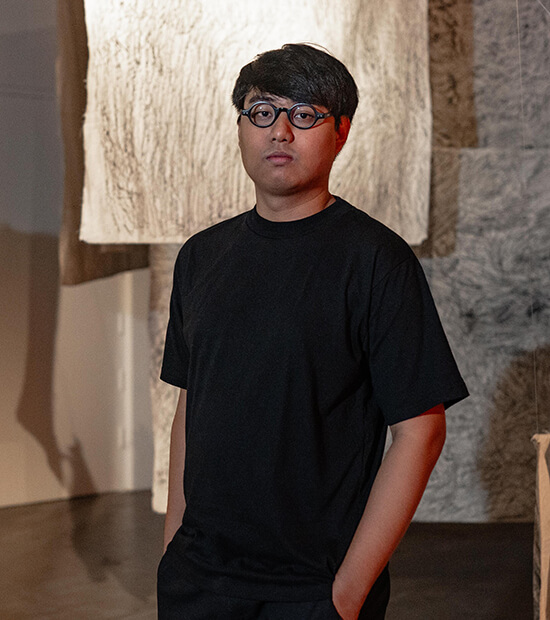
“I just like the texture, and the fact that it’s organic,” Valencia explains. Over time, it naturally evolved into his canvas of choice.
“I started collecting jute sacks from public markets, those used to carry nuts, coffee beans, rice, without a clear plan at first,” he shares. “I just had a sense that the material would eventually find its way into my work. Over time, I began to explore burlap not just as a found object but as a surface, treating it as a canvas for painting.”
What attracted him to his material, which I personally associate with sako? Though seemingly lowly, the sako bore the staple sustenance of Filipinos—rice.
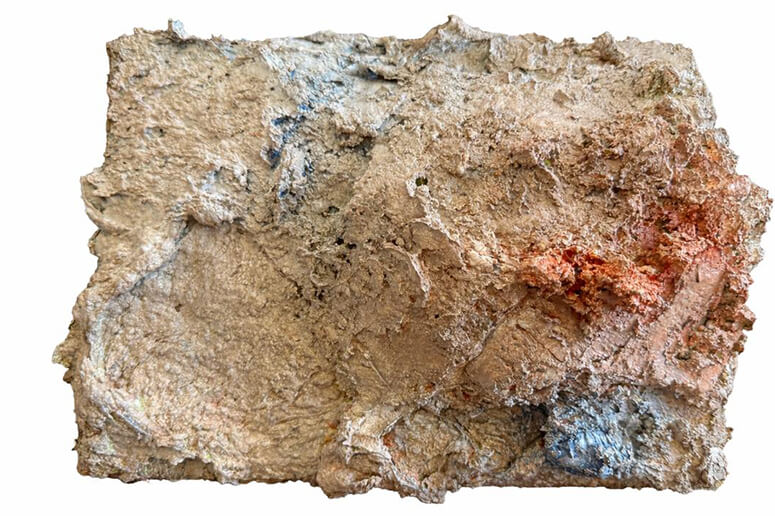
“What draws me to burlap is its history of use: it is meant for transport, for carrying and moving goods from one place to another. It’s a material associated with travel, labor, circulation, and exchange rather than permanence or display. That context matters to me. When I paint on burlap, the surface already holds traces of movement and use, it has passed through many hands and spaces before becoming part of an artwork.
“It reflects my ongoing interest in materials that are ‘in transit’ and how they can hold memory of movement and labor within them,” Valencia elaborates.
His compositions draw from the urban environment—rust, rot, and painted surfaces—translated into gestural forms.
Imagination
Like Valencia, Lynyrd Paras is also a CCP Thirteen Artists Award recipient, and for him, Pagtatagpo carries deep personal resonance, reflecting an inward and outward convergence.
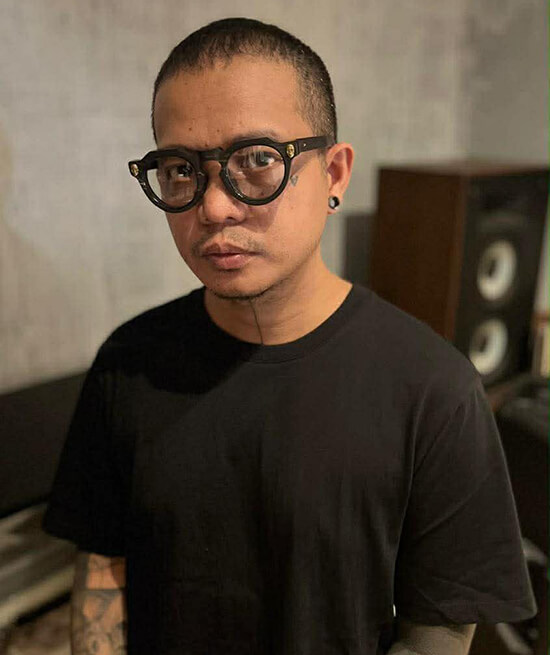
“Pinipinta ko kung ano ang nasa loob ko ngayon, at ano ang nakapaligid sa akin,” Paras reflects. “Hindi naman ako gumagawa ng pang-dekorasyon, kung ‘di yung kasaysayan ng mundo, ng sarili natin. Ang sarap niyang pag-isahin.”
Having navigated years of chaos and uncertainty, he arrives at a peaceful truce between the chaos around him and his internal landscape.
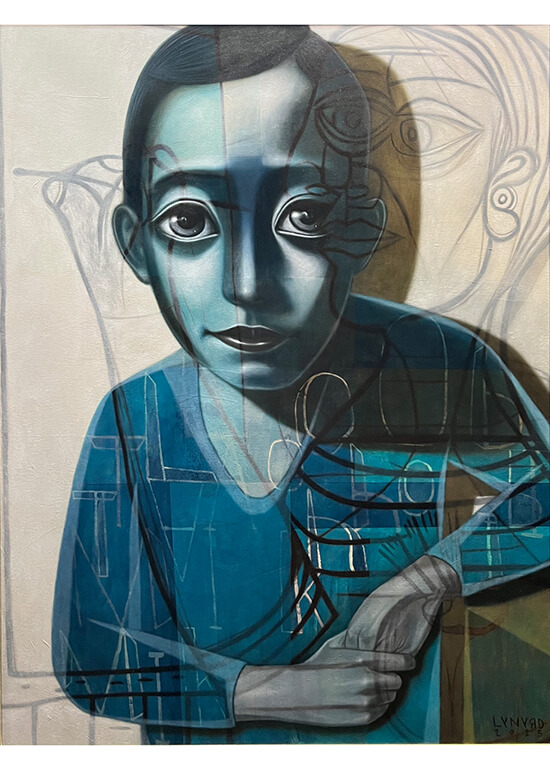
“Maraming bagay ang nakaka-apekto sa paggawa ng art, para sa akin ang pinaka-importanteng bagay ay ang loob ng sarili. Hindi basta basta nakikita ng mata ang isip at pakiramdam ng tao. Ang paglipat ng pakiramdam, isipan at buhay sa pyesa ay katumbas ng hindi mo pagpikit kahit madilim ang paligid. Ang dekorasyon ay para lamang sa ibabaw ng mata.”
Rendezvous
Pagtatagpo is ultimately a rendezvous—of artists, materials, methods, and moments—inviting viewers to reflect on how paths intersect, diverge, and find meaning through shared space.
It would be more than just a meeting place.