

The many storied layers of Rome
Just as in a many a layered lasagna, timpano, or tiramisu, Rome cannot be tasted in one bite. The city was built layer upon layer over millennia, so that excavations yield a strata of older structures underneath. As when you savor a spoonful of tiramisu, where coffee liqueur-soaked ladyfingers vie for your taste buds with rich mascarpone and bitter cocoa, so the many facets of Rome crammed into its spaces demand your careful attention. For culture vultures, it’s hard to take Rome casually when so many jewels of architecture and art are begging to be revealed. Add to that the Roman art of living where the simplest yet most perfect of meals, followed by the most ordinary of pleasures like the passeggiata—a stroll through cobblestoned streets—are sublime.
My experience of Rome, having visited several times through the decades, is also layered. In my teens the wonder of Rome lay in shops like Fiorucci and Sportmax offering trendy and affordable fashion (yes, back then!). To stretch our budget, we alternated days of sightseeing with shopping. By the nth church I concluded, with my blissful lack of appreciation, that all churches look the same. Which is not to say, 40-plus years later, that you won’t get church or gallery fatigue if you pack your itinerary with the myriad churches, gallerias, palazzos and piazzas. But at least I now view the gorgeous ruins and Baroque architecture, with everything else in between, as more than just a way to stay away from the Via Del Corso and other temples of fashion.
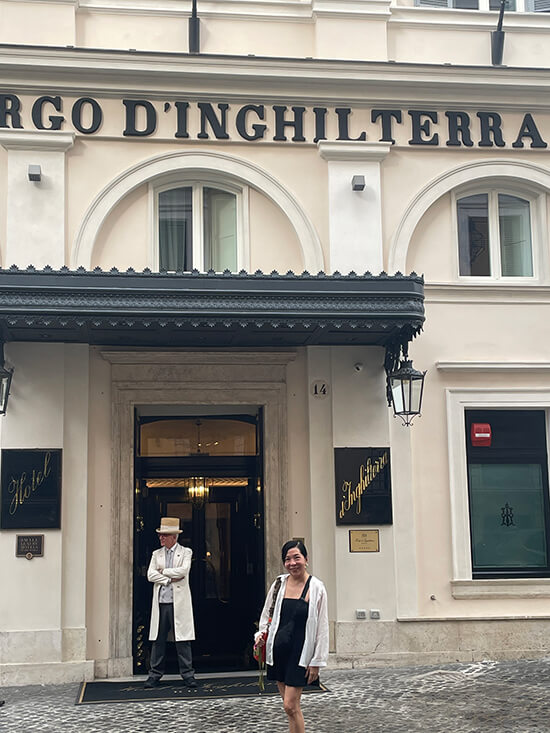
When my sister and I were in our 20s, running our eponymous Vicky&Letlet Veloso boutiques, trips to Europe were both work and play. Italy was where we stayed the longest, and not just because of the fashion-lined streets surrounding the D’Inghilterra hotel where we always stayed. Nor was it because the Trevi fountain was a stone’s throw away or the presence of handsome carabinieri. Mainly, Rome was far less expensive than Paris or London, which we also needed to visit for their own fashion points of view.
In the early 2000s, I was back in Rome for the first part of my honeymoon. As fate would have it, my husband Roberto had lived, studied and worked in Rome when his father, the late Sergio A. Barrera, was Ambassador to Italy. Through his eyes I uncovered yet other layers of Rome, the lesser-traveled paths into a university student’s world that included the bars of Campo di Fiori where some of his schoolmates continued to work. We viewed the city from the hills, Gianicolo in particular, where the only other people were also couples on dates. We skipped the Vatican and Sistine Chapel, having already visited them a number of times. But we did step into the magnificent Pantheon every time we passed it, to simply marvel at that dome and its light-filled oculus. Until just a few years ago, entry was still free of charge.
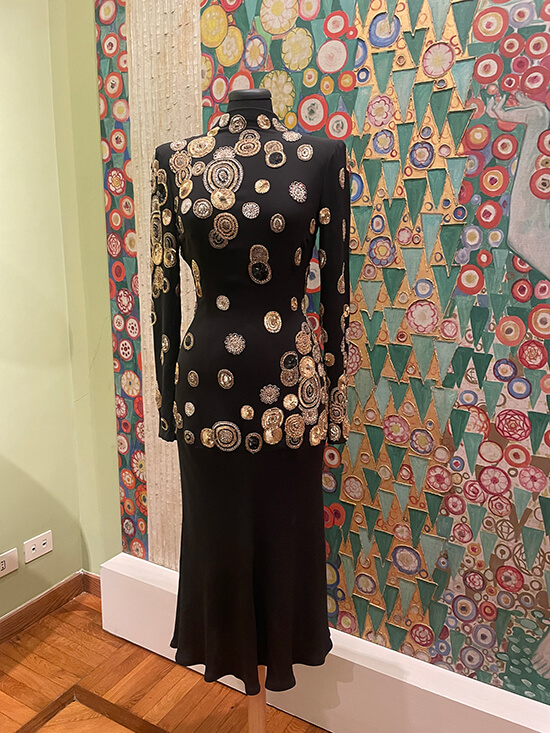
This year finds me back with the whole family, the first visit for our kids. The trip is our daughter Hannah’s college graduation gift. She crafted an itinerary as meticulously as the embellishment of her couture gowns. Arranged according to area, each day was filled with visits to ancient and contemporary treasures all housed within that iconic Roman architecture.
So much of the beauty of Rome can be imbibed by just leisurely walking the same cobblestone streets over and over again. While there are inevitable changes, and brands I loved such as Beltrami have disappeared, newer ones have taken their place. Amidst the gaggle of tourists wherever you go, you will enjoy watching the locals nonchalantly going about their way. You will identify them by that air of sprezzatura, or the art of making everything look easy. Often clad in wrinkled linen and high heels, their fashion sense exemplifies that “fine Italian hand” that pertains not just to handwriting but also to craftsmanship.
Since Rome is smothered by tourists, the best way to appreciate the most popular of sites remains early in the morning and even at midnight. That means the Trevi Fountain at dawn or the Colosseum late in the afternoon. But there are options to all this madness. Since we chose to descend on the city’s most loved attractions away from peak times, that allowed us to walk through many of its most quintessentially Roman streets, full of charm yet devoid of tourists.
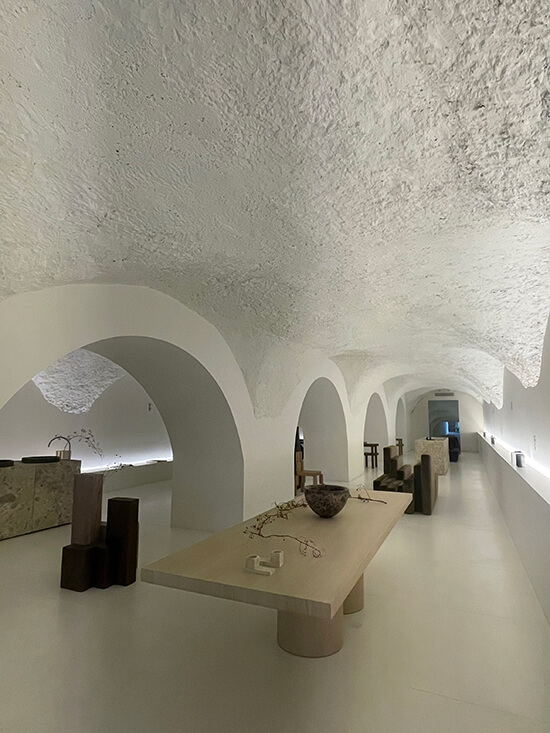
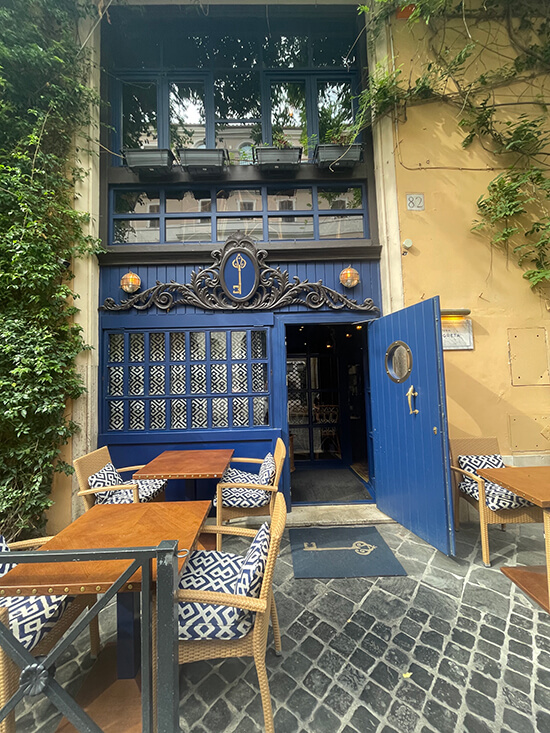
On our first day, we walked to the top of the Spanish steps and turned left, walking down a tree-lined road that curved past the Borghese gardens, fountains, and sculptures to the Piazza del Popolo. Instead of heading out through the popular Via Del Corso, we went through the Via Margutta, considered the loveliest street in all of Rome. Here, a long and narrow, curving path takes you past gorgeous vine-covered structures in shades of mustard and terracotta. These house art galleries, quietly upscale stores selling fashion, jewelry, and home furnishing items that qualify as art; architecture and interior designer offices; and restaurants that go beyond the typical trattoria. You have seemingly wandered off the beaten path, yet are in the true heart of Rome.
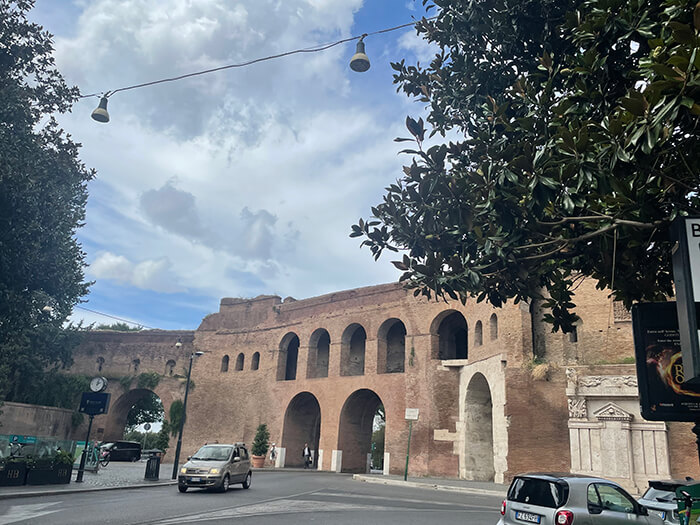
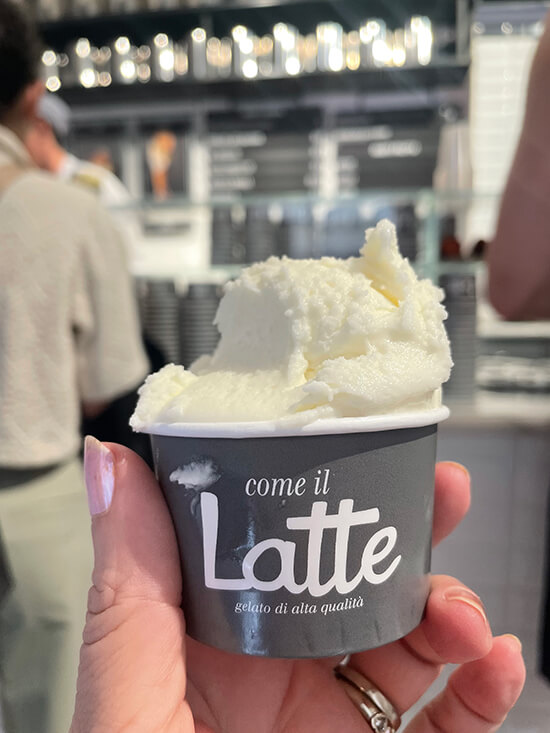
Another lovely area filled with gems is the Via Veneto, more famous in the past than today. You can walk up this wide avenue past the Capuchin crypts and the American Embassy, to reach the picturesque aqueducts that separate the road from the Borghese gardens, then go off on the Via Boncompagni to visit the glorious textile store Aston and the little-appreciated Ludovisi museum. The latter is a palazzo that was home to a prince and princess who did not have children despite commissioning a hauntingly beautiful baby’s crib. It is a worthy detour for lovers of fashion and art, and nearby is Come Il Latte, one of the most highly rated gelaterias in the city, where the fruit sorbets are divine.
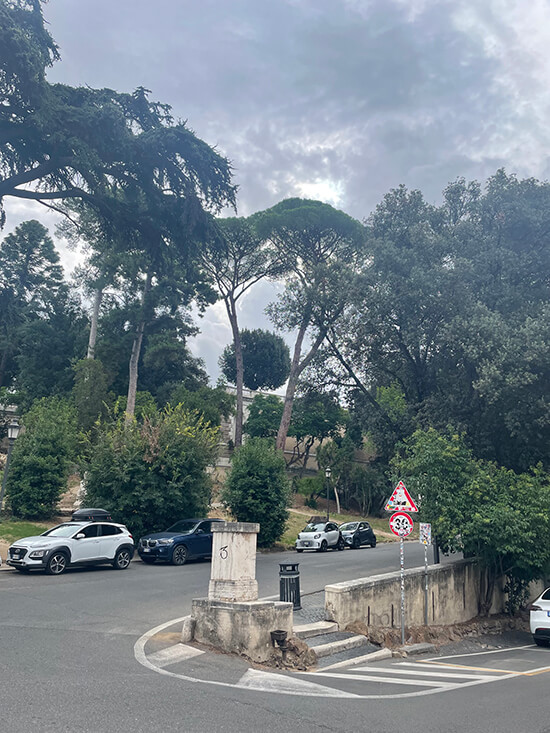
The Rome I see today is one viewed from the eyes and perspective of my three Gen Z children. Unlike my 17-year-old self of long ago, they already have the art appreciation it took me decades to acquire. Digital natives, they scour social media for worthy places to visit, supported by reviews of fellow travelers from all over the world.
The irony of this is while being warned to avoid the “tourist traps,” in heavily tourism-dependent Rome, almost every restaurant and gelato bar can be regarded as a tourist trap. Common sense dictates that the closer you are to a popular site, the more expensive and perhaps inauthentic these places will be. Yet a huge 8 euro serving of coconut, almond, and white chocolate gelato near the Trevi fountain was far more delicious for me than the 3 euro, “truer,” lighter gelato I had at some of the venerated, highly rated gelato shrines.
Then, to find the iconic Caffe Greco on the Via Condotti—a former haunt of Keats, Byron, Goethe, Ibsen, and Nietzsche—lumped in with other tourist traps was at odds with my literary self and my decades of loving this historical, oldest bar in Rome. In the end, you decide for yourself which faceted layer of the city pleases you best, and if a younger generation steers clear of Caffe Greco that means a higher chance of me snagging a table for myself.
In a Jubilee year like 2025, Catholics can swell the number of tourists, and it takes a bit of wise planning to deal with the crowds, the pickpockets, and the weather, although temperatures have cooled down in September. Still, Rome remains a joy to visit, and though September is at the tail end of high season, there were far less people than I was expecting at the Spanish steps and elsewhere. To me, the number of people felt just about the same as on previous spring and summer visits.
Whether you zip through it causally, like those who scrape off the cheesy topping of a lasagna or savor it slowly, dissecting the full flavors of each layer of a cassata, Rome is a place you will never tire of visiting and revisiting. There is always a new layer to be revealed and enjoyed. They call Rome the Eternal City, and it’s easy to see why. It is forever ancient, and also forever new.