
Decency in the time of TikTok
Class and breeding—no, not Jane Austen’s matchmaking obsessions or the survivalist’s fantasy of repopulating Earth after a zombie apocalypse, but something else entirely.
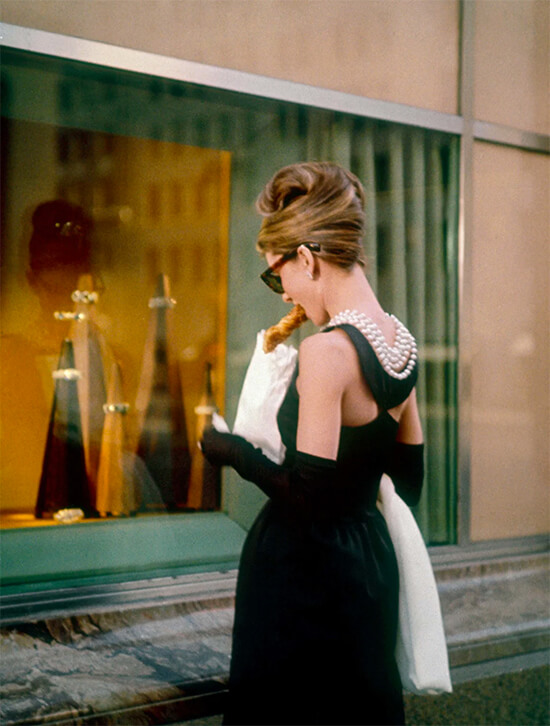
I’m referring to class as elegance, taste, restraint. I’m picturing Audrey Hepburn having Breakfast at Tiffany’s, not Tony Montana (a.k.a. Scarface) soaking in a huge tub wearing bling and smoking a cigar while the champagne chills in a bucket of ice.
Breeding means good manners, civility, the ability to argue without sounding like a Twitter troll with unli data. It’s Shakespeare’s “bearing,” a lawyer’s “countenance,” or a crossword puzzle solver’s “mien.” In other words, it’s not just how you shine under the spotlight, but how you carry yourself when you’re simply in the background.
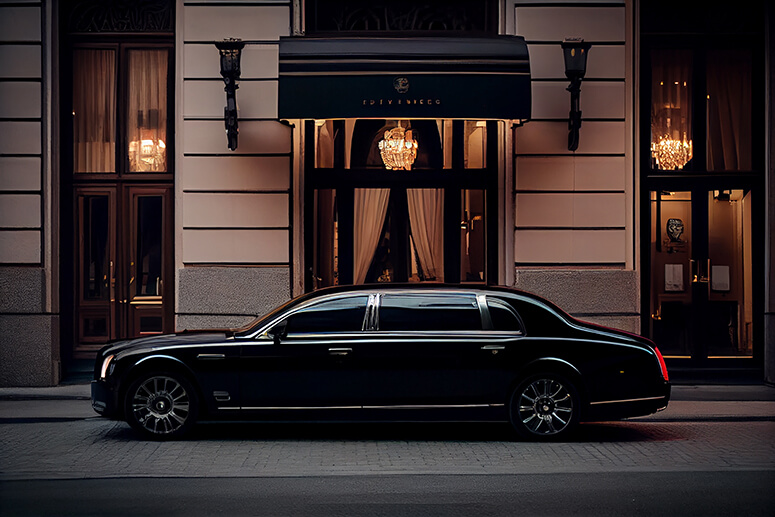
In the Philippines, however, “class” may be confused with “cash.” A Maybach in the driveway (along with a fleet of luxury vehicles) is brandished as proof of refinement, even if the owners are being investigated for graft before the Senate. For that matter, not knowing what a Maybach is does not make one plebeian.
True breeding is quieter, more refined. It’s success without the cheer team or coterie of sycophants; education without condescension; disagreement without decibels or violence. It means your parents raised you well.
The trouble is, somewhere between dial-up Internet and TikTok, something got lost in translation. Today, decency is as rare as “honest politicians”—a fine example of an oxymoron, if you ask me.
Scroll through the comments sections of FB, Insta, or X and you’ll see it (Maine would know)—raw vitriol, manners missing in action, and insults so baroque Shakespeare himself might as well have written them. After all, the Bard of Avon did invent “You scullion! You rampallian! You fustilarian!” It doesn’t even matter if the posts are true or accurate.

Of course, no one’s asking women to turn into Emily Post, who wrote Etiquette in Society, in Business, in Politics, and at Home in 1922, or Laura Windsor, the real-life etiquette coach on Netflix’s Bridgerton series. They may be the crowned Queens of Etiquette, but the bar is set pretty low. At least don’t be that influencer whose post goes viral only because of a nip slip (baktong, in Tagalog slang) or the dreaded camel toe.
For men, the options are equally wide-ranging. On one end, there’s Peter Post—Emily’s great-grandson (duh!)—who kept the family business alive with books like Essential Manners for Men and The Etiquette Advantage in Business. Before him was Cecil B. Hartley, whose 19th-century Gentlemen’s Book of Etiquette and Manual of Politeness advised men to act less like cavemen.
On the other end of the spectrum, there’s Queer Eye for the Straight Guy, which, while not a manual in the Post sense, teaches men something equally important, i.e., how to look sharp, smell human, and hold a conversation that doesn’t begin with “bro.” Honestly, that’s already a big upgrade.

Were people really more decent in the past? Nostalgia says yes: gentlemen tipped hats (and removed them indoors), children said “mano po” to solicit the blessing of elders, and strangers gave up bus seats without impure motives. But let’s not get too misty-eyed. The same “golden age” also had duels over a stolen kiss and corporal punishment for kids who were left-handed or “slow.” Maybe the past wasn’t more decent, just better choreographed.
Today’s decency battles are fought over smaller, stranger hills. Should youngsters punctuate every sentence with “po”? Not everyone in the country subscribes to this practice. Should you dress decently for church service or shopping? I remember a parish priest who publicly shamed women whom he deemed inappropriately dressed for Mass by denying them Holy Communion. And this was before the era of social media!
In the realm of remote work, shoved into our consciousness during the COVID-19 pandemic, inconsiderate brutes kept their Zoom or Skype mic on while blending smoothies or hollering at the neighbor’s dog. Not cool. Video calls became the norm, but you passed the test if you at least pretended you were actually in the office, even if you were wearing boxer shorts with your suit.

In the Philippines, breaches of decency play out like recurring gags in a sitcom: the driver who cuts across five lanes, the politician who pockets public funds with all the subtlety of Gollum clutching his “precious,” the bystander who live-streams an accident instead of helping out. What we praise as diskarte (street smarts) is often just selfish improvisation, an illustration of our “crab mentality.”
The internet hasn’t really made us smarter; it has only made the world louder. Social media has given everyone the chance to say anything, anytime. Every phone has become a loudspeaker, and opinions battle for attention. In the process, common sense is often the first to disappear, and simple decency soon follows. We’ve exchanged handwritten letters for angry posts, Sunday gatherings for online quarrels, and friendly neighborhood marites for endless viral gossip. What used to take courage, like in publicly shaming someone, now only requires a stable internet connection.
And yet, not all is lost. Decency, like the Jedi, may be scattered but not extinct. You still see it: someone returning a lost wallet or doing a good deed without posting about it; a customer returning excess change; a seasoned driver being patient with a newbie. These small gestures are invisible or immune to algorithms, but they prove that there’s hope for humanity after all.

Maybe Harper Lee’s Atticus Finch had it right: “The one thing that does not abide by majority rule is a person’s conscience.” You don’t have To Kill a Mockingbird to realize that conscience is inconvenient, unglamorous, but quietly revolutionary. In a world where rudeness trends faster than kindness, those little acts of conscience are the real rebellions.
So perhaps “uncommon” decency isn’t dead. It’s just waiting—like Aragorn and Gimli waiting at Helm’s Deep for Gandalf—on the first light of the fifth day. The question is: will we be wise enough to recognize it when the dawn breaks??