[OPINION] Peso staying above P60:$1? It may just be wishful thinking
The Palace spokesperson said something odd last week. She announced that President Ferdinand "Bongbong" Marcos Jr. does not want the peso to fall to P60:$1.
A few news outlets carried those remarks. The matter, however, eventually fell through the usual cracks in the daily news cycle.
It was not clear from the spokesperson’s account if the President was ordering the BSP to intervene to stop the peso’s fall or was simply indulging in wishful thinking. An exchange rate of P60:$1 has become some sort of psychological threshold. It is also a real peril: Beyond that point, the exchange rate will have a real impact on domestic inflation, considering our import dependence on the most basic things.
The BSP, for its part, dutifully assured that the rate of P60:$1 is not going to happen “anytime soon.” That being said, a number of bank economists estimate that we will end this year with an exchange rate of about P61:$1.
The odd part about the Palace spokesperson’s remarks is that this is something that is never said, never publicly admitted. As a matter of formal policy, the country observes a market-determined exchange rate. The currency’s exchange rate moves according to market trends.
A market-determined exchange rate is not merely the fashion. It is the most prudent policy to maintain.
Managing the exchange rate can become very costly for any central bank. In order to prevent the exchange rate from sliding, the central bank will have to create artificial demand by buying a sagging currency and selling a rising one. No commercial bank will do that. It is a losing proposition.
Moreover, there is peril in keeping an artificial exchange rate. Recall that the Asian Financial Crisis of 1997 happened because Thai monetary authorities were manipulating the exchange rate and keeping the baht overvalued. Eventually, speculative pressure built up and the dam broke. The baht was forced to devaluate sharply, dragging the regional financial market into chaos.
There are numerous large trends forcing the peso’s exchange rate to deteriorate against the dollar. These trends could not be concealed from an informed market.
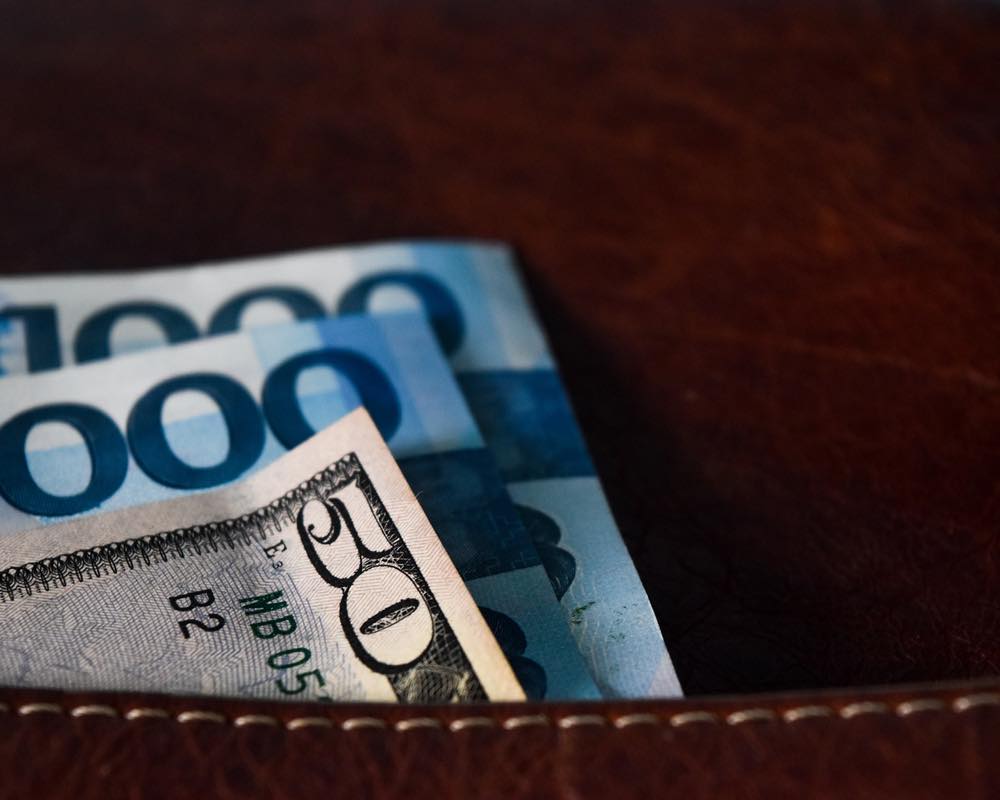
The biggest factor undermining the peso’s exchange value is our mounting debt.
Our outstanding public debt now stands at P17.6 trillion. In June 2022, when the Marcos II administration took over, the public debt per capita stood at P115,304. In just three years, per capita debt zoomed to P155,000. And we do not even have a pandemic to give us an excuse for fiscal profligacy.
New bond sales by the national government will add to the debt stock. The fact that two-thirds of our public debt is peso-denominated might seem reassuring at first blush. But there is also a long-term cost to this. Public borrowing crowds out the private sector from the debt market, inhibiting private investments.
The government is not the most efficient user of a nation’s capital stock—especially one saddled with so much corruption.
The 2026 GAA projects a budget deficit of P1.6 trillion. This is 5.3% of GDP—slightly above what is generally considered the prudential limit.
Our debt-to-GDP ratio is now 63.1%. This, too, exceeds the 60% conventionally regarded as prudent.
On top of it all, our debt is growing at twice the rate of our GDP. The conventional wisdom is that the domestic economy should outgrow the debt. In our present case, the debt is racing past our weakening domestic economic expansion.
To make things worse, our economy is becoming increasingly import-dependent. Our agriculture’s miserable performance caused us to import basic foodstuff. We import nearly all of our fossil fuels. We are not industrializing fast enough to substitute what we import. Our exports are negligible.
Long-term trends, therefore, do not favor an appreciating peso. But devaluation will magnify all the negative impacts of these trends. Our imported inputs will rise even more sharply, fueling domestic inflation. With hardly any exports, a weaker currency will not improve our competitiveness.
Like the President, all of us wish the peso would not fall below the P60:$1 threshold. But we will all be indulging in pure wishful thinking if we do not comprehensively address the structural weaknesses of our economy.
The administration recently convened business leaders to promise “big, bold reforms”—although no details were made public about what these reforms could possibly be. This promise calls up echoes of the “bold reset” the President promised after the unflattering results of the midterm elections. Nothing much happened with that “bold reset.” Instead, the whole nation was engulfed by news about the scale of public works corruption.
We pretty much know what “big, bold reforms” our country needs. We have dozens of think tanks and research groups pointing out the flaws and weaknesses of our economy. What we have always lacked is the political will to do the difficult things that must be done.
Given present circumstances, what businessmen need to see is a clear indication that the administration recognizes that corruption is a systemic problem crying out for a comprehensive solution. We have seen no such indication.
What we do see is an ICI that has lost two of its commissioners, with no one wanting to replace them. What we do see is a Cabinet that could not be revamped because no one wants to replace the incompetents in place.
Disclaimer: The views expressed in this article are those of the author and do not reflect the opinions of PhilSTAR L!fe, its parent company and affiliates, or its staff.