The brutal beauty of Harbin—in layers
I consider myself a seasoned traveler. Not the romanticized, backpack-only kind—I check in luggage proudly, because I believe in options and backup outfits. I’ve traveled through proper winters: Moscow, where the cold feels ideological; Sapporo, where snow falls politely but relentlessly; Toronto in December, which is cheerful but deceptive; and even a full-on Chicago blizzard, which I survived with confidence that now feels wildly misplaced. I thought I understood winter. I thought I respected it. Then I landed in Harbin, and winter laughed in my face.
We deplaned wearing what we Filipinos sincerely believed were jackets. They were light, stylish, and absolutely useless. The flight attendants looked at us with concern usually reserved for people who insist they’re “fine” while clearly not fine. “Please put on warmer clothes now,” they said, with urgency that meant this was not a suggestion but a warning.
At the luggage carousel, reality unfolded in real time. Locals sprang into action, pulling out layers with astonishing speed. Jackets multiplied. Scarves appeared. Hats were yanked on. Gloves snapped into place. All of this happened right there, beside the conveyor belt, under harsh airport lighting. We stood watching, suddenly aware that Harbin was not here to play.
Harbin, a city in northeastern China, is a new experience even for someone who’s been around. This isn’t just cold. This is existential cold. The kind that questions your confidence, your packing skills, and your entire personality. No amount of previous winter travel prepares you for subzero temperatures that feel personal.
I learned quickly that Harbin is not a place for minimalism—or cuteness. You are not here to look chic. You are here to stay alive. Fashion becomes purely theoretical when your survival depends on insulation. This is not about silhouettes or color palettes; this is about whether your body continues to function.
On top, I wore two Uniqlo Ultra Warm Heattech shirts, a cashmere or wool sweater, a down puffer vest, a puffer bomber jacket, and finally my Columbia Icelandite II parka—my main winter armor. Below the waist: two Ultra Warm Heattech leggings, waterproof ski pants bought in Harbin (best impulse purchase, though they looked like pajamas), two pairs of Heattech socks, heated insoles, and waterproof, nonslip fleece-lined boots. The nonslip part is nonnegotiable in Harbin, where slipping on icy sidewalks and breaking a bone is all too common. “Take little steps, walk like a penguin,” our guide Lily advised. With all our layers, one can hardly sprint anyway.
A critical footwear lesson: Size up. Aggressively. I’m a size 35, but in Harbin they sold me a 38—and they were absolutely right. You need space for thick socks, heated insoles, and, crucially, air circulation. Crammed toes are cold toes. Cold toes lead to panic. Panic leads to poor life choices. Vanity has no place in subzero travel.
Accessories mattered just as much—arguably more. A furry hat. A face mask to protect my face from the wind, because apparently nostrils are sensitive and dramatic. Two pairs of gloves: thin Heattech ones so I could operate my phone, and a bulky waterproof pair that made my hands feel like they had joined a boxing gym. But my true MVP was my old COS cashmere scarf—light, deceptively warm, endlessly adaptable. When all else failed, it doubled as face cover, ear warmer, and overall emotional support.
I eventually abandoned the bulky gloves—they were too unwieldy—and instead stuffed my pockets with Japanese heat packs that lasted longer than the ones bought in Harbin. I didn’t bother sticking heat patches to my clothes like some of my travel mates; with all my layers, I was toasty.
One crucial lesson: Insulation is meaningless without protection from the wind. Windproof clothing is nonnegotiable. The cold in Harbin doesn’t sit politely on your skin—it slices through you. Without proper windproof outerwear, all that Heattech is just optimism.
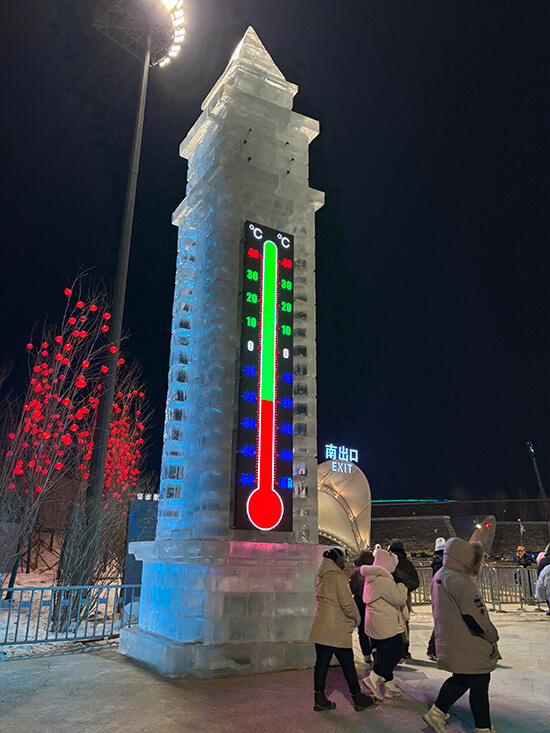
Frozen eyelashes are real. So are frosted eyeglasses. Wearing specs outdoors was a losing battle: lenses fogged, then frosted, then became decorative ice sculptures attached to my face. Visibility was optional. Faith carried me forward.
Dressing for -25°C weather, I learned, is exhausting. Putting on layers is cardio. Taking them off indoors—because every building is heated like it’s fighting the climate—is cardio. Then you put everything back on. Then you strip again to use the toilet. This cycle repeats ad nauseam. Add hot flashes to the mix, and suddenly you are both freezing and overheating.
There is no romanticizing subzero weather. You respect nature, or nature humiliates you.
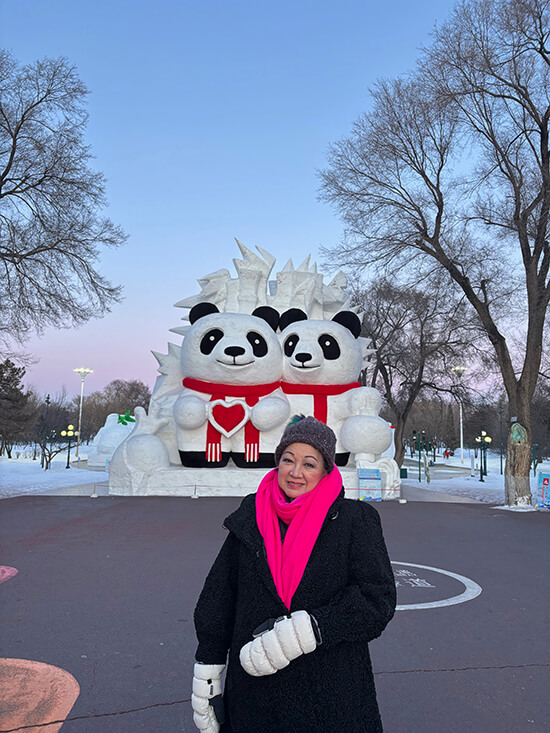
Phones suffer. Batteries drain with shocking enthusiasm. Taking photos with your phone is no joke. You either risk frostbite or end up with blurry photos because your fingers have stopped functioning. Asking someone else to take your picture feels almost criminal—they’re also fighting to keep their fingers. There’s a silent understanding among tourists: We are all struggling; please don’t ask for multiple poses.
You are constantly worried about losing something. A glove. A hat. A scarf. In Harbin, you would rather lose your wallet than your coat or gloves. There were moments when I genuinely thought I might lose my toes to frostbite. And then there’s the spectacular sensation of not feeling your fingers, or your snot freezing mid-breath. So humbling.
And yet—if you are properly dressed, Harbin is a delight.
Somewhere between thawing my fingers indoors and bracing myself to go back out again, our host, former senator Nikki Coseteng, said something that stayed with me: that travel can sharpen gratitude as much as it inspires admiration. She spoke about the cold as a reminder of our good fortune living in the tropics—not as something to romanticize or compare against, but as a way of recalibrating perspective. It wasn’t about idealizing another place, but about recognizing potential—elsewhere and at home. At the time, I nodded, still preoccupied with whether my toes would make it to dinner.
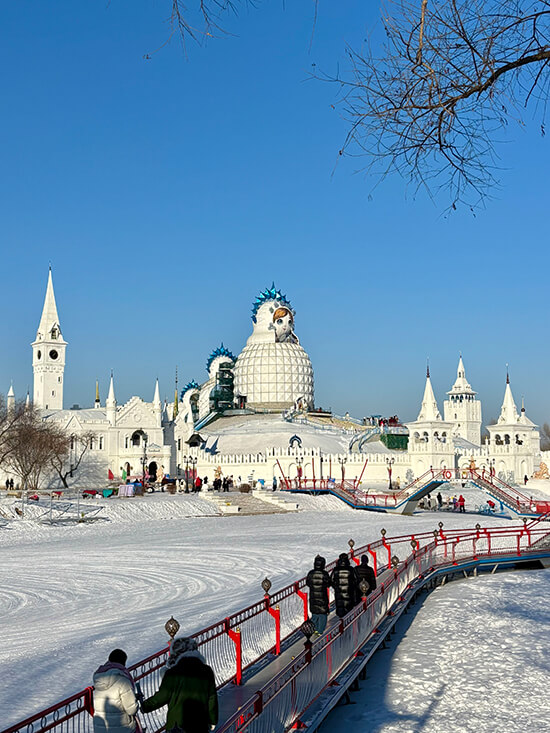
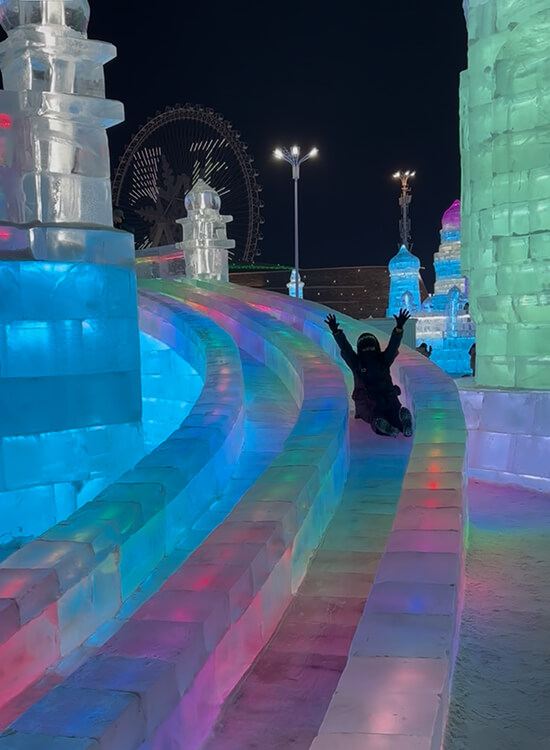
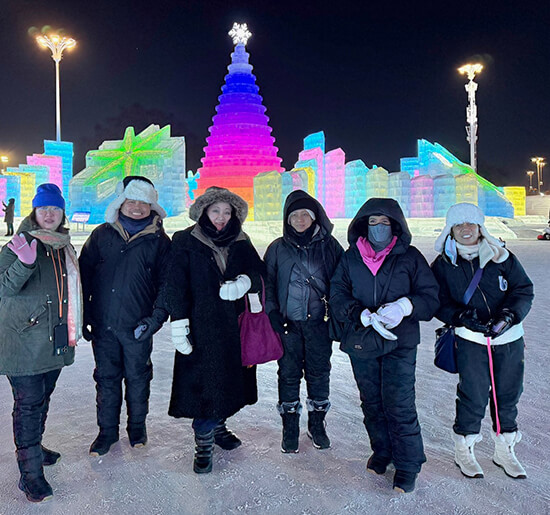
But walking through Harbin Ice and Snow World, I stopped thinking about how cold I was and started thinking about the sheer coordination it must take to build something this temporary, this enterprising, in a climate that allows no margin for error. It’s not merely a tourist attraction; it is a frozen city built on ambition and LED lights. Massive ice structures tower over you, each carved with astonishing precision and lit from within so they glow against the black frigid sky. Walking through it turns you into a kid again, gleefully gliding down a rainbow-lit slide carved from ice. The cold disappears briefly, replaced by awe and the quiet pride of having survived long enough to see it.
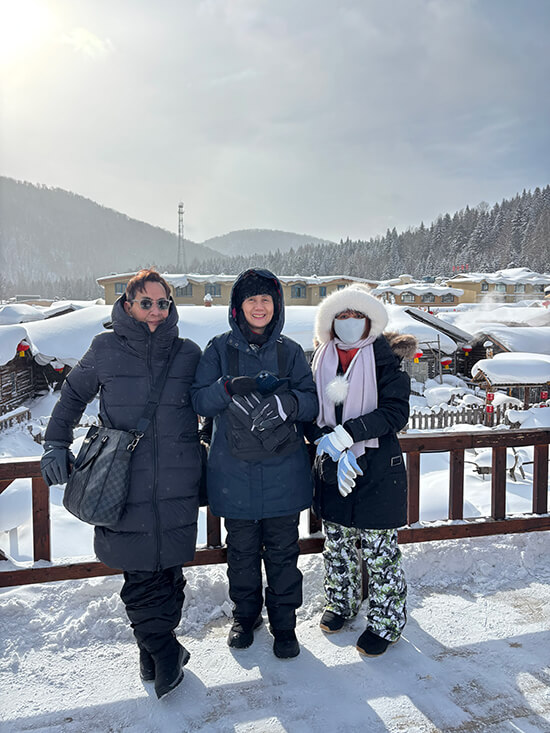
At Yabuli, a few hours away, winter becomes playful. We rode a sleigh pulled by a horse, bundled up like overstuffed parcels, then willingly surrendered our dignity by sitting on inflatable tubes dragged by a tractor across the snow. It was ridiculous. It was joyful. Then, it was a speed ride through the mountain snow on snowmobiles. It was the kind of fun that reminds you that adulthood is optional at minus-whatever degrees.
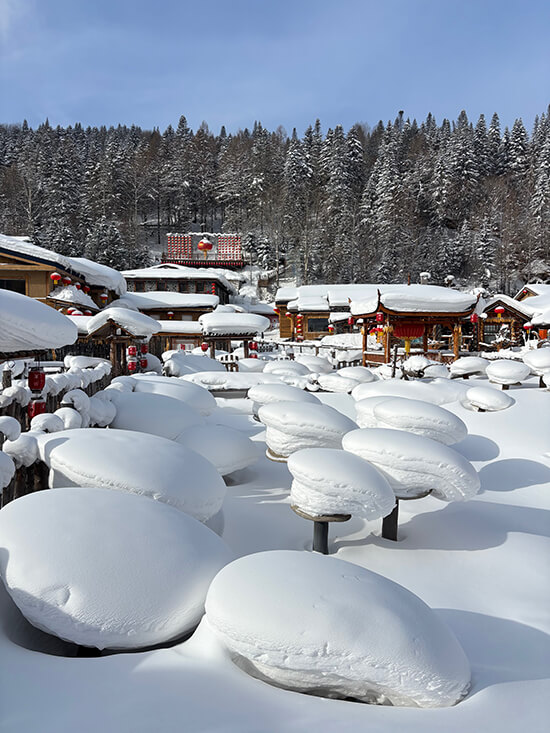
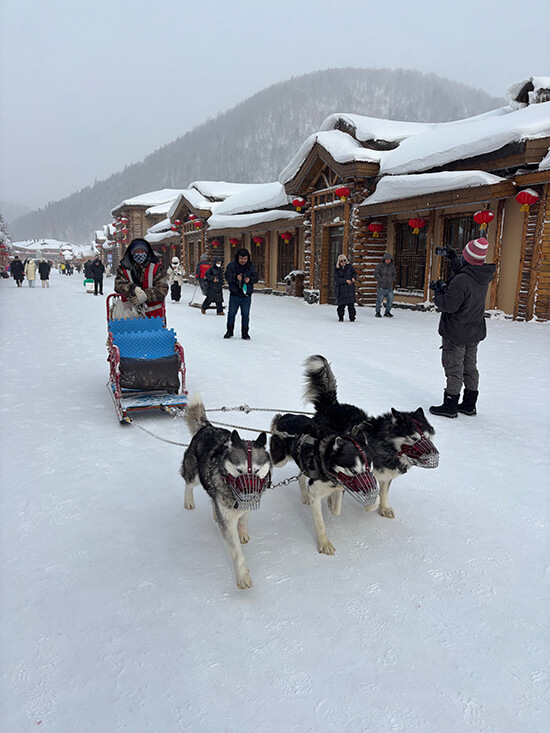
China Snow Town felt like a snow globe someone had shaken just for us. Snow fell gently as we walked through a village where rooftops were piled high with powder, lights glowed warmly from wooden houses, and Alaskan Malamutes and Siberian Huskies pulled sleds with quiet competence. It was cinematic without trying too hard, beautiful in a way that made you slow down despite the cold. At night, neon lights turned the village into an altogether different spectacle.
Sun Island is world-renowned for the Harbin International Snow Sculpture Art Expo. Enormous, intricate works rise from the ground—mythical creatures, architectural forms, surreal scenes—each carved entirely from snow. It’s humbling to see how something so temporary can be so monumental. It was so cold there it felt like walking through a walk-in freezer—only much colder—and for the first time, I felt grateful that this kind of cold was something I could choose to leave.
At Siberian Tiger Park, we encountered the true locals. Beautiful, massive Siberian tigers lounged lazily in the frozen landscape, perfectly adapted to the cold we were still negotiating. Feeding them felt both thrilling and sobering—a reminder that this climate belongs to them, not us.
We visited St. Sophia Cathedral, its green domes dusted with snow and red brick façade standing out dramatically in the evening sky. Around it, tourists posed for elaborate “winter princess” photo shoots—gowns, tiaras, flowing capes—proving that even in brutal cold, humans will find a way to romanticize things, provided they are wearing sufficient thermal underwear underneath.
At Volga Manor, Russian-style architecture sat quietly under blankets of snow. Churches, bridges, and wooden buildings looked austere and cinematic, as if time had slowed down to match the season. It was calm, and oddly soothing in its vastness.
And then there was Central Street—twinkling lights, European façades, music in the air, and the surreal pleasure of strolling in subzero temperatures while eating a popsicle. Logic had left the building. Joy had taken over.
Harbin humbled me. It reminded me that experience doesn’t make you invincible, and that winter—real winter—is not to be underestimated. Dress properly. Windproof everything. Abandon all ideas of looking cute. And Harbin will reward you with beauty so stark, so magical, it feels earned.
And if you see a Filipina waddling by in six layers, cashmere scarf pulled up over her face, pockets stuffed with heat packs, eyelashes frozen, but spirit very much intact—know that she is not trying to be fashionable. She is simply trying to survive.