

Mooncakes and rebellion: Asia’s night of magic and revolt
In this luminous heart of autumn, when the moon swells into a perfect pearl against the velvet sky, Asia pauses.
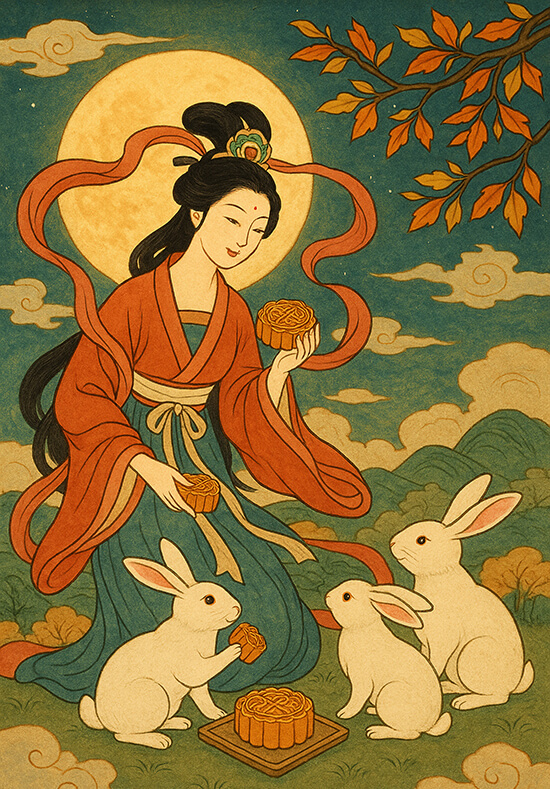
On Oct. 6, this celestial spectacle will ignite the ancient Mid-Autumn Festival (sometimes called "Mooncake Festival"), a harvest celebration so profound it functions as the continent's universal Thanksgiving.
Beneath this luminous orb, families gather, poetic souls compose verses, and children parade with glowing lanterns—all while quietly nibbling on Mooncake pastry that once orchestrated revolutions.
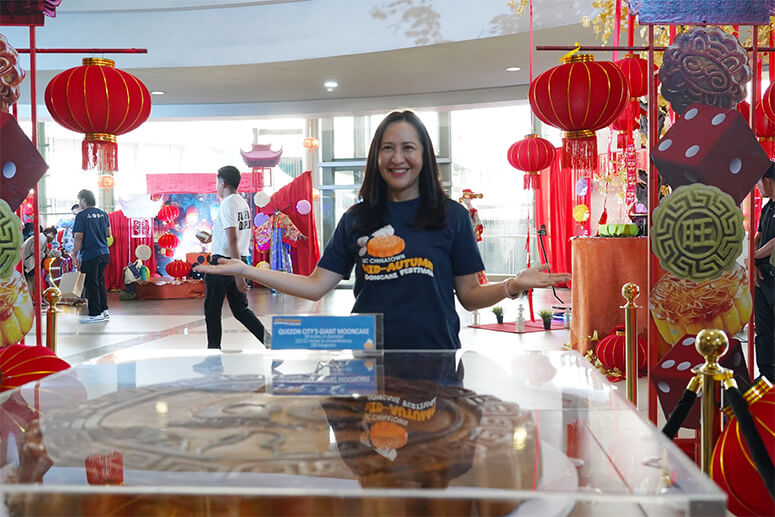
By the way, congratulations to Quezon City Mayor Joy Belmonte for recently hosting the city's first-ever Mooncake Festival celebration in its Banawe district Chinatown. The festival, organized by the Quezon City Tourism Department, featured a 39-inch giant mooncake weighing 100 kilograms, a mooncake dice game, a vibrant lantern parade, and live performances by actors Richard Yap and McCoy De Leon.
There is a subtle, unspoken consensus that the festival’s brilliance is magnified by what it displaces. It arrives as the definitive curtain call on the seventh lunar month, the dreaded "Ghost Month,” when restless spirits are said to walk the earth.
As the full moon rises, it banishes not only the literal darkness but also the spectral unease, restoring order to the universe.
Hay, one can’t help but wish the same luminous power could cleanse our modern corridors of power here in the Philippines from their own vile hauntings—the ephemeral ghastly "Ghost Projects" that consume resources and vanish, and the shapeshifting balimbing "Ghost Leaders" who master the art of ethereal accountability. May the moon, in its unwavering constancy, offer a silent rebuke to such earthly impermanence!
Culinary conspiracies and cunning
The festival’s most delicious paradox is the mooncake—a dense, rich pastry that is both a symbol of unity and once a historical tool of anti-colonial, anti-corruption insurrection.
During the Yuan Dynasty, when China chafed under Mongol rule, the rebel leader Zhu Yuanzhang conceived a brilliant plot. He needed to coordinate a synchronized uprising without alerting the military and political authorities.
The solution was as elegant as it was cunning: secret messages were baked into traditional mooncakes, which every family had. These unsuspecting pastries, exchanged freely as gifts during the festival, carried the call to revolt specifying the date and time.
When the Mid-Autumn night arrived, the rebels, acting as one, launched a successful attack that helped topple the world's biggest ever empire. The very pastries we now slice with ceremonial delicacy were once the encrypted texts of national liberation.
Elsewhere, another revolutionary mind weaponized the festival for morale. The Japanese-born Chinese national hero and Ming Dynasty loyalist warlord Zheng Chenggong, whom the late tycoon John L. Gokongwei, Jr. told me was known as "Koxinga,” was preparing to liberate Taiwan from the Dutch colonizers in the 1600s.
Stationed with his troops in coastal Xiamen City of Fujian province, he saw their morale waning with homesickness as the annual Mid-Autumn Festival approached. His response was not a stern lecture, but a colorful game.
He invented "Pua Tiong Chiu" (called "Bo Bing" in Mandarin)—a raucous dice game where soldiers would gamble for different sizes of mooncakes (from small ones as consolation prizes to the biggest "Chong-Guan" Grand Winner Mooncakes).
The clatter of dice in a porcelain bowl and the joyous shouts replaced the silence of longing.
Koxinga understood a profound truth: sometimes, the path to revolution is paved with lightheartedness. He later succeeded in expelling the Dutch colonizers in the year 1662, a testament that the spirit helped nurture by a simple game can change history.
He didn't want to submit to the Manchu conquerors of China with their new Qing Dynasty, so Koxinga set up his own Han Chinese "Kingdom of Tungning" in Taiwan island and hoping to someday reconquer mainland China for the lost Ming Dynasty.
By the way, before his untimely death due to illness at a young age, only 37, Koxinga had also sent a stern warning to the Spanish colonial government in the Philippines through his envoy, Italian Dominican missionary Vittorio Riccio, demanding payment of tribute and implying protection of the persecuted local ethnic Chinese minority.
Our modern lunar rebellion
So what is our rebellion today? We are not plotting against Mongol cavalry, but against the creeping cynicism of our age. We are not smuggling messages in pastries, but fighting "ghost" projects and errant leaders that lack substance, shame and accountability. Our uprising is to still choose reunion, to still make a wish on a paper lantern, to still laugh with family and friends over an ancient game of dice.
This Oct. 6, as you receive a mooncake—that "sweet, dense symbol of completeness"—consider its revolutionary past and its timeless reminder of Thanksgiving to God for blessings. And if you are offered a chance to play the Hokkien or southern Fujian province traditional game "Pua Tiong Chiu," roll the dice with gusto.
In a world that often feels fragmented, our most defiant act is to choose connection, to find joy in tradition, and to believe, if only for one magical night under the brightest moon of the year, that unity can still orchestrate the impossible.