'Quezon': Flaws and heroism
Filmmaker Jerrold Tarog made history relevant and accessible—again—with Quezon, his biopic on Manuel L. Quezon. Tarog directed the equally successful Heneral Luna and Goyo: Ang Batang Heneral. These obras are called “bayaniverse” films.
Quezon—which opened with a big scene to depict the victory party of Manuel L. Quezon as first president of the Commonwealth in 1935—is about a man’s vision and struggle to achieve independence from American colonial rule. As the film presents historical truths, it also humanizes the mortal, the hero, the narcissist in Manuel L. Quezon.
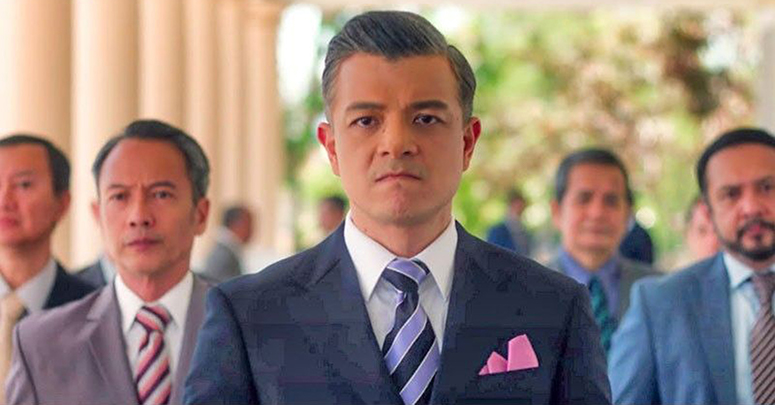
Tarog grippingly provides a compelling portrait of Quezon. In the movie, the protagonist’s toil for independence is as much for the country and for himself. So human, so flawed Quezon is in the lens of Tarog, that the hero of the film is also a master of political maneuvering. Patronage politics was present. And that makes the message of Quezon alarmingly close to present-day politics in the Philippines. Granted political favors were rewarded. How much more now that the alleged corruption in government runs into trillions of pesos?
Jericho Rosales provides an impressive and skillful performance as Quezon. He possesses bravado in his rhetoric as the protagonist. His glib and gab are excellent, even the intonation of his voice commands power. Power—the love of it—seems to sustain Quezon. And Rosales displays utter power in his performance. There’s even braggadocio in his silence. He has an unfathomable depth when he acts, even the swagger of his hands commands control, authority, supremacy.
You either love or hate him in his arrogance, particularly in his love-hate relationship with Sergio Osmeña, portrayed with realistic warmth and enthralling candor by Romnick Sarmenta.
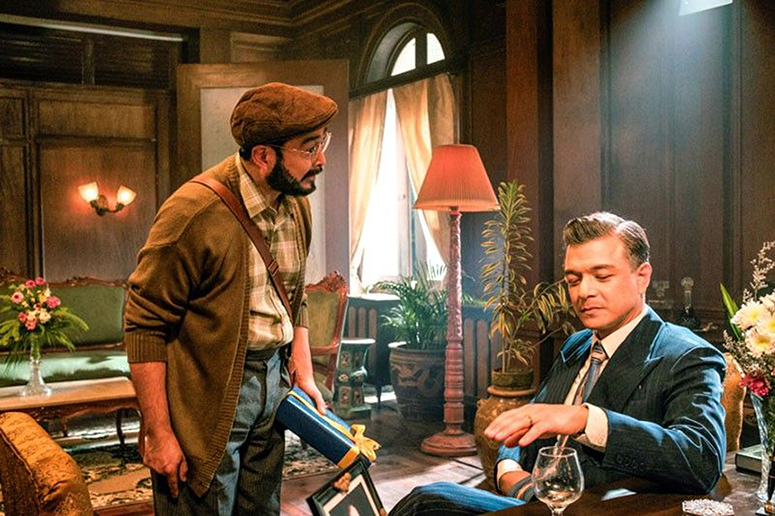
“Hindi ako kulangot. Huwag mo akong binibilog,” Sarmenta (as Osmeña) told Rosales (as Quezon). The line tickled the funny bones of the audience at the jampacked Cinema 2 of Power Plant last Saturday. True, Quezon is also entertaining. Of the three “bayaniverse” films of Tarog for TBA Studios, methinks Quezon provides the most hilarity. Perhaps because Tarog wants the audience to laugh at the circus that is politics. Or maybe because the filmmaker wants the audience to laugh at themselves because they, too, are part of the circus by electing clowns. It is a tale as old as time.
The script of Quezon is witty and crisp. Big thanks to Jerrold Tarog and Rody Vera. The film-within-a-film approach is innovative in introducing fictional characters of the film. It is where make-believe characters of Joven Hernando (played by Arron Villaflor as the younger version and Cris Villanueva as the older one), a journalist; and his daughter Nadia (Therese Malvar), a young filmmaker and goddaughter of Quezon, surface with conviction. Nadia made two films: one is perfumed propaganda for Quezon’s presidential campaign; and another. a series of vignettes that are not sanitized, where humanity and humiliation are a merry mix in the life of Quezon. Whether the latter was shown to the public is for you to find out at the cinema.
Tarog and Vera relegate the point of view of the film to Joven Hernando. Watch Cris Villanueva (I became a fan of his when I saw him in the film Calvento Files: The Movie in 1997) essay his role with calm and cunning impunity and be mesmerized.
Conflict after conflict is fundamental in the exposition of Quezon. It helps that Joven—like the chorus in a Shakespearean drama—gives the audience the ringside view of the story. Because of his deep connection with Quezon, he gives the viewers a blow-by-blow account of the personal and the political life of the protagonist. He was there when Quezon launched a feud against Governor General Leonard Wood (played consistently good by Iain Glen). Of course, Joven also takes note of the dog-cat hostilities between Quezon and Osmeña when they were rivals in Congress. Later on, Quezon invited him to be his vice president. And the worthy tale of mudslinging during the presidential campaign of Quezon against Emilio Aguinaldo (essayed with aplomb by Mon Confiado) was also witnessed by Joven.
Tarog portrayed Aguinaldo with goodness on one side and his dark secrets in another. Quezon praised Aguinaldo only to prep the latter to go against colonial rule. And when he did not get what he wanted, he is portrayed as venturing into mudslinging, maneuvering and machination. Sounds familiar.
Karylle as Aurora Quezon displays a beautiful picture of pain. She was portrayed as a martyr wife in the film, often showing her disdain or unhappiness through her eyes, in silence.
Quezon is somehow subversive if we take it as a commentary about the politics we have now. The dangers of ego then are the dangers of many a politician’s soul now. The quagmire that is politics is circuitous. Then and now are the same.
History comes alive on the big screen with Quezon. In this film, we see a metaphor of where the country is heading if the present dilemma is not solved. Its message hits close to home.