

Where the dead still speak
Here in the Philippines, my energy doesn’t fade. It expands.
Back in the US, every reading or event left me wrecked. I’d sleep for days, the psychic hangover so heavy it felt like gravity itself was punishing me.
Here, something very different happens. The air feeds me. The ground hums beneath everything. It feels alive, as if the land itself recognizes what I am.
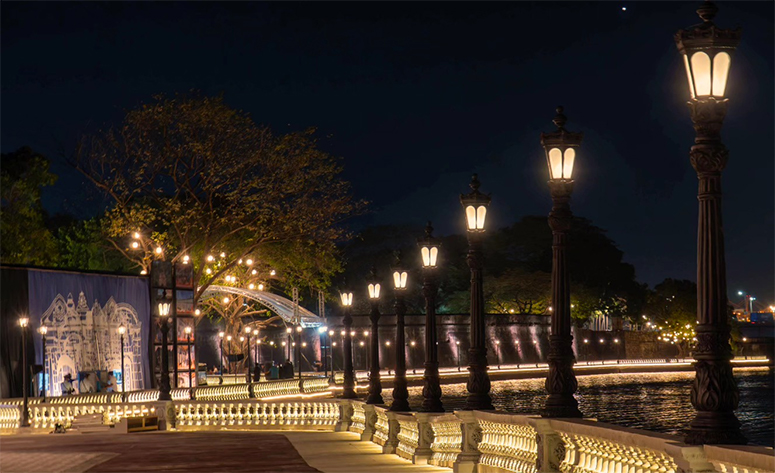
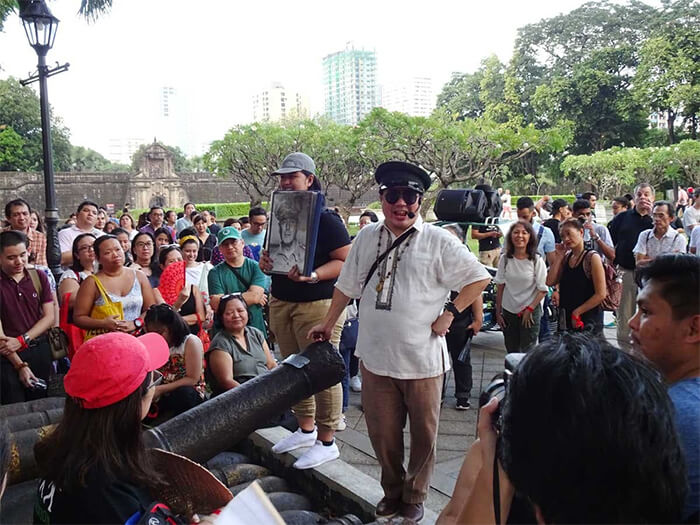
Twenty years ago, during my first long stay in Manila, I was invited to a small dinner party at the home of the late, great Carlos Celdran: pop historian, provocateur, and the irreverent soul of Intramuros.
We’d just met when I noticed an old Chinese man standing behind him, talking nonstop. Except, the old man wasn’t alive.
I tried to ignore him, but ghosts have no sense of boundaries. Eventually I leaned toward Carlos and told him what I was seeing. Being a medium means you rarely get to just enjoy dinner. You often end up becoming entertainment.
Carlos was fascinated. The spirit, it turned out, was one of his ancestors. That night, between laughter, stories, and a table crowded with rice, wine, and Filipino delicacies, something unexpected was born: Psyched in Manila.
It was a small television concept Carlos and I created with Romeo Candido, the Canadian-Filipino director who once told me he held the odd distinction of being the first Filipino born in Newfoundland. The show never aired, but filming it was magical.
That was my introduction to the spiritual current that runs through this country, the invisible thread tying the living and the dead, the seen and the unseen. In America, spirituality is a choice. Here, it’s the air you breathe.
Years later, I feel it every day. The air carries stories. The trees hum with memory. Strangers stop me in the palengke to tell me their dreams and ask if the old woman by the mango stall is real—she isn’t, but I don’t always say that out loud.
When I walk through Intramuros now, I can still feel Carlos Celdran—loud, irreverent, impossible to ignore. I like to think he’s glad that I came back.
There’s a natural coexistence between worlds here. No need to explain. No need to convince. The supernatural simply exists, woven into the daily rhythm of life.
That’s what makes living here so strange and beautiful. I’ve met plenty of foreigners who came chasing beaches or bargains, only to find themselves haunted—not by spirits, but by something subtler. Old regrets. Lost timelines. Versions of who they used to be. The Philippines has a way of pulling those ghosts to the surface. It doesn’t just show you paradise; it shows you yourself.
I think that’s why my own energy feels stronger here. This country amplifies intention. The soil remembers. The sea repeats. The ancestors lean close to listen.
When I walk through Intramuros now, I can still feel Carlos—loud, irreverent, impossible to ignore. I like to think he’s glad that I came back.
For all its contradictions, the Philippines gives me something no other place ever has: spiritual stamina. Here, I can work all day, connect all night, and still wake up full.
People often ask why I left the US for good. I could give a dozen reasons: safety, community, the cost of living, the way my daughter finally feels she belongs. But the truth is simpler. My energy belongs here. The work flows. The messages come easier. I feel plugged back into something older than language.
The Philippines doesn’t drain me. It sustains me.
In a world obsessed with productivity, that kind of replenishment feels like a quiet rebellion and a homecoming for the soul.