

Unique Undas traditions in the Philippines that honor—and celebrate—the dead
As Filipinos across the country travel to the resting places of their beloved departed, they take part in traditions that are as varied as the names engraved on tombstones in cemeteries.
Even for the nationwide practice of observing All Saints' Day and All Souls' Day, different regions in the Philippines have their own ways of paying tribute to their deceased loved ones.
This practice of Undas, a Filipino word derived from the Spanish "honras fúnebres,” which roughly means honoring the dead, has multiple interpretations throughout the country. Here are some of them.
Panag-apoy
At dusk every Nov. 1, the Church of St. Mary the Virgin Cemetery turns into what looks like a hill of bonfires for a couple of hours. It is an important element in the solemn commemoration of Panag-apoy, which is the Sagada locals’ way of honoring the saints and their ancestors who’ve gone ahead.
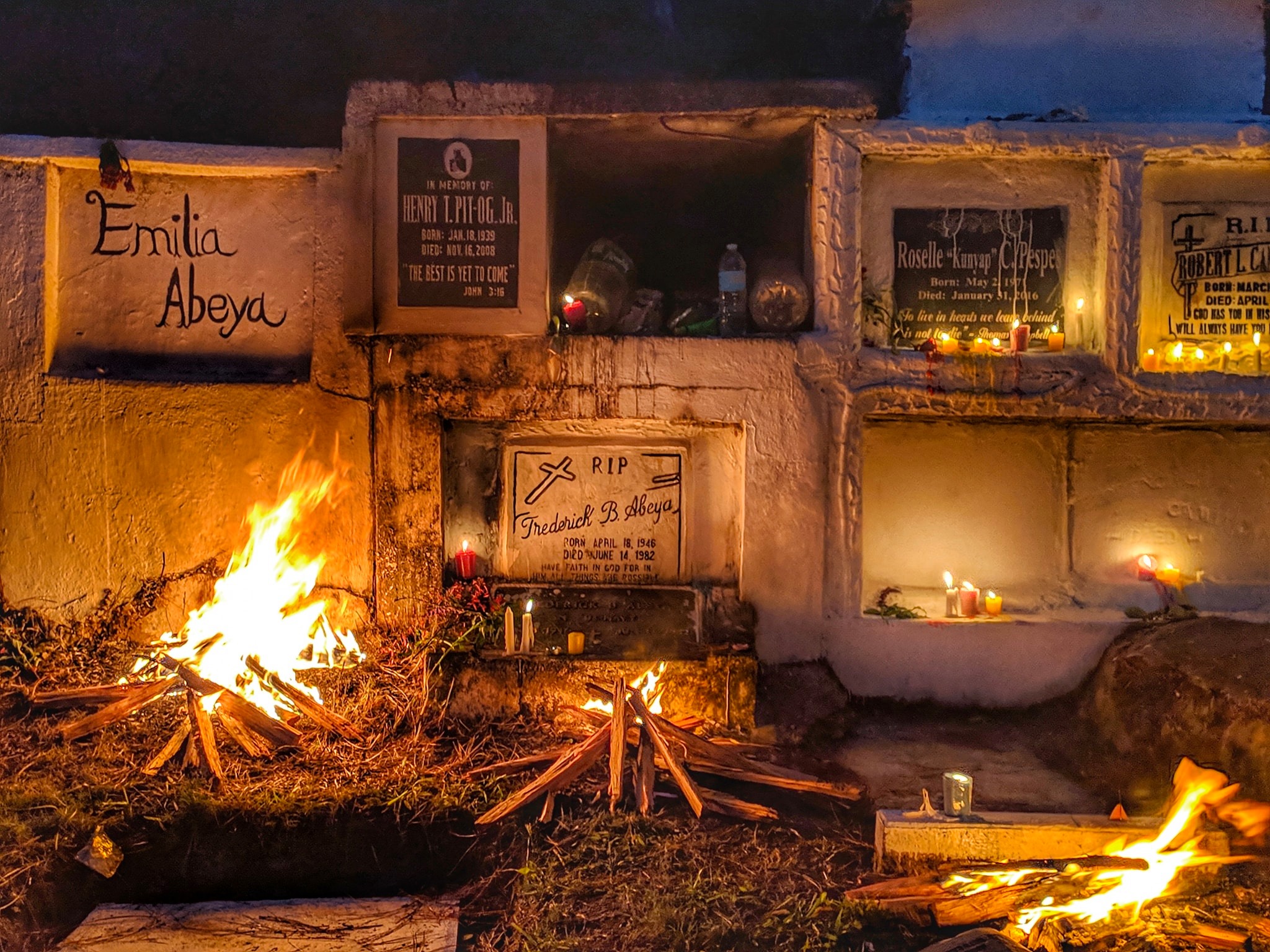
According to Alma Louise Bawing, a long-time resident of Sagada who runs a bed-and-breakfast in her hometown, the practice began around 1915, when American missionaries in Sagada built the Church of St. Mary the Virgin and the adjacent cemetery.
She described the practice: “It is a Christian tradition, where we go to the graves of those who went ahead and light candles at their graves. The difference is, we use wood instead of candles just because Sagada around this time is very windy. Candles quickly go out. And there is a big supply of wood in Sagada.”
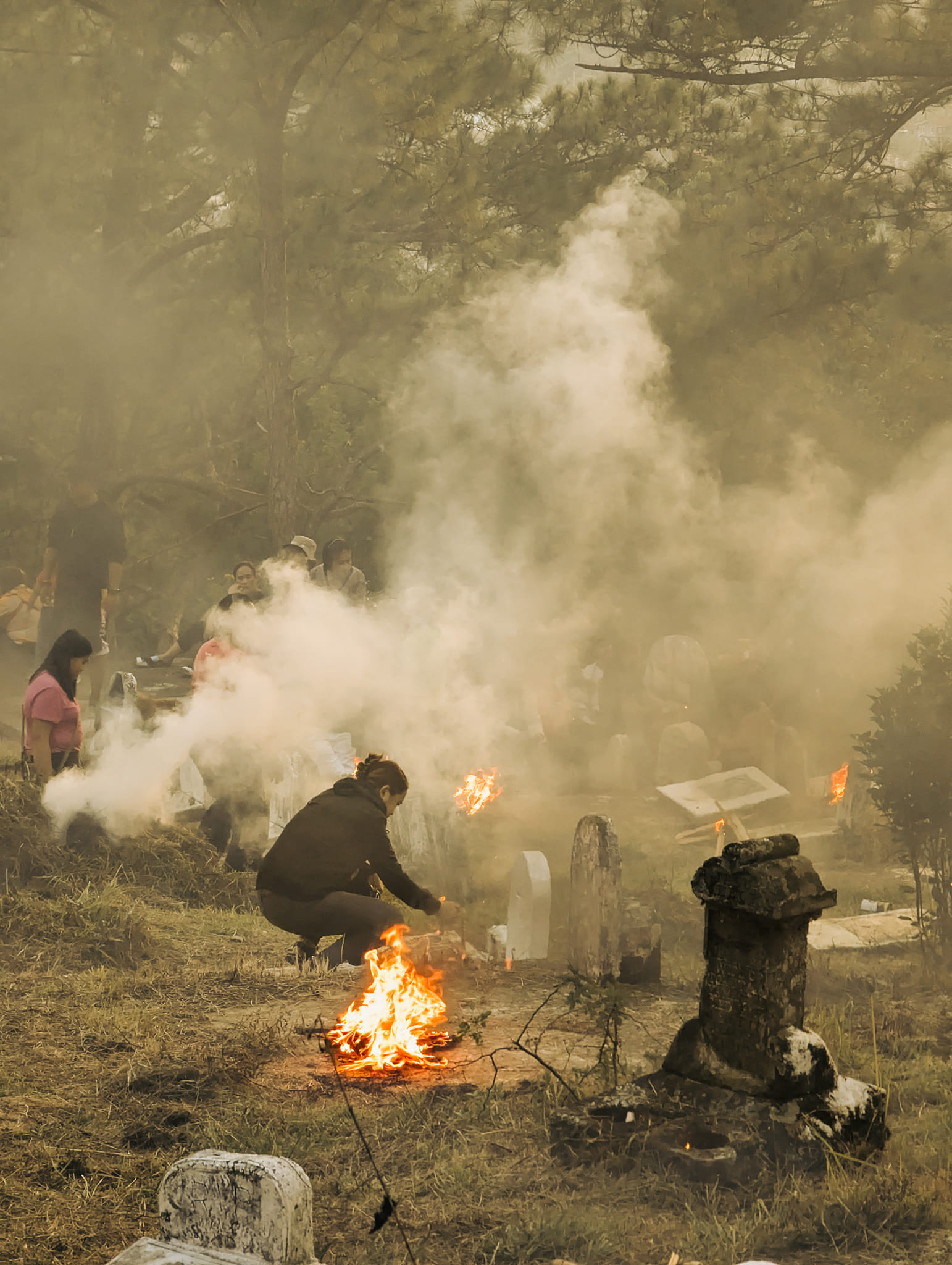
The pieces of wood are first blessed during a mass early in the afternoon of Nov. 1. During the mass, the name of each person buried in the cemetery since it was opened is either read aloud or flashed on a screen. After the mass, the locals go to the nearby cemetery where they build bonfires on the graves of their departed loved ones.
After offering their personal prayers, the locals walk around the cemetery to greet friends and family. Panag-apoy is also a time of homecoming for out-of-town Sagada residents, as it is held to coincide with the celebration of Begnas di Yabyab, a thanksgiving ritual marking the sowing of rice seedlings.
“Panag-apoy is not a festival,” Bawing clarified. “It’s a very solemn celebration, not a fiesta for tourists. We light our own gardens—what we call our loved ones’ gravesites—then we visit our friends doing the same thing around the cemetery. After about two hours maximum, we go home and continue the reunions at home. It’s taboo to stay in the cemetery all night.”
Offering inlubi to the souls of the departed
In the municipality of Aguilar, Pangasinan, the pre-war practice of honoring loved ones also celebrates the province’s agricultural roots.
Like several other areas in the Philippines where food is traditionally left for the souls of the dead, locals in Aguilar do the same, but with a specific type of food: inlubi.
This kind of sticky rice cake is made from glutinous rice grains that are toasted then combined with coconut milk and sugar. The mixture is continuously cooked until it's dark, dry, and chewy. It's then used as an offering on a loved one's tombstone or home altar.
Offering inlubi to feed souls in Aguilar began as an agriculturally strategic decision.
“Dati, wala pang irrigation; ang palay, rain-fed lang. Eh ‘pag piyesta ng patay, hindi pa mature ‘yung palay; hindi pa puwedeng i-harvest. So they devised a way to use the immature palay,” said Engineer Yolanda P. Judan, municipal planning and development coordinator, as well as tourism officer, of Aguilar.
“Farming is the main source of livelihood here. Back then, money was difficult. To keep up with the Filipino tradition of honoring their dead, locals in Aguilar used whatever was available to them, which was immature palay,” added Judan.
Today, with modern irrigation systems in place, inlubi is made year-round in Aguilar. But locals still make sure their departed loved ones enjoy a plate or two of this delicacy during Undas.
Pangangaluluwa
Before the West's trick-or-treating craze hit the country, residents in rural Philippines—including those in Nueva Ecija, Laguna, Cavite, Batangas, Rizal, Bulacan, and Sariaya, Quezon—went through their local version of naughty “souls.” They called the practice “pangangaluluwa.”
The tradition was not limited to rural areas, however. Mary Jusi, 76, experienced the tradition in a San Juan neighborhood in the 1960s.
As the practice went, on the eve of All Saints’ Day. At dusk, groups of people walked from house to house holding lit candles and singing some verses over and over to the accompaniment of a guitar. They introduced themselves to homeowners as wandering souls.
“They began one verse with, ‘Kaluluwa kaming tambing…’,” recalled Jusi, roughly translating it to “We are wandering souls.”
The singers, through their chants, asked the homeowners for money, as carolers do during the Christmas season. Unlike carolers, though, these “souls” told the homeowners to hurry, “kasi babalik pa sila sa langit, kaya nagmamadali sila para hindi masarhan ng pintuan ng langit,” said Jusi.
“The other part of the song went, ‘Kaluluwa kaming dakma, isang manok na mataba’. It was a warning. While the big group was asking for change, a small group of two to three people broke away and snuck to the back of the house, where homeowners used to keep their chickens or goats,” Jusi said. “If they found some wandering around, the singers would take them to cook the next day and share with family at the cemetery.”
“I remember one of my aunts telling her husband, ‘Dali, punta ka sa likod para abangan ‘yung mga mandadakma ng mga manok,’” recalled Jusi.
Today’s pangangaluluwa practice of sung prayers for the dead is a much-sanitized version of its origin.
Tulod
The practice of Tulod in the Bicol region involves leaving a deceased loved one’s favorite items on their tombstone in an effort to appease their souls.
“The practice begins during the wake, regardless of the date,” said Florinda “Dindin” Quiambao, a longtime Albayano. “Habang nakaburol ‘yung tao, meron nang pagkain sa ibabaw ng coffin, usually the person’s favorite food. Pero hindi lang pagkain ang puwede.” There have been instances, said Quiambao, that family members have placed a pack of cigarettes and bottles of alcohol on the coffin of a loved one who liked to smoke and drink.
Come Nov. 1, the locals do it all over again on the gravesites or tombstones of their beloved dead.
It is a practice frowned upon by the clergy and the educated sector, according to Quiambao.
“’Pag malaman ng mga pari, pagagalitan ka. They’ll tell you these are pagan practices. ‘Kaluluwa na ang patay. Bakit pa pakakainin? Pagdasal niyo na lang,’” Quiambao said, recalling instances when priests berated their church members at the cemetery during Undas.
“These were practices ng mga ninuno, long before we were colonized by the Spanish,” Quiambao said. Perhaps this is why the tradition has become embedded in the Undas traditions of the Bicol region.
Tumba-tumba
For the residents of San Narciso, Zambales, the Undas season means putting up kubols or makeshift huts at street corners meant to signify the gravesites of loved ones. These “tombs”—in Spanish, tumba—can be traditionally decorated with handmade paper flowers with atang with a spread of Ilocano food offerings, such as betel nuts and bottles of native wine basi.
Alternatively, the tumba-tumba kubol can depict horror elements, such as bloody corpses. This year, the theme for the horror tumba-tumba is Philippine folklore and mythology.
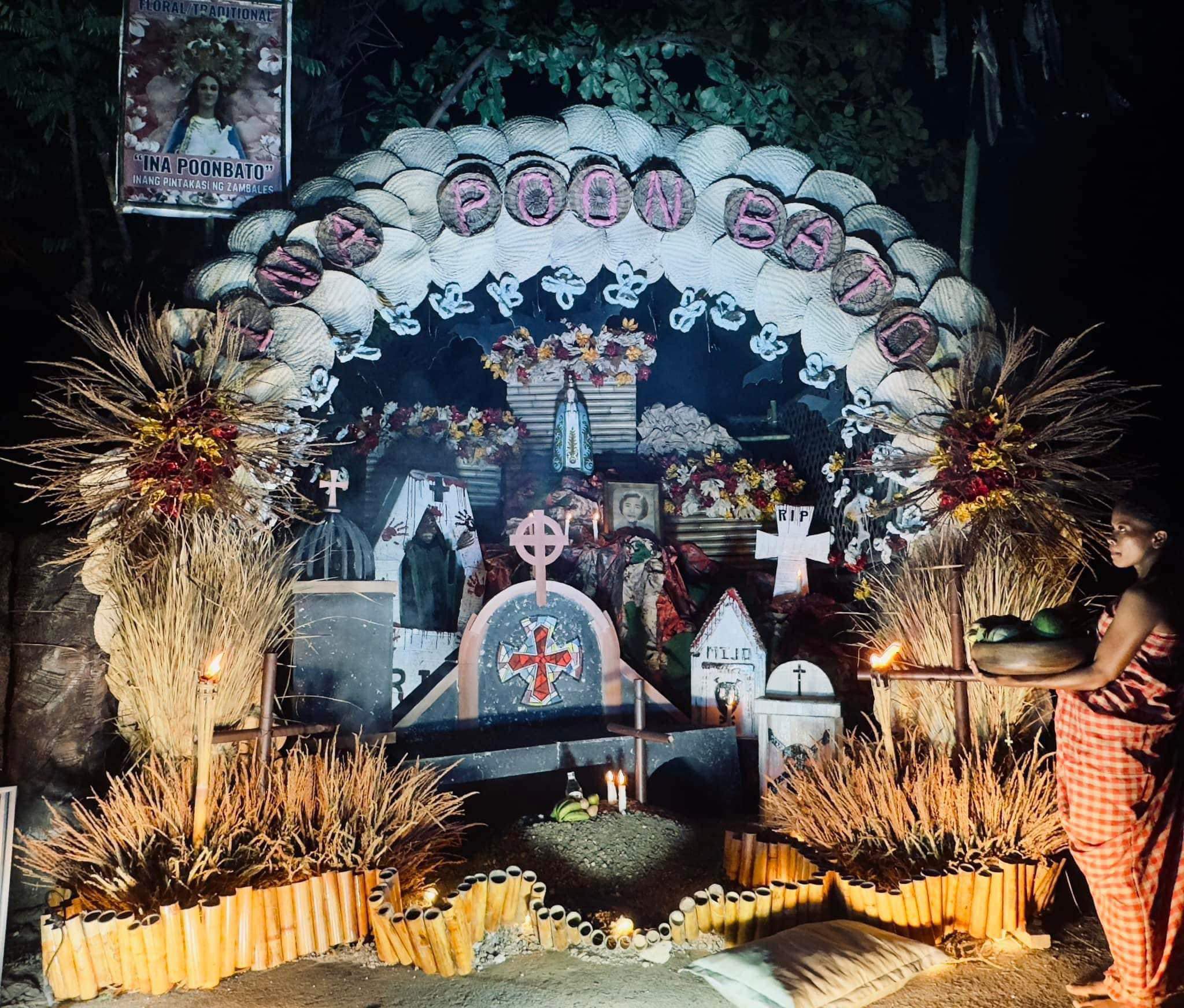
“This annual cultural event in San Narciso began in the 1830s as an offshoot of the tumba-tumba tradition in Paoay, Ilocos Norte,” said Maria Janise G. Recitis, supervising tourism operations officer of the San Narciso Municipal Tourism Office. “But while the practice in Paoay is solemn, in San Narciso, we have incorporated horror houses and a horror parade into the festival.”
“Noong unang panahon, when Ilocanos couldn’t travel to the gravesites of their loved ones, they put up replicas of the graves on the streets where they were. They even wrote the names of their beloved dead on the makeshift tombstones,” said Recitis. “And that would be where they would offer prayers as a community (luwalo in Ilocano), leave their food offerings (atang), and maybe even have dung-aw, the practice of telling the life story of the dead but in the form of loud wailing.”
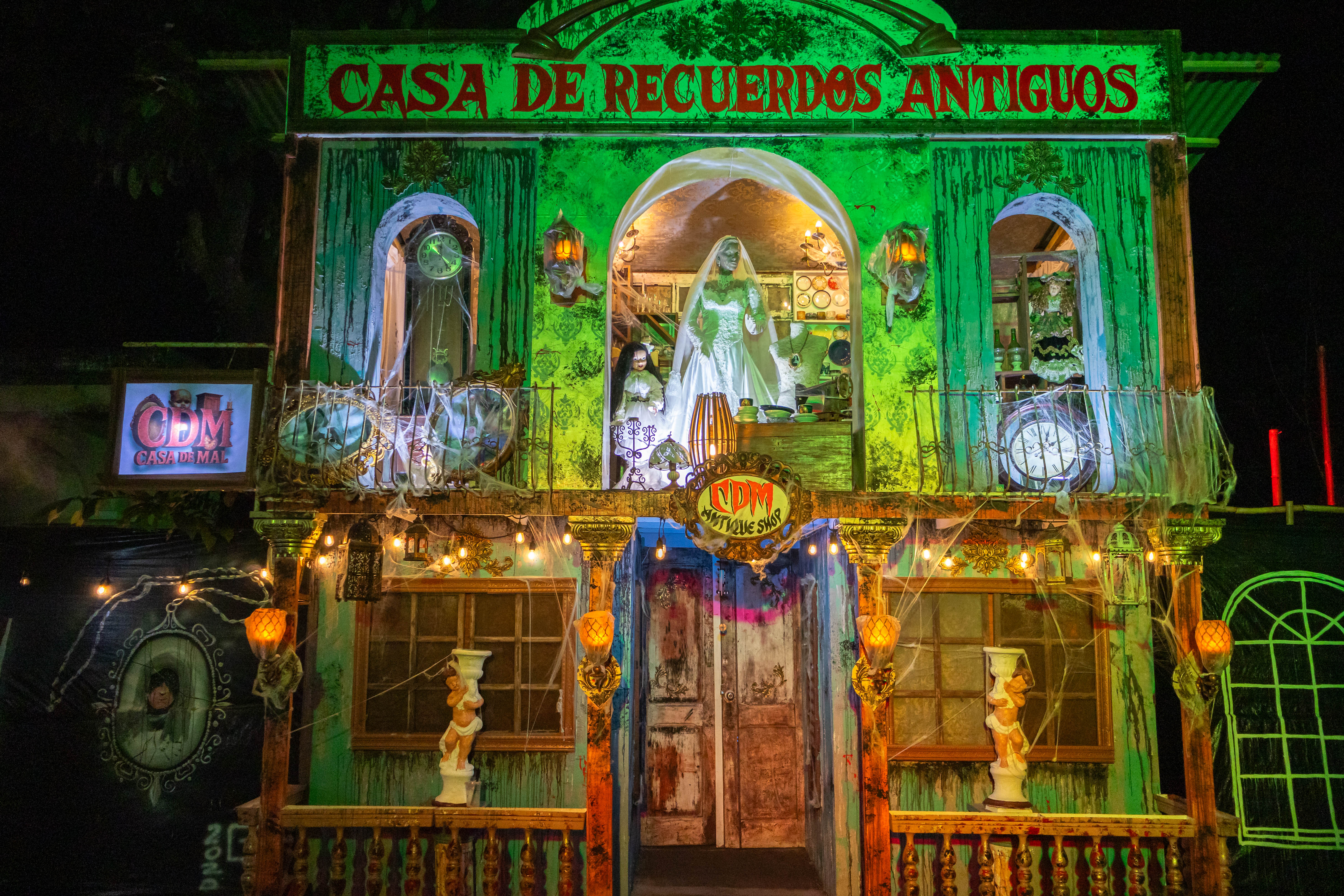
Normally, the traditional tumba-tumba huts go up along with the horror huts on Oct. 31. By the end of Nov. 1, the traditional huts are taken down, while the horror kubol set-ups are kept up especially for tourists to enjoy.
Kalag-kalag
The commemoration of Undas in Cebu City takes on a party atmosphere as “Cebuanos, until now, consider Nov. 1 as a festival with the dead,” said Sam Costanilla, mediaman and an officer of the Philippine Press Club–Cebu chapter.
A Cebu City resident since birth, Costanilla remembered when Cebuanos used to bring all sorts of items to the cemetery on All Saints' Day to begin their festivities with the souls of their beloved dead.
“Today, they go to cemeteries or memorial parks bringing with them flowers and candles,” Costanilla said. “But before, they used to bring foodstuff, soft drinks, and [portable] sound systems because they [believed] the day is a celebration with their departed loved ones.”
While the Spanish-era Kalag-kalag—the Cebuano term for “soul”—has calmed down considerably amidst safety restrictions, Costanilla said the tradition is still practiced in Cebu province’s component cities and the islands of Bantayan and Camotes.