

Inside Bulacan’s trike sounds scene
We arrived at the Malolos Convention Center at around 6 p.m., the grounds already buzzing with food stalls and night joggers. We were looking for Kuya Rex, a tricycle modder I met on Facebook, where he regularly shares his latest modifications and updates on community events. Drawn by a burst of colorful lights and loud budots blaring in front of the gymnasium, we made our way toward a line of parked trikes.
The sounds were menacingly loud, yet the scene we stumbled upon was unexpectedly wholesome. We met three of the trike owners, Aethan Roxas, Erwin John Sayo, and Arnold de Leon, relaxing with their friends and families, swapping stories about their newest mods, sharing snacks, and chatting about the latest happenings in the scene. As joggers passed by with hands over their ears and children danced to four different songs playing at once, we took in the lively energy of Bulacan’s bustling trike sounds community.
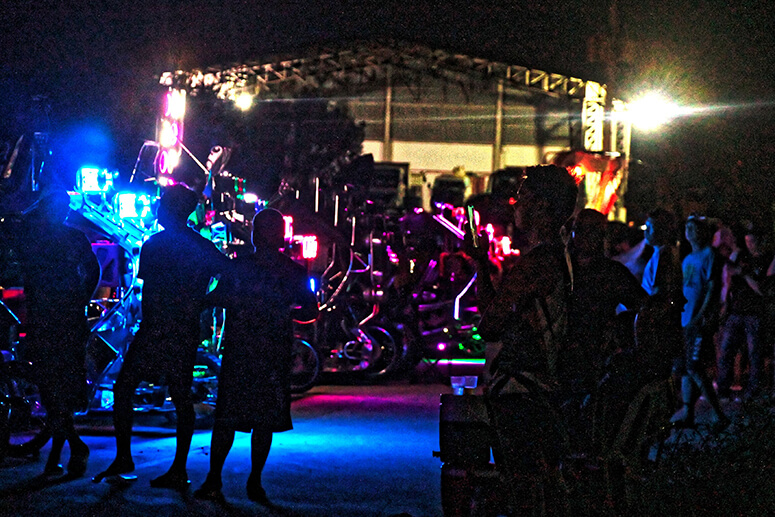
“It’s a yearly affair, this gathering of tricycles during the ‘ber’ months,” Kuya Aethan told us. “The capital actually likes us here—the lights make the area more colorful.” Like many in the scene, Aethan has been modding trikes for years. Enthusiasts come from all over Bulacan, and even Pampanga, eager to showcase their pride and joy to the public.
Meanwhile, Kuya Arnold explained that although every trike was uniquely designed by its owner, certain visual “styles” reveal where a trike came from. There was the popular “Baliwag” style with its curvy façade, the boxier “Calumpit” style, and even a “Malolos” style similar to the Baliwag design. As a newcomer, I struggled to distinguish them, but what was unmistakable was the sheer variety on display. Some owners printed their names, or their children’s, on the panels; others featured favorite pop culture characters. Catholic iconography was also common.
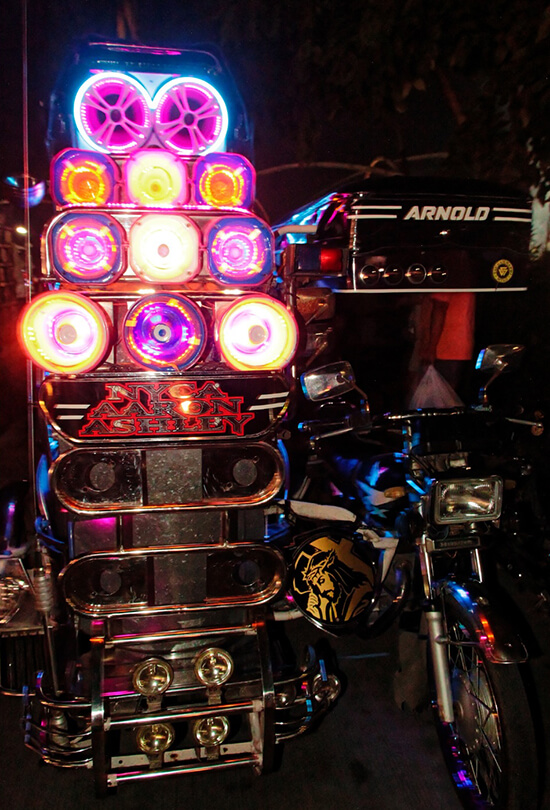
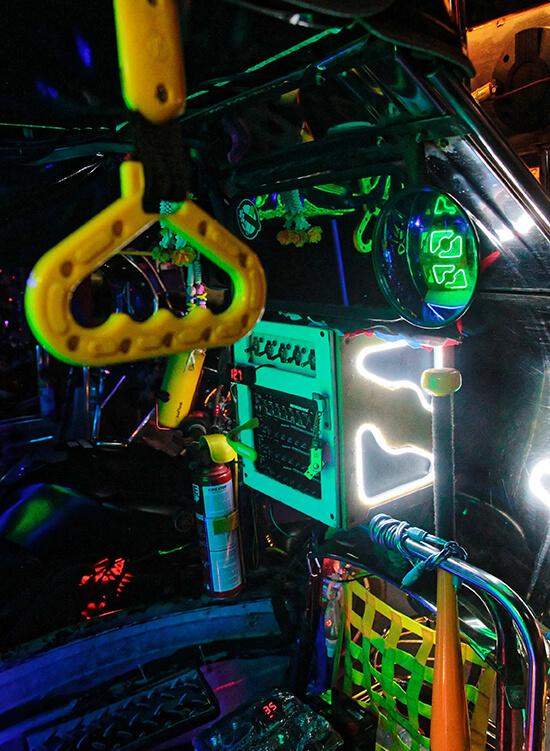
Aethan, Erwin, and Arnold gave us a tour of their creations. It was astounding how much thought and labor had gone into these machines. Their sound systems featured an array of loudspeakers and lighting combinations. Even the interiors were illuminated with lights. Parts were sourced from all over Bulacan or traded among fellow modders. They generously shared their speaker arrangements and electrical setups, most powered by multiple lithium batteries. Their mixers and amplifiers, heavily loaded, were cooled by colorfully lit fans.
For some, modding trikes was more than an expensive hobby. Kuya Arnold, for example, had been working on his project since 2021. Many of them joined sounds competitions. Like Formula 1 équipes, modders organized themselves into teams, each with specialists handling engineering, electricals, and lighting. These trikes are never used for pasada or public transport, though some were hired out (“arkila”) as sound systems for private events.
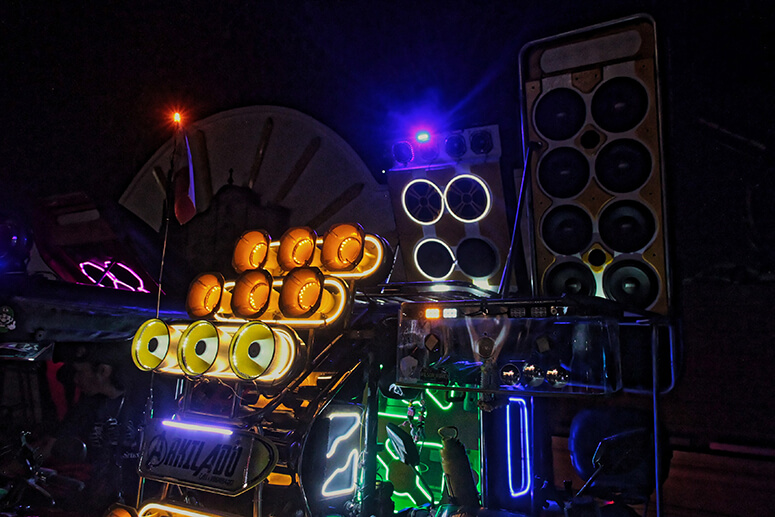
Erwin, who works at a gasoline station, shared that since landing his job, he has devoted part of his income to building his sound system. He says that his partner supports his hobby as long as he provides for their family. “Even if it takes a while, I can slowly build my sound system. I’ve already spent a lot on this. But this is a better vice than other vices, you know,” he said, laughing.
This interest in mobile sound systems does not come out of nowhere. Bulacan, known as the “Fireworks Capital” of the country, has been reeling from heavy regulations on the firecracker industry in recent years. With a burgeoning sound system scene as vibrant as the one they now have, it seems that Bulakenyos are coming up with new ways to make noise.
Kuya Rex finally arrives with his tricycle. After only a few minutes of conversation, they mentioned that there were fewer people around that night because most of the group was in Guiguinto for a sounds competition. We said our goodbyes and decided to witness the battles ourselves.
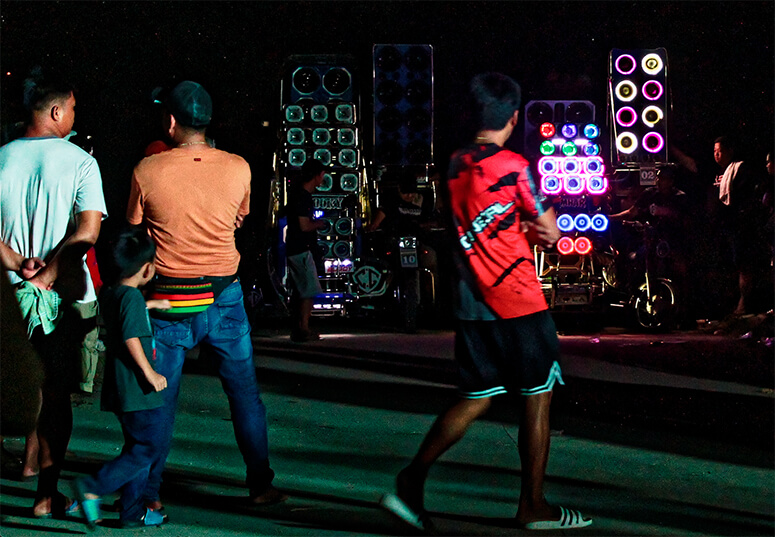
We made the 30-minute drive to Guiguinto, cutting through rural roads surrounded by rice fields. A much larger crowd greeted us, along with even more trikes clustered around a makeshift stage. The booming sounds were impossible to miss.
We settled onto a grassy clearing just as the host was giving away sponsored goods in a raffle, an intermission between the one-on-one sound duels that had been happening since dusk. As the battles resumed, the host called up the next two contenders, who shambled into the pit like dueling gladiators, their towering loudspeakers mesmerizing the crowd. People whispered among themselves, scrutinizing each setup.
The host counted down—“Ready… bomba!”—and the competitors blasted two different tracks at once. I assumed the contrasting tempos and harmonies were intentional, helping listeners distinguish which sound came from which trike. What followed was an earsplitting barrage of sounds, crashing into the senses like thunderclaps. The effect was visceral, as if one’s entire body was being struck by a sledgehammer. At the height of each battle, modders stood behind their mixing decks, pushing faders and buttons to isolate their opponent’s most powerful frequencies.. Within minutes, both systems were pushed to their limits. As the night wore on, we even saw a few rigs break down mid-duel.
Eventually, the host declares a winner. A best-of-three system determines who advances to the next round. Earlier, I had asked Kuya Arnold about the criteria for judging. “Palakasan, yun lang,” he said. But from what I observed, judging was far more subjective. Unlike open-pipe motorcycle “bombahan” competitions, no decibel meters were used. The entire audience listened seriously. It wasn’t just about volume; sound quality and projection mattered too. There was a clear aesthetic dimension that required intense listening and a well-tuned ear. “May nabibiyak,” one said, noting tweeters that couldn’t handle the high frequencies. “Malakas sana kaso di marinig boses,” another remarked, pointing out muddled vocal frequencies. The standards were high, and even the most casual listeners seemed capable of sharp, discerning critique.
We eventually left with ruined ears, still shaken by the pandemonium we witnessed. The trike modders will be filling Bulacan’s streets with fanfare every weekend until December, climaxing in New Year’s Eve.