Is the Big 4 that big of a deal?
I collect school ID lanyards like how people collect fridge magnets.
Once, I’d asked my friend from La Salle to buy me one of those thin, black minimalist laces with the university’s initials patterned on the strap, detachable by the nape. On a fluke visit to the UST museum, I was able to buy a similar one in yellow. Same manufacturers, probably.
At some point, I started bartering them. “I’ll trade my Benilde lanyard for your MINT College lanyard.” Hell, one of my friends even offered her UP lanyard for my La Salle one. Who said you needed a degree to do business?
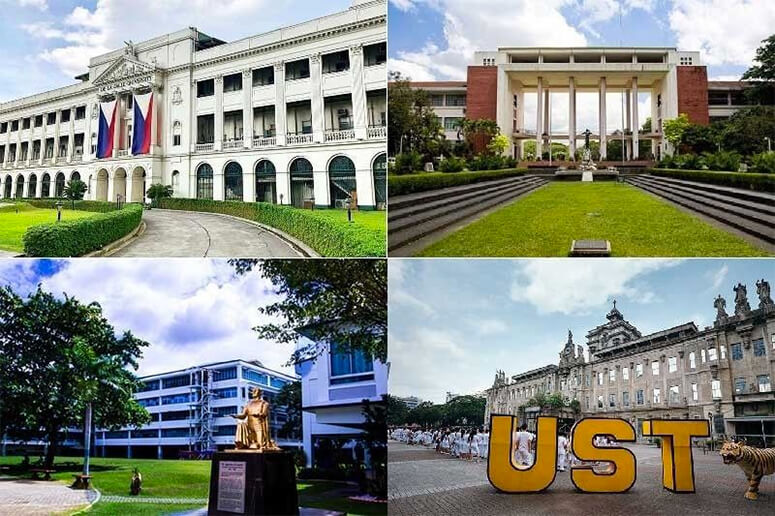
There’s something, or so I would like to believe, campy about affiliating with a school that you aren’t even enrolled in. Irony is good fashion sense. It’s the same way TikTok fashionistas will tell you to match a sundress with running shoes, or to pair black loafers with pinstripe shorts.
Although there’s something particularly exhilarating about parading a Big 4 lanyard, which takes up more of my collection than I’d like to admit. It feels aspirational, or like a costume. A recurring fantasy I have involves people congratulating me and building statues in my honor. Afterwards, we’d all hold hands and skip.
Little would they know that I had fooled them. A-ha, I’m not from a Big 4 university! But it sure would have been nice.
By fours
Older forms of religion believed that four cardinal elements made up the world. Not 118 or whatever my science teacher said when I was 12. It was also around this time that I saw a Facebook post saying that my hand shape made me a firebender.
At an age when the world didn’t seem to make much sense, labels and categories conveniently sorted it all out for me. I’m a Sagittarius, so I’m adventurous by heart. I’m an ENFP, so I’m bubbly and outspoken. Had J.K. Rowling not been a transphobe, I would proudly call myself a Ravenclaw.
The world was in neat fours, or at least multiples of. Girl, boy, bakla, tomboy. (God rest Wenn V. Deramas.) It was just a matter of where you were on the X or Y axes.
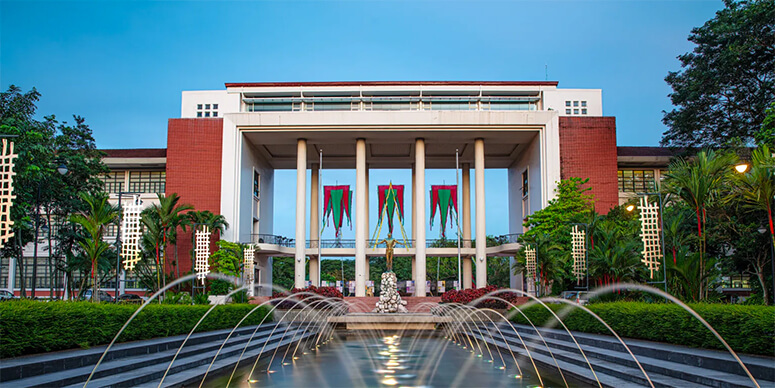
But I wasn’t prepared for the possibility of being outside of those axes. I didn’t get into my dream UP campus when UPCAT became UPCA. I swear I would have bumped my UPG up to 2.1 had there been a test, or had my high school transcripts indicated that I graduated from a science high school or a pricey private school in Quezon City. Where was I supposed to be now on the quadrant?
Identification (1 point each)
On days I would study my face in the mirror, I saw an achiever who, more often than not, scored near full marks on quarterly tests. I loved analogy exercises—matching-type. So I drew lines from Column A to Column B. A cat is to a kitten; a dog is to a puppy; happy is to sad; cold is to hot; and I am to UP.
A doctor is to UST; an entrepreneur is to La Salle; a lawyer is to Ateneo; and a journalist is to UP.

Read enough of those freedom wall posts and it becomes: a person with commitment issues is to UST; a nepo baby who can’t cross the street is to La Salle; a conyo who can’t park straight is to Ateneo; and a person who hides the fact that they drive a BMW to campus is to UP.
Stereotypes are fascinating. Perhaps it is through them that we make sense of complex information and populations. In an age of instant gratification, efficiency is key. But maybe, just maybe, it is through stereotypes that we also justify our sense of belonging or unbelonging.
Here’s us, and here’s them—and here’s the rest of them. Here’s what makes them “them,” and us “us.”
No way to go but up
UP is where great leaders, thinkers, and above all, journalists come to be made and built. My high schools all had some shade of maroon in their seals, so I grew up believing I would fulfill a prophecy if I entered UP to be the next Jessica Soho. But, honestly, who still believes in fate these days?
There are, after all, multiple ways to enter the media.
Contrary to popular belief, your school does define you. But maybe not getting into your dream university doesn’t have to be the end of the world.
My parents say, “We could afford Benilde,” La Salle’s sister school. A good school. “But try to see if they have scholarships.” The strategy is to get a Multimedia Arts degree, and I promise to make a lot of money with advertising. Good money. I think of it as a pre-med degree—or, in this case, pre-media. I’ll eventually shoot or report for a major TV network, and then I’ll be a journalist. A big name for a big name.
So not maroon, but green. Green, but not quite. Big 4-adjacent, so probably Big 4.5.
If Maine Mendoza, Mimiyuuuh, and Hidilyn Diaz all graduated from here, then probably I would have the means to replicate their success, right? Though I’m not very spontaneous on camera, nor is it physically possible for me to lift 200kg.
But I do think I have a lot in common with Rory Gilmore from Gilmore Girls. Not only are we both extremely fixated on coffee, but also on working towards our country’s top university. Rory’s grandmother, Emily, had once said, “The best chance for success and financial security is not just to go to college, but to go to a top college.”
If you don’t go to a top college, does that mean you’re completely doomed? How will I win people’s approval now that I can’t type in “upd ‘25” with a sunflower emoji in my Instagram bio?
Where am I—are we—now on the hierarchy?
Graded recitation
On my quest for answers, I interview Dr. Peter Romerosa, an educational anthropologist and Arellano University’s Dean of Education, on why it was imperative that we go to a Big 4 school, let alone a good school. Why go through so much trouble for a diploma?
He lets me in on a secret: Pierre Bourdieu’s cultural capital theory. I did some studying before our little oral recitation; I still try to be a good student after all.
Bourdieu suggests that you don’t necessarily need a trust fund to climb the ladder, though it does help. Your intangible assets, like the way you speak, the people you know, and the school name on your lanyard, can all determine whether you make it or not.

“Big deal ang pagpili sa Big 4 kasi may tatak ‘yan. ‘Pag sinabi nating taga-UP ako, taga-Ateneo ako, it speaks of your symbolic capital, (kung) anong cultural capital mo, anong political ties mo, (at) anong social networks mo,” he explains over Google Meet.
Having finished his PhD at UP, Dr. Romerosa tells me of honor, excellence, and service as standards and traditions. “Hindi pwede mawala ‘yan. Kapag pumasok ka sa school, dapat i-emulate mo ito, isabuhay mo ito.”
Still, traditions only mean something when you’re allowed to carry them.
I then ask Dr. Romerosa whether the Big 4 hierarchy is just a matter of truth we all have to accept. “Hangga’t may hindi pagkapantay-pantay sa lipunan, mirror lang ‘yan ng edukasyon,” he says.
So more than anything, to be part of the Big 4 is to have access—and to have access is to have privilege. And what makes up privilege?
Assigned readings
It’s partly true when they say you don’t need degrees to pursue what you want. Benilde doesn’t have a degree program in Journalism, but interviews sure do come easily to me.
I talk to Dr. Jozon Lorenzana, an anthropologist teaching at Ateneo, whose research interests include social inequalities. And I ask them the million-peso question over Zoom: “What’s so big about a Big 4 university anyway?”

Ateneo costs on average P130,000 per semester, so I would like to thank Dr. Lorenzana for giving me a crash course on Max Weber and the workings of cultural capital for free.
According to my discussion with them, everything in the Philippines eventually ties back to whatever happened 300-odd years ago in the ripe age of colonialism. Catholic orders created elite schools, which are three out of the Big 4 already, and the Americans introduced public education, inventing sweet old UP.
Higher education was, for a time, exclusive to wealthy and affluent families. Ilustrados, pensionados, and your high-brow abogados. The tornado that is the Philippine education system was (or still probably is) run by the elite, to produce the elite, for all their elite reasons.
Real world-ready
“Schools are a proxy for social class identity,” Dr. Lorenzana tells me. “The way this works, this entire thing as a class, as a kind of social practice, is through the process of distinction.”
So what flavor of elite education tastes best? Well, it really depends on the job you want. Some schools will promise you a brighter career in medicine than others, though not as bright in management and business, in turn. Strategically, schools have niches on purpose.
But that just means education isn’t really about learning, doesn’t it? It is no wonder DepEd wants to reform K-12 to be more job market-ready. It is no wonder that CHED wants to remove general education courses. It just gets in the way of securing a P20,000 entry-level job.
A Big 4 education arguably makes things easier. And perhaps scholarships are as close as we can get to the top—perhaps through lanyards we borrow or university acronyms we fake on Omegle as well.
“The contentious part of cultural capital is where it is used to give or deny access to resources and opportunities,” Dr. Lorenzana says. When HR inevitably screens your CV, the prestige of your school can weigh in. That is, if your school can provide you with the right network for an interview with HR to begin with.
On a lighter note
I end the interview with Dr. Lorenzana by asking them what advice they would give to the young readers of this article. How do you navigate self-worth if you’re not from the Big 4?
Little do they know I am also asking for myself. But I think they could tell. They don't have a doctoral degree for nothing.
And like every answer and consolation I’ve ever gotten before, when I cried when my UPCA portal said “Thank you” instead of “Congratulations,” I am once again told that it's not the end of the world.
“To make it in this world, one needs to have realistic goals and one needs to survive. In other words, one must not resent oneself, others, or society for one's social situation at the moment. But one can do something about it by learning the rules of the game,” they tell me.
And the game I shall play indeed.