Why do Filipinos love to perform luck traditions?
Filipinos have a long list of rituals they love performing on every occasion, from holidays, contests, and even major exams. New Year’s Eve is perhaps the most ceremonial: jumping to grow taller, blowing a torotot to ward off evil spirits, or even jiggling coins in our pockets to attract financial abundance.
For the last few years, Gen Z and millennials have engaged in a new, viral TikTok trend: a single person ready for romance crouches under the table and, when the clock strikes, gobbles down a dozen grapes in one minute.
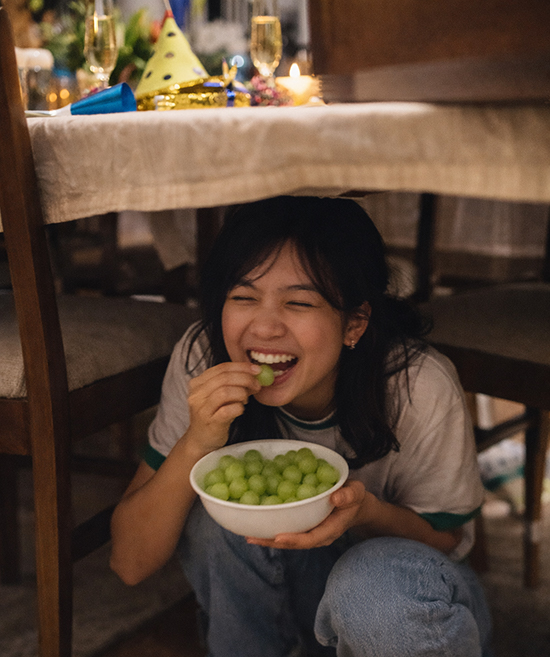
Contrary to popular belief, this is not limited to romantic relationships. It traces back to Spanish culture, where it is known as las doce uvas de la suerte or “the 12 lucky grapes.” A group of merchants from Alicante in Eastern Spain established this practice on New Year’s Day as a symbol of good luck in the province. However, as reported by food writer Jeff Koehler, newspaper clippings from the 1880s indicate that the habit originated from Madrid’s bourgeoisie imitating the French New Year’s Eve custom of consuming grapes and champagne.
Regardless of its true origin, people have continued to take part in this practice to bring luck by their side, as the 12 grapes equal the months in a year. Gen Z has interpreted this custom into a love ritual today, and although we know that there is no real correlation between grapes and success, many people still willingly participate.
The psychology of rituals
From knocking on wood to eating grapes every New Year’s Eve, Filipinos have always relied on small rituals to bend fate in their favor.
Rituals are usually performed in times of uncertainty, like board exams, seasonal celebrations, or even during contests. Aside from the fact that these beliefs are harmless to do, they can help reduce anxiety even if the ritual itself has no discernible effect on the result. “Although the rational brain knows these actions do not change the physical world, the emotional brain finds relief in doing them,” cognitive behavioral therapist Tom Holland-Pearse told Young STAR. “And because the action reduces anxiety, even just a little, the behavior becomes reinforced.” At its core, superstitions and rituals are a survival strategy that the brain uses to feel more in control in times of uncertainty. Since predictability is essential for survival, our brains evolved to function as pattern-seeking mechanisms. Dr. Raffaello Antonino, a counselling psychologist and the founder of Therapy Central, explained, “If something good happened after we did a particular thing, we naturally link the two together. Do it enough times and that connection starts to feel like the truth.”
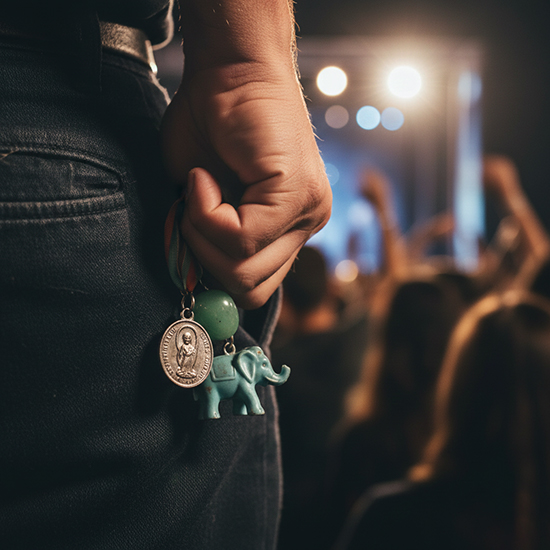
Research published in the journal Psychological Science revealed that common actions and famous expressions, such as saying “Break a leg” or crossing your fingers, improve performance in certain tasks. Believing in superstitions and performing rituals became our reassurance in outcomes that have no certainty of success. We feel more confident that everything will work out as planned. Rather than having to deal with possible misfortune, a small action like knocking on wood is a cheaper price to pay. Personal ritualistic beliefs, such as carrying a lucky charm or sliding a coin in your shoes before a nerve-wracking performance, have an appeal to most because of their low cost.
Cultural influences and way of life
Aside from the psychology behind rituals and superstitions, these traditions have long lived because of our rich cultural history. Our interactions with Southeast Asian countries have led to the blending of pre-Hispanic faiths like Hinduism, Sikhism, and Jainism of India, as well as Confucianism, Daoism, and Buddhism of China. When the Spaniards came and introduced Christianity, Filipinos, in some way, were able to combine Christian and pre-Hispanic practices.
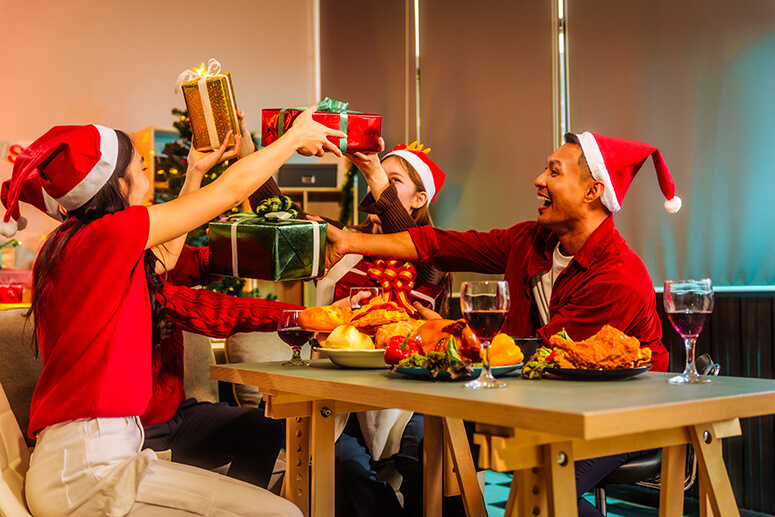
“Filipinos are into following rituals because it has always been their way of life since the pre-Hispanic period,” said Professor Melanie Turingan, dean of the Faculty of Arts and Letters at the University of Santo Tomas. “The tradition has been passed on both orally and in practice. Although there may have been some changes or innovations, these are innately found in the consciousness of every Filipino.”
Even before, our indigenous ancestors had secular activities and religious rituals prepared for every occasion. In the book Culture and Customs of the Philippines by Paul A. Rodell, the earliest Spanish priest chroniclers wrote that the Tagalogs believed in Bathala as their principal god. Since this supreme god was distant and unreachable, Filipinos offered prayers and sacrifices to lesser, complementary deities to gain immediate blessings. The anitos were the most prevalent, as they were believed to be the spirits of our ancestors who were supplicated for assistance in difficult times. For Non-Christian Filipinos, rituals formed the core of religious beliefs; they believed that ceremonies guided by shamans kept harvest plentiful and health under check.
Today, superstitions and rituals can boost people’s self-esteem and motivate them to strive harder and set greater goals for themselves by evoking sentiments of good fortune. In challenging times, it becomes our comfort and coping mechanism for dealing with uncontrollable circumstances. At the end of the day, there is no harm in trying these rituals.
With the new year just around the corner, you might find a family member, friend, or yourself devouring a dozen grapes under the table. Be careful, though, since you might decrease your chances of an organic encounter if you choke. Whether these rituals may work or not, believing in them is one thing; having confidence in your capabilities is another.