

EXPLAINER: How the Sierra Madre mountain range weakens powerful typhoons, but does not stop them
The Sierra Madre Mountain Range, also known as the "Backbone of Luzon," has been given superhero status on social media in recent days because of its role in weakening what used to be Super Typhoon Uwan.
When the typhoon made landfall in Dinalungan, Aurora on the night of Nov. 9, it encountered the Sierra Madre Mountain Range, which "slightly" weakened the typhoon.
"Malawak ‘yung mata ng bagyo hanggang sa ito ay tumama dito sa may area ng Aurora. At noong tumama po ito sa may area, ang Aurora ay nabasag po ‘yung sentro ng bagyo. Makikita natin na bahagyang humina nga mula sa super typhoon category ay naging typhoon category na ito," PAGASA said in its 5 a.m. update on Nov. 10. "Kung babalikan po natin ‘yung ating landfall point ay dito sa Dinalungan sa Aurora, kagabi, 9:10 p.m., binagtas po ng bagyo itong Sierra Madre mountain ranges sa Aurora."
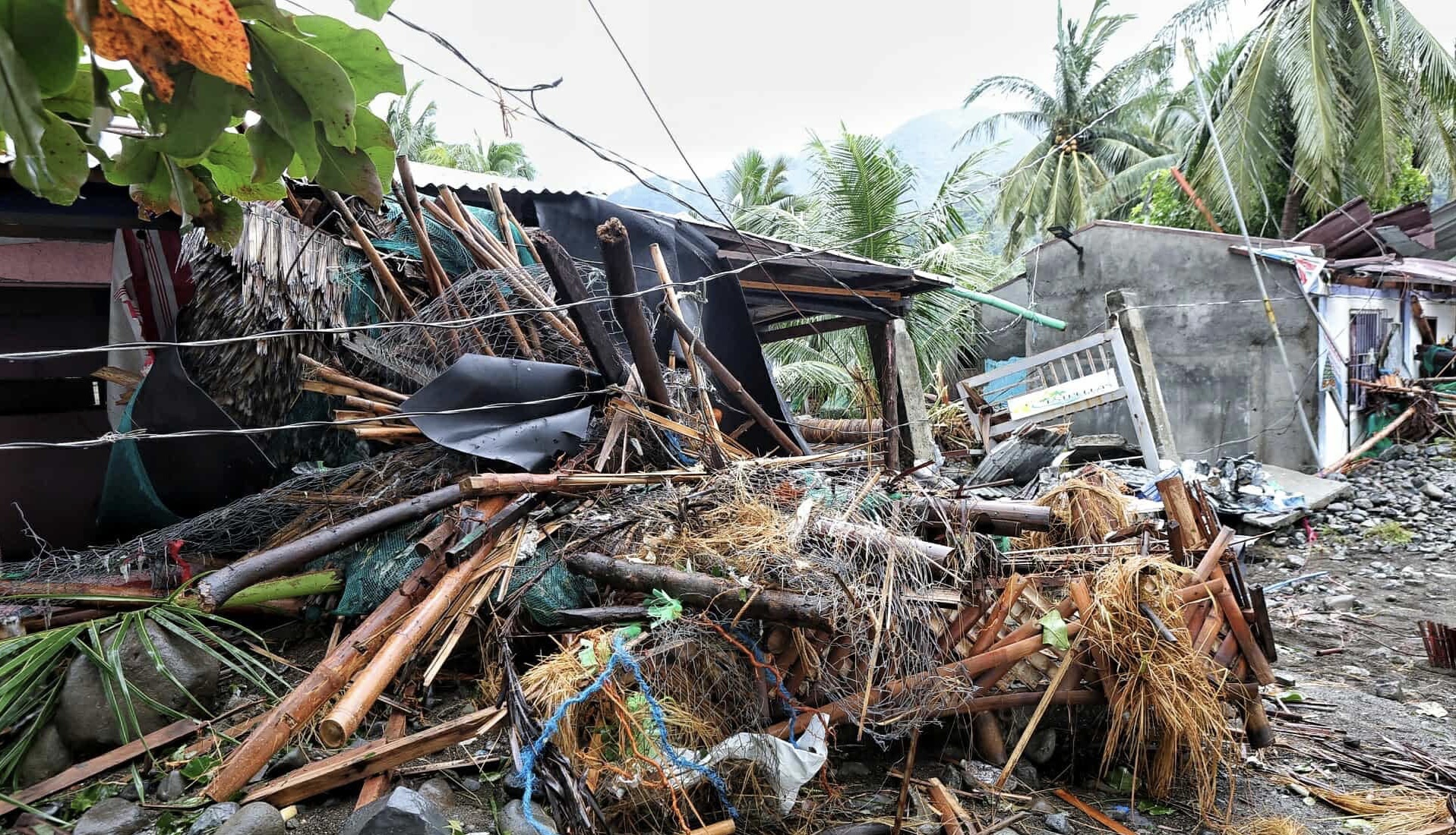
Sierra Madre—which stretches about 500 km across Cagayan, Isabela, Nueva Vizcaya, Quirino, Nueva Ecija, Aurora, Bulacan, Rizal, Laguna, and Quezon—has built a reputation as a sort of “magic shield” that completely protects northern Luzon from strong typhoons. But climate experts would like to set the record straight: The formidable mountain range does not stop typhoons—it simply weakens them.
How Sierra Madre affects typhoons
In an article, climate change and disaster risk expert Glenn Banaguas wrote that when a typhoon hits Sierra Madre, or any other kind of rugged terrain, the resulting friction interrupts the smooth flow of the wind within the storm. While that does not completely stop the typhoon—the core of the storm stays intact for several more hours after impact—it effectively breaks up the flow of the wind near the ground.
If it is the core of the typhoon that directly hits the mountain range, the wind speed will slow down much faster.
The north-south orientation of the Sierra Madre, however, "means it doesn't block the storm head-on, but it interacts with the cyclone's outer layers, especially rainbands and low-level winds," Banaguas told PhilSTAR L!fe.
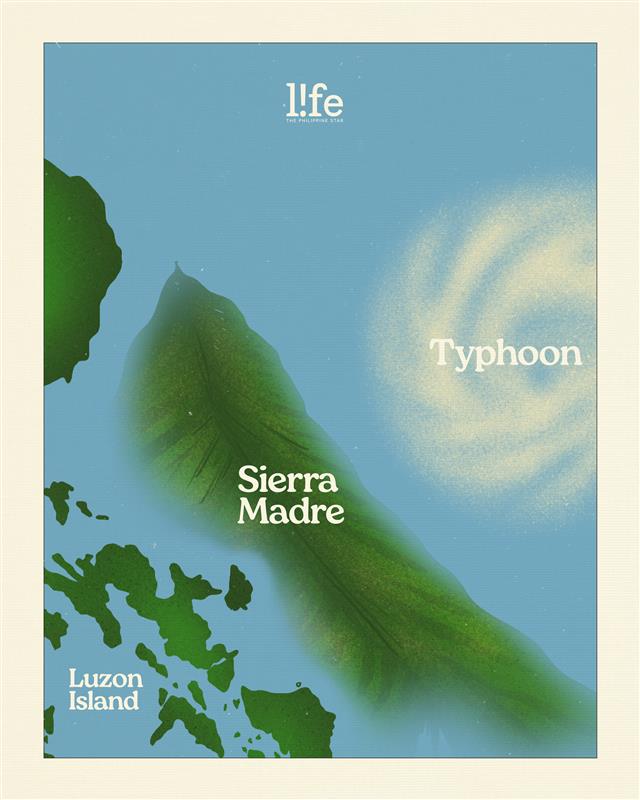
Banaguas compared the interaction to a kid (the typhoon) running down a hallway lined with a row of pillows (Sierra Madre).
"The pillows on the side might brush against [the kid], but they won't stop him unless he runs straight into them," he wrote.
Sierra Madre also acts as a buffer against storm surges. As waves from the Pacific Ocean crash onto land, pushed by the typhoon, the mountain range's tall cliffs become a veritable wall that keeps the water largely off the land.
Where the 'Backbone of Luzon' falls short
Among the scientists and agencies who are seeking to educate about the actual capabilities of the Sierra Madre are American storm chaser Josh Morgerman.
On his Facebook page, Morgerman, who flew to the Philippines specifically to study Super Typhoon Fung-Wong or Uwan, explained that the Sierra Madre chain "weakens typhoons *after* they make landfall on the east coast of Luzon."
The Department of Science and Technology, in its own post, clarified some misconceptions about Sierra Madre's absolute power. “May kakayahan itong bahagyang pahinain o bagalan ang lakas ng hanging dala ng bagyo—lalo na sa hilagang-silangang bahagi ng rehiyon,” the DOST wrote on Facebook. “Gayunman, hindi ito nagbibigay ng ganap na proteksyon laban sa matitinding epekto ng mga ito.”
The agency based this statement on a 2023 study published in the Philippine Journal of Science by University of the Philippines Diliman Meteorology professors Dr. Gerry Bagtasa and Dr. Bernard Alan Racoma.
In their study, where they used weather models to study 45 typhoons that hit Luzon between 2000 and 2020, the scientists found that Sierra Madre can help weaken winds only by 1% to 13 %. According to them, the Cordillera Mountain Range is more effective at reducing wind speeds than Sierra Madre.
Furthermore, Bagtasa and Racoma wrote that while it does slow down wind speeds, Sierra Madre is not able to mitigate rainfall.
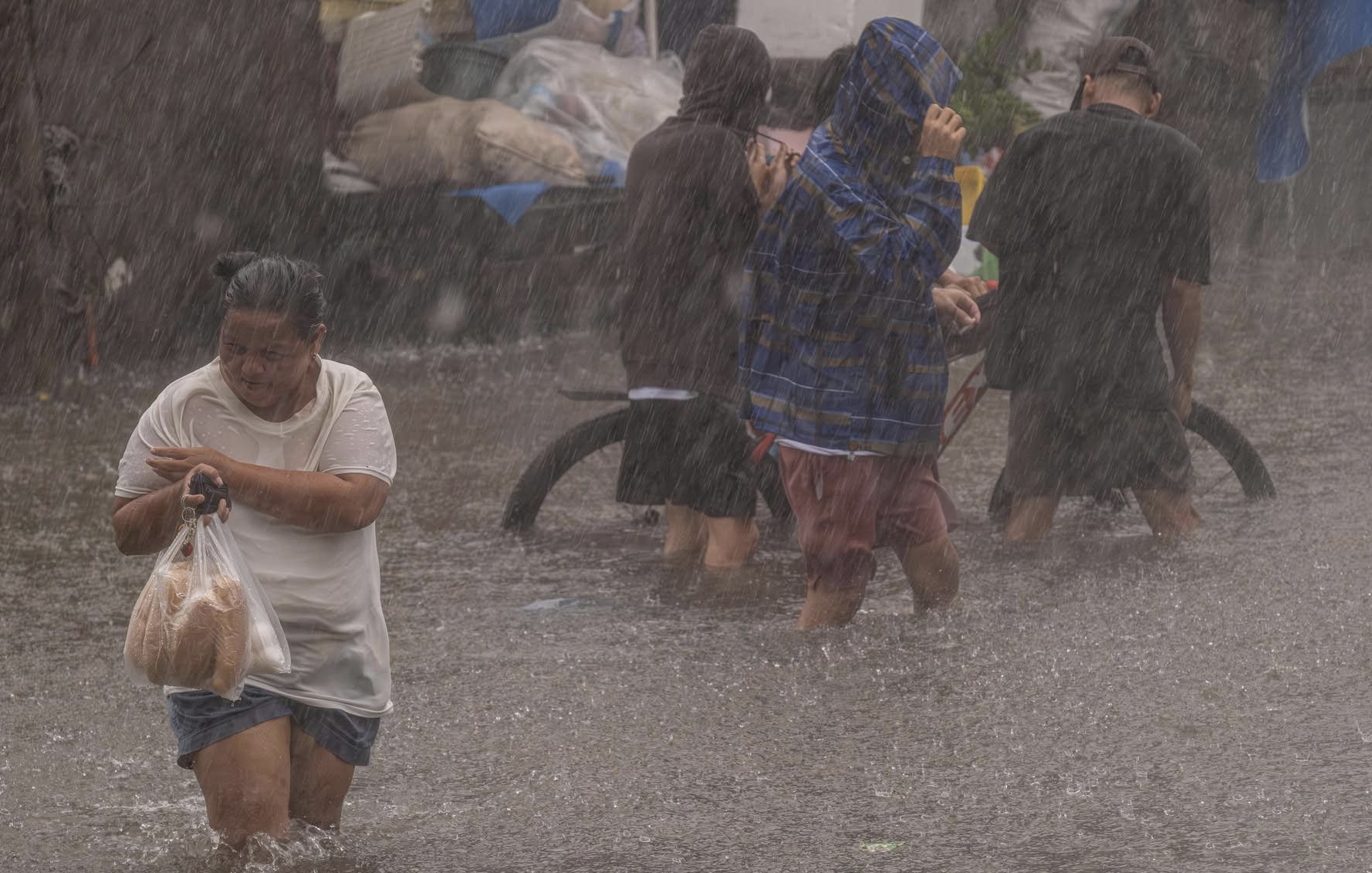
In September 2022, Super Typhoon Karding arrived in Quezon, Pampanga, Bulacan, and Rizal with a wind speed of 195 km/h. Metro Manila and Nueva Ecija were told to brace for heavy rainfall. When the typhoon hit Sierra Madre, the wind speed slowed, but it did not minimize the rain.
Explaining the effect of Sierra Madre then, Bagtasa told L!fe that while the mountain range did affect Karding, most of its influence affected the distribution of rain rather than its intensity.
"Kung rugged 'yung surface, like may mountains, 'yung paghina will be more pronounced. In terms of Sierra Madre, it's not tall or high enough to have a significant impact in reducing wind intensity of tropical cyclones," Bagtasa said.
He continued to explain that mountains are, in fact, known to increase rainfall.
As the storm approaches the mountain range, the terrain pushes the rain clouds in the storm upward. With all that moist air being “squeezed” together, the interaction produces heavier rainfall. Banaguas called this effect orographic rainfall.
"The mountains don’t stop the storm, but they make it rain harder in some places, especially on the side facing the ocean," he said.
Additionally, according to Banaguas, terrain can only significantly and permanently weaken a storm when the typhoon spends more than 12 hours hovering over land. If the typhoon moves fast, all Sierra Madre can do is slow it down a little.
Banaguas shared all this based on empirical data. "Studies confirm that terrain-induced friction and uplift influence storm structure, even if the eyewall remains intact," he told L!fe.
Unfortunately, it's still rainfall that wreaks the most havoc in the Philippines, not strong winds, according to Bagtasa and Racoma.
Still vital to survival
Despite its inability to completely block off typhoons, Sierra Madre is still crucial to our survival against natural calamities. After all, it is also home to 3,500 plant species—58% of which are endemic.
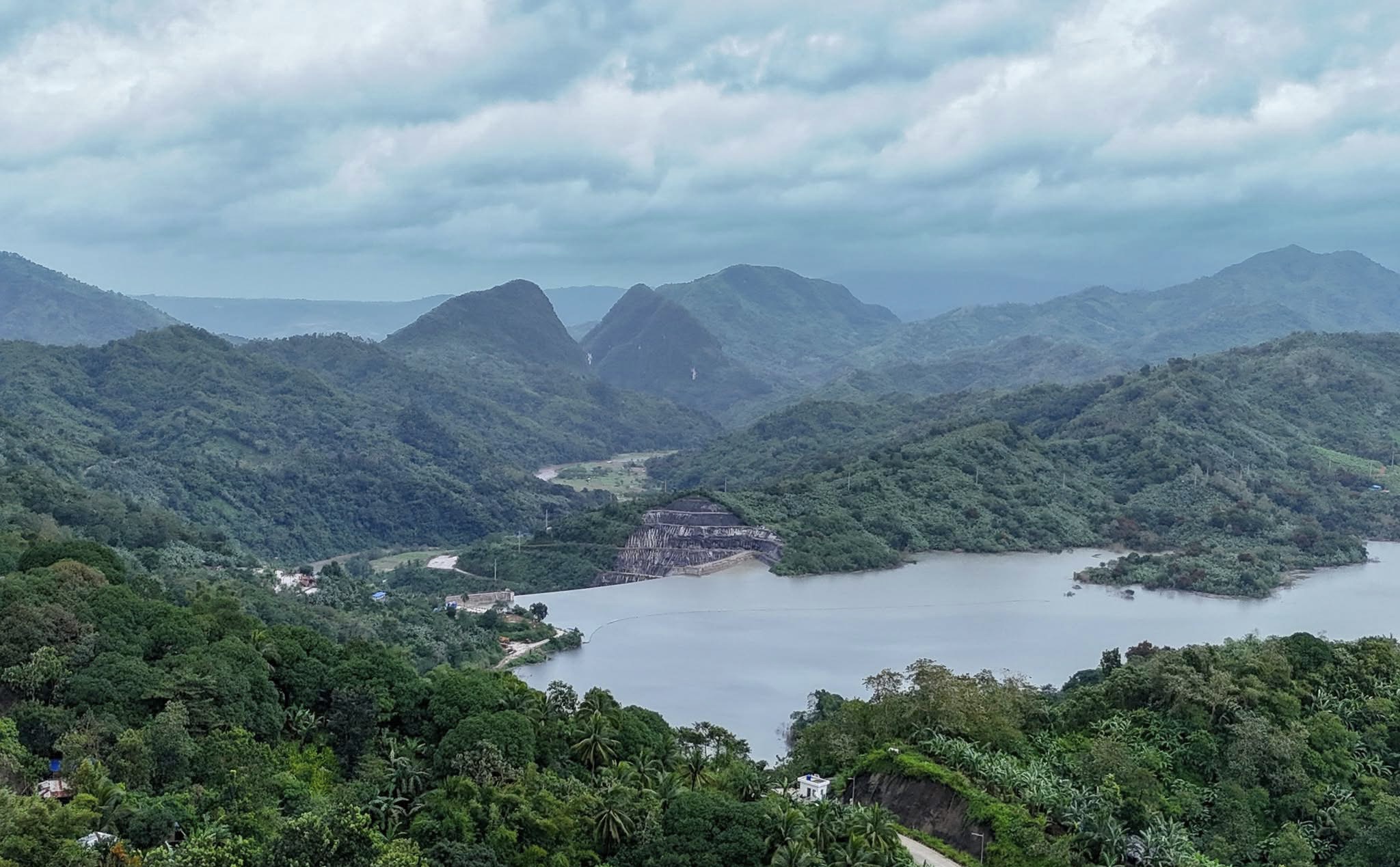
Bagtasa and Racoma, in their study, emphasized the need to protect the mountain range against deforestation, mining, and other kinds of environmental abuse that endanger its biodiversity. In fact, it is a task all Filipinos must do for every mountain in the country, not just its northern backbone.
Beyond protecting Sierra Madre, Banaguas called for continued alertness: "Sierra Madre softens the storm’s edges, but it cannot stop the heart of a tropical cyclone. That’s why we must never rely on hope alone. We must prepare early, listen closely to weather updates, and care deeply for one another."