What do we really mean when we say everything is political?
“It’s not that deep” is usually a good way to dismiss attempts at political discourse. It’s a definitive conversation-ender on seemingly trivial matters such as the harm of a “harmless” homophobic or rape joke.
We can use it to entirely avoid conflict, especially in intimate circles like family reunions. At dinner tables, we eat peacefully by completely shutting down discussions on the necessity of boycotting union-busting corporations that sell us our condiments, or ignoring the transport strikes around us.
Every utterance, even silence, has political weight. Whether or not we acknowledge it, politics is in our homes, communities, and everyday life.
As peacekeeping as this aversion may seem, it is a symptom of a much larger problem. In a country like the Philippines—a nation shaped by colonization, dictatorship, and capitalism—nothing is truly just an opinion, just a choice, or just a joke. There’s a reason why someone might feel entitled to jest about rape and then be surprised when there are consequences.
Every utterance, even silence, has political weight. Whether or not we acknowledge it, outside of our halls of congress and ballot boxes, politics is in our homes, communities, and everyday life. It’s inescapable.
Let people live
Politics is in our education system—in the books we are prescribed to read, the parts of our history that are omitted and taught, and the language we’re encouraged to use. It’s even in the efficiency, or lack thereof, of our public transportation system. Our roads, down to the bollards, are built on someone's decision, usually a politician, and the business interests that were prioritized.
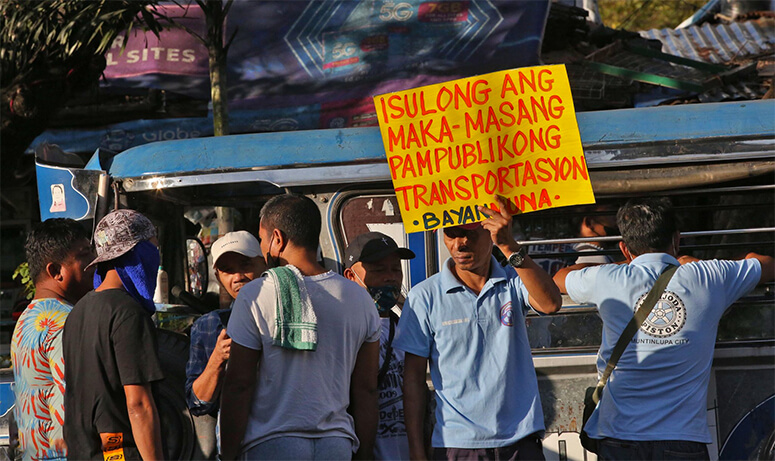
Everything is political. Believing otherwise may be comforting, as it allows people to create an illusion of a world where we can be neutral, apolitical, or simply be living our lives, but this only benefits those in positions of privilege. If you're not being harassed for your gender, displaced out of your home, or dying from hunger, it's easier to believe that politics is optional.
No one wants to spend their family reunions debating with their aunt on body-shaming, arguing with their grandparents on the morality of divorce, or talking about the criminally underpaid farmers who put food on their tables. Some of us would rather ignore these things than be called an overly sensitive snowflake. However, this avoidance only allows injustice to take deeper roots.
Our neutrality is a political choice that rarely benefits those in the margins.
When we retreat from discussing topics like extrajudicial killings, we devalue human lives. We’re complicit in our reduction to statistics, collateral to a failed war on drugs. By refusing to engage in politics, our collective memory fades, powers become unchecked, and political dynasties that plundered our country to a seemingly perpetual debt are enabled to erode our democracy.
Engaging in politics is essential because it shapes our lives. We must challenge the status quo breeding injustice, and push for a politics that builds a more just and equitable future.
Taking accountability
Changing the status quo is easier said than done. Once we recognize something as political, we must reckon with our role in it. It demands that we take accountability. What do we tolerate for the sake of our personal convenience? Whose oppression do we ignore to preserve our comfort? Are we willing to give up our favorite fast-food restaurant if it’s supporting genocide?
Engaging in political discourse—even in uncomfortable or messy ways—can cultivate awareness and empathy. It opens up collective action and solidarity, reminding us that politics isn’t something abstract; it’s in how we distribute our resources, rights, and recognition. It’s in the price of rice, the caliber of our education, the safety of our streets, the dignity of our labor, and the overall quality of our lives.
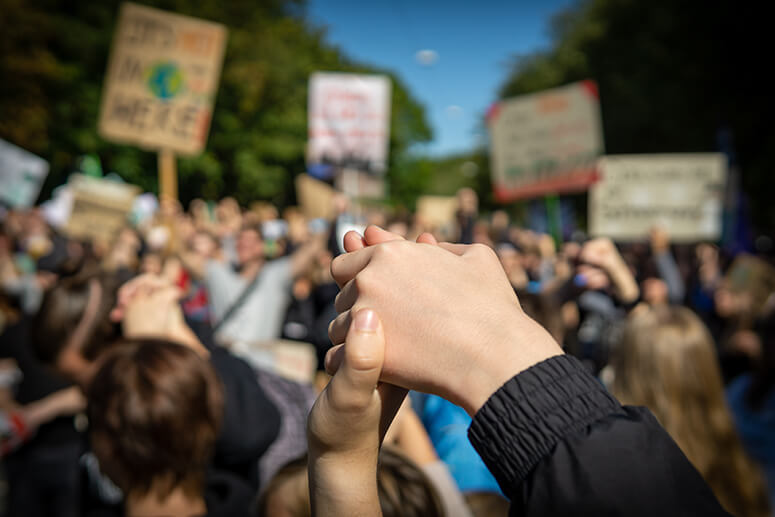
Participating in politics, whether through voting, activism, community organizing, or even just staying informed, is how we reclaim agency in shaping our society. Women’s suffrage, free education, and even tax exemption were all won through sustained political struggle.
Participation also deepens solidarity across our differences. It empowers us to share democratic spaces. When students join indigenous groups in the protection of ancestral lands, or when urban professionals donate to community pantries, these alliances are antidotes to the isolation that modern capitalism cultivates. At its best, politics weaves individual stories into a communal fabric sturdy enough to resist inequality and injustices.
In the Pedagogy of the Oppressed, Paulo Freire wrote, “To exist, humanly, is to name the world, to change it.”
Depth is not a flaw
Thanks to how troll farms have weaponized rage baits, political conversations are often reduced to an “us versus them” battle, crushing nuances under slogans and catchphrases. Politics, however, is not inherently polarized. Acknowledging its omnipresence does not require constant combativeness. Genuine political engagement can be, and often is, a nuanced endeavor.
Political engagement acknowledges complexity and avoids reducing issues to caricatures. It accepts that people can disagree without sacrificing each other’s humanity. It makes room for listening as much as speaking. Such engagement recognizes that no one has a monopoly on truth; it also opens space for intersectionality. Social issues are usually, if not always, interconnected, and solutions require multifaceted approaches rather than simplistic binaries.

This can look like a respectful dialogue between opposing views, or supporting causes based on principles rather than partisan loyalty. It may even look like public officials upholding human rights, justice, and dignity over their personal beliefs.
It is truly that deep, but depth does not have to be a flaw.
Politics surrounds us like water surrounds fish. Recognizing it is the first act of liberation. Facing that depth does not guarantee that we will always swim in perfect strokes, but it does mean we stop pretending we can breathe underwater by closing our eyes.
Acting upon it, especially with the help of communities and movements that help us stay afloat, is how we begin to shape the currents— towards justice, dignity, and a future where no law, justice, or even a joke is weaponized against the vulnerable.