

A newfound swagger for Metiz
It took more than half the year for Metiz to be fitted with new clothes. And now that it’s more tailored than before, they haven’t looked any better—and any more confident, too.
“We made the kitchen more spacious, allowing us more space for us to cook, more space for storage and refrigeration. We used to have a lot of dead space at Metiz. It looked pretty, but we needed more functionality,” says chef owner Stephan Duhesme.
“It took three years for Metiz 1.0 to get to the level it had achieved, then we realized we had simply outgrown the space to pursue any more ideas. There were so many things we wanted to, but couldn’t due to space constraints. From a service standpoint, we also wanted a more intimate experience. More open dialogue between guests and chefs. While not everyone may be interested in knowing more about why we do things the way we do, it’s nice to have the option to strike up a conversation with us.”
He’s referencing the dramatically lit 12-seater chef’s table, which smoothly wraps around the well-equipped industrial kitchen, consequently providing not just front row access to live cooking entertainment, but also dish descriptions coming from the very people who prepared them.
For a more intimate experience, diners can opt for the banquet seating running along the wall, positioned in a way where customers still get a glimpse of the open kitchen action. Or there’s the nook situated at the end of room, right next to the wine “cellar,” which allows people to revel in their own semi-private space.
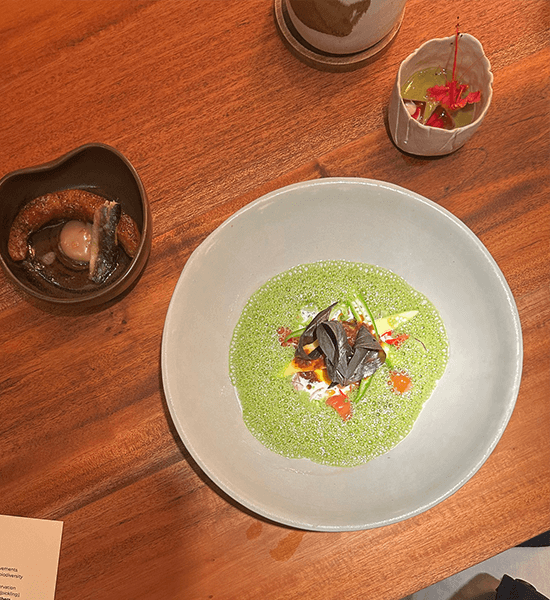
Aesthetics and layout-wise, the changes are major. It’s the same with the menu, which has been consciously made more accessible—“a little less intimidating, a little more flexible” is how Duhesme describes it. Proof of this case is the format in which the plates are served. They now come in four movements that start with a salad; followed by soup and a bread course; then succeeded by a set composed of a hefty protein, grains and greens; then capped with desserts.
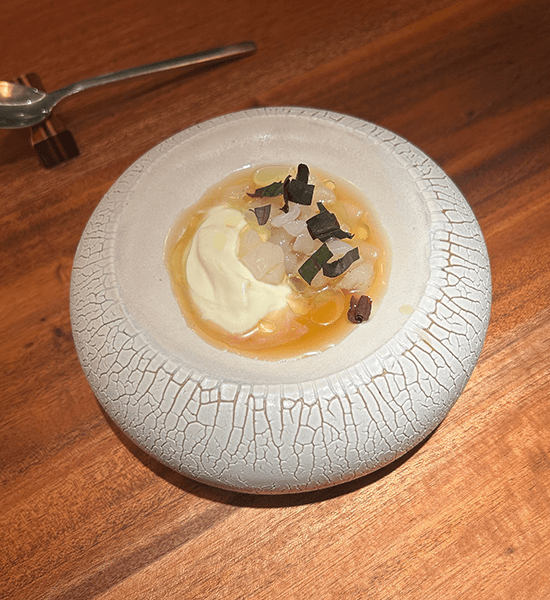
But true to Metiz form, they didn’t exactly come out the way one would expect them to look. The ensalada was wet—not just drenched, but more like sitting on a pool of liquid. Twenty different vegetables, prepared various ways—some raw, some cooked, some fermented — made up this stunning starter. They were tossed in a bagoong dressing then finished with a subtly sour dikai foam.
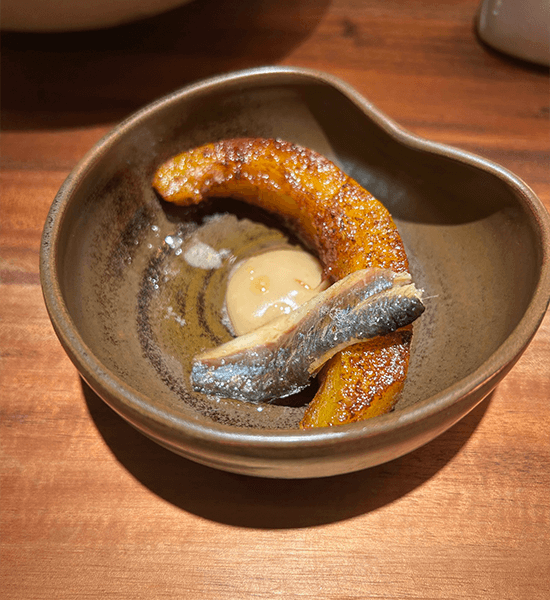
Simple yet super satisfying was the roasted squash number which was accompanied by nilupak na cashew nuts and a headless piece of smoked anchovy. There surely was a strong case being made in having just less than a handful of ingredients stir up such a memorable and mouthwatering dish.
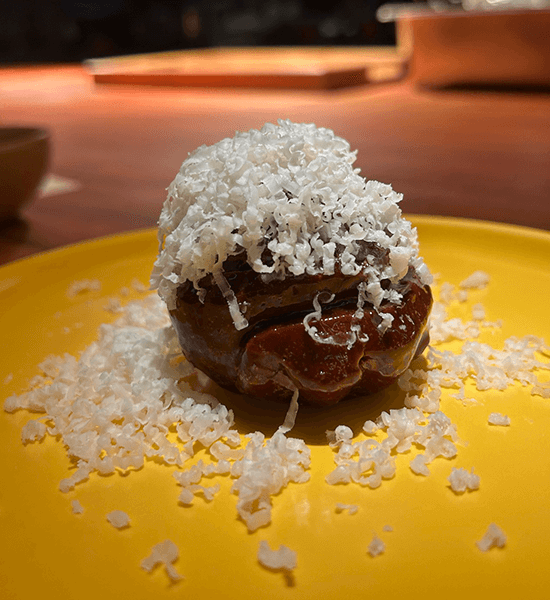
Their signature ensaymada was slightly bigger and more caramelized, still lusciously enrobed in Malagos gouda shavings, while their successful iteration on a Spanish tortilla—egg with melty potatoes, crustacean sauce and fermented peppers and black garlic—ate better than the traditional.
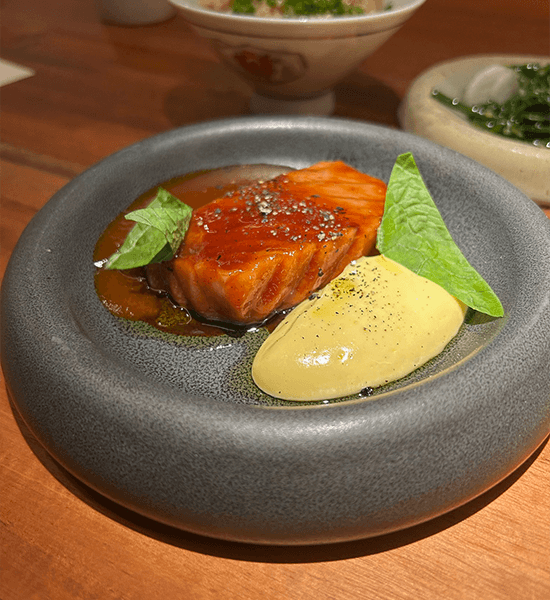
The main then came as a set: aged tuna belly kissed by the charcoal grill then glazed with a BBQ sauce made of tamarillo, pineapple and soy sauce; pork mechado jus; batitis hollandaise; pompano rice seasoned with mushroom broth; fermented radish; and native chicken broth.
Each movement impressed, without having to rely on pompous techniques and unnecessary textures. Sticking to the formula that has long worked for the brand from the get-go, Duhesme and co-owner and chef Arlo Gregorio work with the same cooking philosophy to produce familiar Filipino flavors balanced by ferments. Only this time, they taste extra rich as they are seasoned with more bravado, something very evident from the two as you see them work around the room.
“We are more confident simply because we now have this space to realize all of the ideas that we’ve been carrying with us for a while,” says Stephane. “We aren’t limited by our tools or by our space anymore. We only have to worry about the battle within ourselves. It removes a lot of things that are outside of our control.”
If anything, their newfound swagger promises even more delicious things ahead, much like their active participation in the Globe Platinum Gastronome Giving initiative. Until the end of November, each meal sold in their restaurant contributes to the Hapag Movement, a program aimed at eliminating involuntary hunger by supporting sustainable livelihood and programs to battle child stunting.

“Metiz 2.0 was able to happen because so many guests, many of whom became friends, supported the restaurant, whether it was through our very first opening months, the pandemic with our various experiments, or the pop-ups during our renovations. It made sense for us to support this initiative.”
The guys are paying it forward by doing what they do best. With such a delicious meal served in an equally delicious space, no one really is at a loss with this deal.