Debunking the rumor that Tuguegarao and Isabela are not tourist destinations
Whipping winds and torrential rains caused by the onslaught of typhoon Opong threatened the cancellation of the International Council on Monuments and Sites’ Tuguegarao and Isabela study tour scheduled for last Sept. 26. But mercifully, the typhoon left the Philippine Area of Responsibility two days before departure, making the trip joyfully possible for the departing group composed of four board members—Dr. Cheek Fadriquela, Mylene Quinto Lising, Joselito Corpus, and myself—with popular tour guide and ICOMOS member, Ivan Man Dy. Nonetheless, during the tour, cloudy skies and occasional rain showers came and went, alternating with extreme heat, which we were told was characteristic of the weather in Tuguegarao’s hot season, considered the hottest in the country ever recorded.
While Tuguegarao and Isabela are not two of the most popular destinations for tourists looking for “chill” spots like beaches and other relaxing environs, the charm of these two provinces lies in their heritage sites packed with historical significance and natural attractions, something beyond my expectations.
Churches
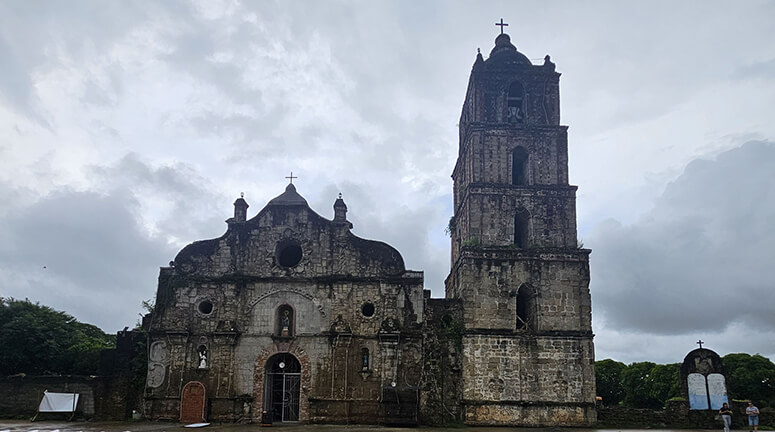
Among the oldest structures in the two provinces are the churches. In Isabela, the 401-year-old church of San Pablo, built in 1649 and damaged during World War II, also survived a magnitude 7 earthquake in 1949 and in 1950; and in one instance, its roof burned down. Its façade still exhibits visible bas reliefs of icons, its sturdy buttresses still visible, supporting the aged but steadfast structure made of bricks, river stones, coral stones and adobe. Six layers of this material form its belfry, known to be the tallest in the Cagayan Valley. Hometown tales have it that diggings through the old walls leading to the altar were done in search of Yamashita’s treasure. Whether it was found or not, the church itself is declared by the National Museum as a National Cultural Treasure. Unable to reconstruct the damage, a smaller church was built within its walls to serve the community’s celebrations of faith.
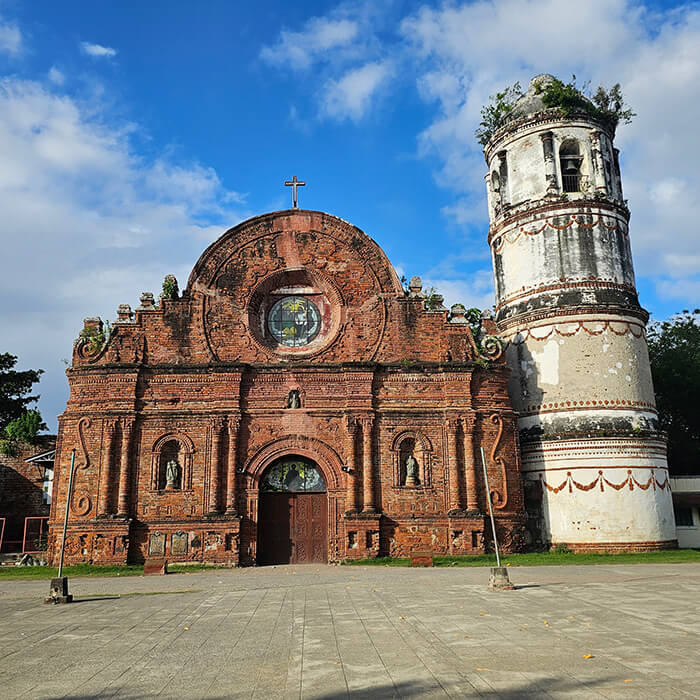
Just about 10 kilometers from the San Pablo Church is the municipal church of Tumaini, the Church of San Matias, which, unlike San Pablo, is a well-preserved structure built in 1751, also in the Baroque style like San Pablo. “Tumaini” originates from an Ibanag word “mauini” which is the name of big trees found in the area. Legend has it that when Spaniards asked, “Como se llama el grande lenia? Sabes tu?” The native replied, not understanding what the Spaniard said, and answered “ Tu mauini,” meaning “large trees.” The stone church features a 25-meter cylindrical bell tower, reputed to be the only Spanish colonial church with this feature, which resembles a wedding cake. Its heavy bell is riddled with bullet holes from the war but has not been re-casted, perhaps to preserve it as a reminder of the war. The municipality is known as the “premiere golden grain” city in northern Isabela, with the reputation of being the center of education for youth science education.
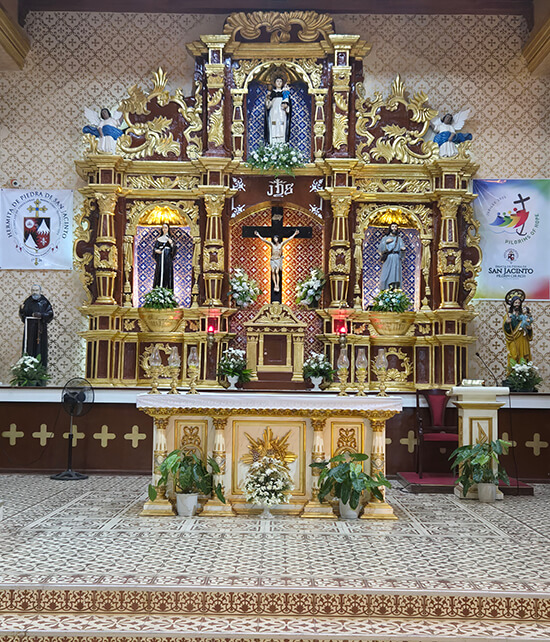
If the San Pablo Church was the oldest in Isabela, San Jacinto Ermita church is the oldest in Tuguegarao. It is a significant landmark, utilized as the garrison and hospital of Filipino revolutionary forces in 1898 and headquarters for the American soldiers. Made of bricks, its dome-shaped façade known as a rock structure, it is accentuated by white framework and pilasters, a belfry at the central top with finials on either side of the structure. The structure which houses the Cagayan Museum and the Historical Research Center was once the Spanish-era Casa Tribunal and the old provincial jail as well. If there is any place that a history buff should visit, this is where the region’s historical and cultural artifacts that define the province’s significance is housed: from indigenous arts, crafts and relics to historical tales, one can be transported in time, shooting up the value of cultural heritage preservation.
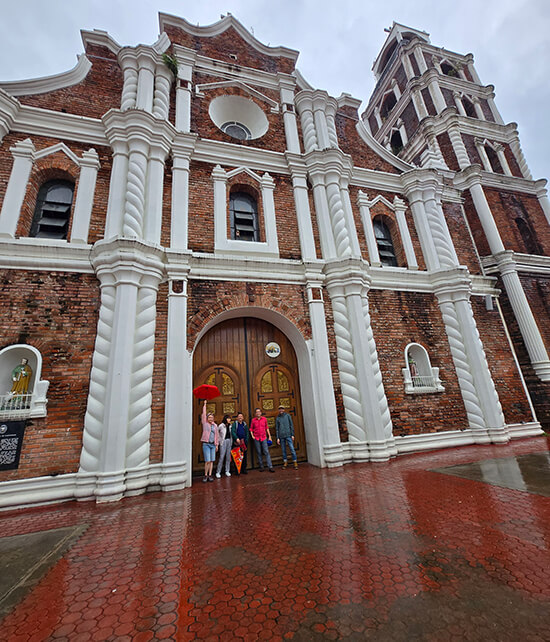
St. Peter Metropolitan Cathedral, or the Tuguegarao Cathedra—yet another Baroque church but done in the “barn style”—was built for the Dominican friars by architect Antonio Lobato. Unlike the first two churches, its façade has been described as whimsical and playful with Solomonic twisted designs on its pilasters. On its windows and columns are varied symbols like keys, papal tiaras, the sun and moon, and at the center is an ominous (at least to me) oculus. From afar, the church with its panels of red bricks and white framework could, in one sense, resemble a Chinese pagoda, with its wavy roof design and finials.
Arched flying buttresses of red bricks support the walls of the 1787 Church of Iguig, also known as St. James the Apostle Parish Church or the San Antonio de Galicia Church. It is designated as a National Historical Landmark. An architectural focal point, it is the only church in the province that features the traditional flying buttresses common in Gothic church architecture. It is built on a hill referred to as Calvary Hill, as life-sized replicas of the three crosses on Calvary, as part of the 14 Stations of the Way of the Cross, overlooking a valley. It is undoubtedly the go-to place on Lenten season.

The Minor Basilica of Our Lady of Piat’s history dates back to when the Dominican Friars brought from Macau a black image of the Virgin carrying the Christ child. The image has been attributed with various “miracles” over the years. Believed to be made of papier-mâché, the image gained a reputation for divine favors, and over time, the people’s devotion is reputed to have bordered on fanaticism. The mysticism of the image somewhat defines the profile of this place and town talk underscores the devotion to the image.
Ruins
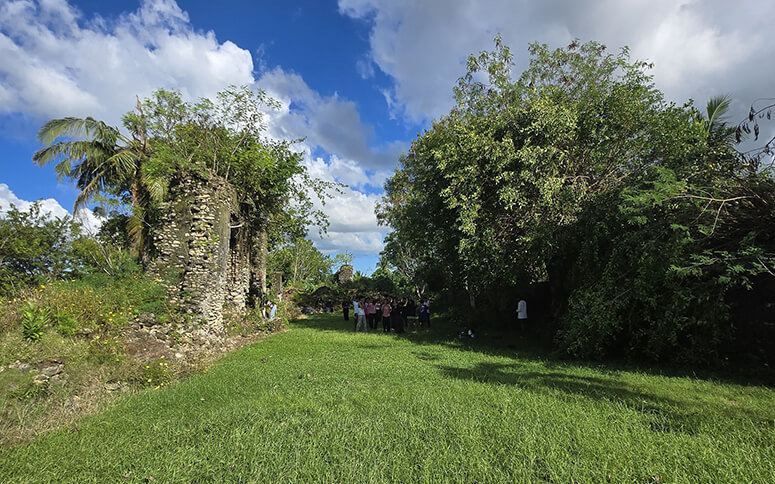
Well-maintained church ruins and old kilns called “hornos” have been preserved in Tuguegarao. The Tocolana Church ruins, for example, still maintain a recognizable architectural design. Sixteenth-century remnants of the Pata church in Sanchez Mira, close to the Pata river, still stand as constructed by two Dominican friars: Gaspar Zarfate and Miguel de San Jacinto.
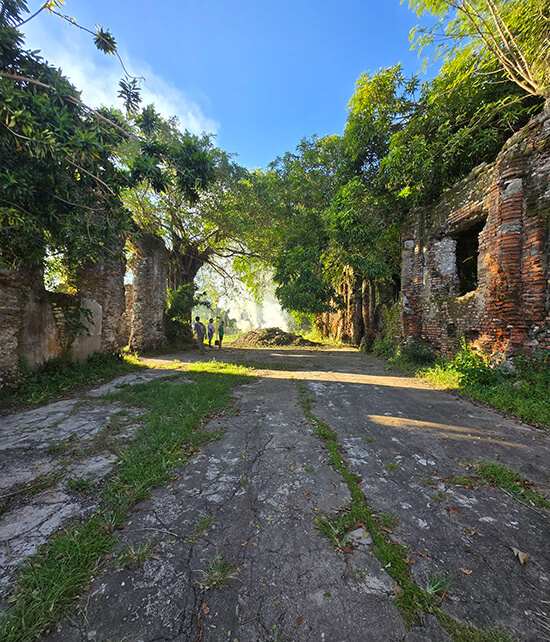
The Camalaniugan bell tower, church ruins and horno stand elegantly. Beside the newer church is a bell tower housing the oldest bell in Asia. The rest of the structure consists of stones left standing from the church’s walls, beautifully and naturally decorated by lush vegetation.
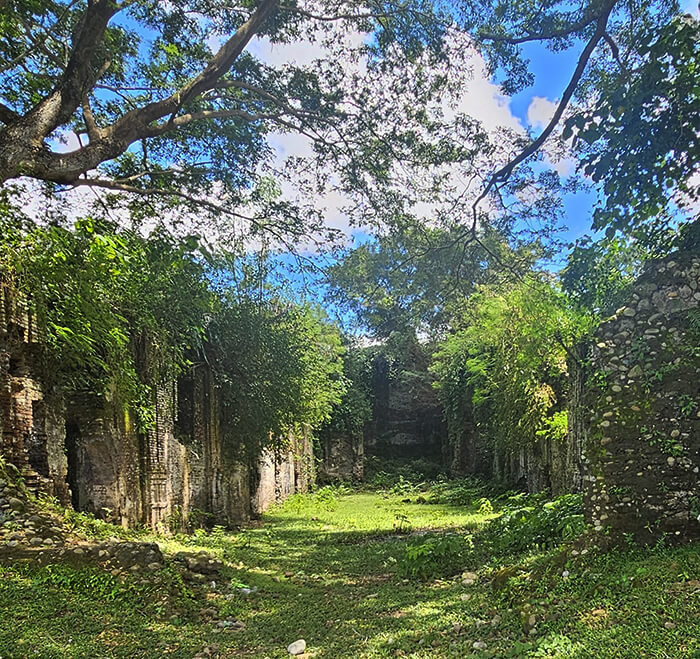
The Tabang church ruins, with its remnants of red bricks, is recorded as one of the early churches to use cement and steel in 1731. Architect Manolo Noche classifies the church as the “proto-Tuguegarao” type of architecture. This refers to an architectural style developed by Fr. Antonio Lobato de Sto. Tomas, done in the Baroque style with “theatrical flair,” featuring ornate pediments which are seen in most churches in Tuguegarao. The ruins of the church form a beautiful landscape of green paths and big trees, framed by the red brick ruins.
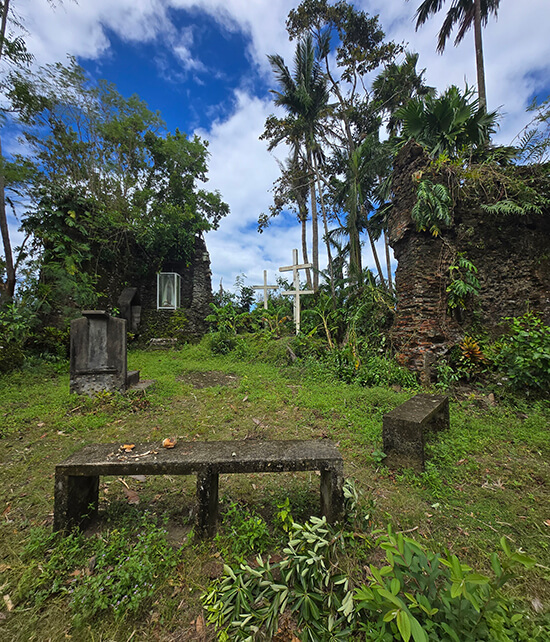
“Horno,” translated from the Spanish, means “oven” or “kiln.” Its ruins are found in a 16th-century Spanish port. After climbing some steps, passing photogenic twisted huge roots of decades-old trees decorating the hillside, we reached the kiln which was used in the production of clay bricks, lime mortar. We were told they were also sometimes used for cooking or baking food. Another horno is located in Camalaniugan. Sadly, this art of traditional brick making and pottery is now lost, but it didn’t stop us from doing a photo op with us inside the kiln, thankfully exiting the horno unbaked. These ruins were exactly that: ruins, photogenic ones at that.
Recalling the sentiments recorded in John Ashurt’s Conservation of Ruins, these so-called rundown structures are quoted to be “a considerable part of our architectural heritage… preserved as ruins, maintained as ruins,” per Italian architect Gionata Rizzi, known for his involvement in the Herculaneum Conservation Project. Tuguegarao is one of those provinces that has respected ruins for what they are, and in the midst of this photogenic rubble, one senses their value, aesthetics and significance, and to a certain extent, adds architect Rizzi, it evokes a romanticized feel of an “evocative icon of times past.”
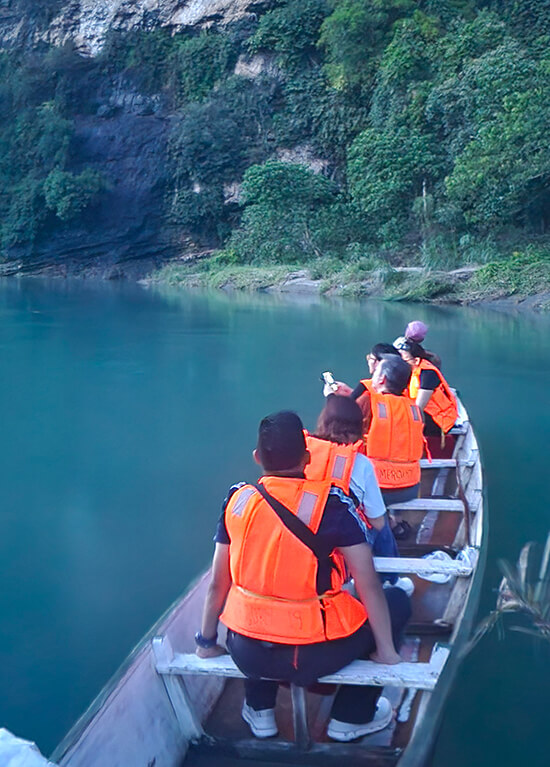
What better way to end the study tour than with a fiesta before boarding our bancas to head over to Callao Caves? Passing through the Tuao town proper, festooned with buntings, march music was playing in typical fiesta mode. But before celebrating with the townfolk, we headed for the bat caves.
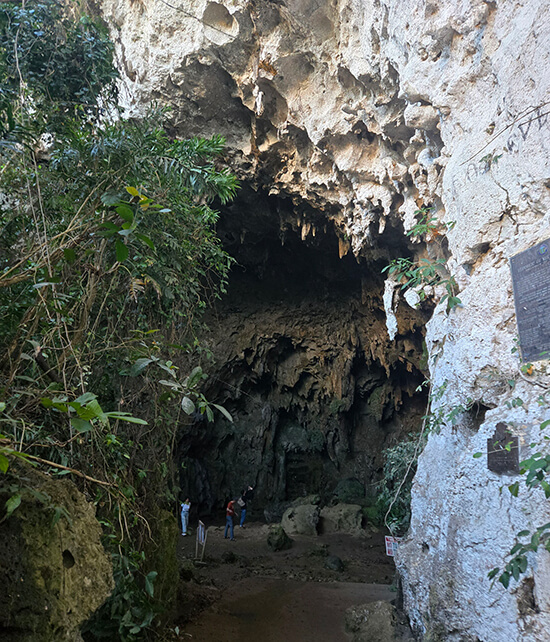
The dramatic cave stalactites and stalagmites of the Calao cave set the tone for the bat exodus that was to follow. Row we did in our bancas, headed to the bat cave entrance. And we waited. And waited… till nightfall, only to be informed that the bats had migrated earlier than usual, way before we even arrived. In a way I was relieved, as I was a bit antsy about being swarmed by thousands of bats, whom I feared would pee in mid-flight. Knowing that their liquid excretion could cause blindness if it comes into contact with the eyes, I was secretly relieved to get back to dry land.
After a short freshening up at the hotel, it was back to “civilization” at the National Museum of Tuguegarao, with dinner hosted by its hospitable director, Kevin Baclig, adding even more interesting tidbits to our “study.”
This was a study tour like no other, a learning curve, a journey of unexpected sights rife with eye-opening information, not to forget the taste exploration of the region: pansit Tuguegarao, dinakdakan, igado, sinabalu and others, plus the ever-popular, tasty Tuguegarao longganisa… not to mention the pasalubongs of milk candy and chicken feet chicharon.