

The grand way of tea
It was more than just a cup of tea.
Memory stirred into the milky oolong, recalling a teabag in a mug of hot water. My father had passed on the remedy to calm gastric discomforts that occurred frequently when everyone was asleep. I would heat water in his special teapot that was sufficient for one serving of Sir Thomas Lipton’s infusion. Sometimes Dad would wake up and join me for light conversation or be a quiet presence till I was done. Caffeine notwithstanding, it always worked, and I would fall soundly asleep after he tucked me in.
Stolen tea
Tea has been known to soothe aching tummies owing to its anti-inflammatory properties. The Chinese knew of its therapeutic effects as far back as A.D. 3 and consumed the leaves of the camellia sinensis plant as a medicinal drink. This evergreen shrub is indigenous to southwestern China, as well as Myanmar and Northeast India, although it is now cultivated in over 60 countries. Historical accounts credit Robert Fortune for the expansion of the tea trade in the British Empire through the East India Company. He was a Scottish plant hunter and botanist who surreptitiously transported the tea plants, as well as skilled Chinese tea growers, to India in 1848. The theft contributed to the establishment of tea estates in East Africa as well as South Asia.
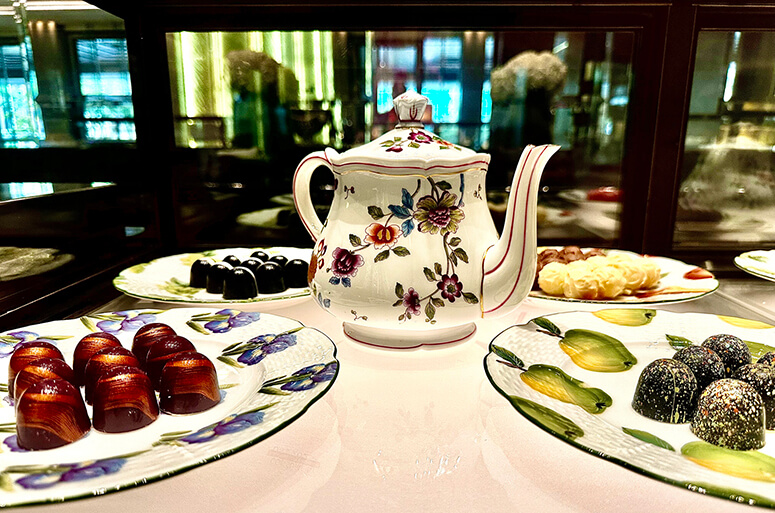
The flavor of respect and humility
All tea preparations are made from the camellia sinensis, differing only in the process to produce black, green, white, pu-erh, and oolong. Young leaves are handpicked and are allowed to wither, causing the elimination of excess water. This is part of the oxidation process that determines the kind of tea it will become. Green tea is less oxidized, resulting in lightness and a pale yellow-green color. Black tea requires more oxidation and is darker, and transforms into an amber or reddish-brown elixir with a stronger, bolder flavor. The others fall somewhere in between.
As tea became a universal drink, it transformed into more than a treatment to relax digestive muscles. It became a spiritual ritual, a ceremony honoring the harmony of man and nature, a performance of skill and precision, and a way of showing respect in small gestures. The whisking of matcha in a ceramic yunomi, or the turning of an earthenware cup, reflected movements embodying quiet discipline and mindfulness. Humility and gratitude were conveyed by a gentle pouring of water into porcelain cups. Small gestures transformed an ordinary teacup into a reminder that respect need not be grand.
Another side of the world steeped tea in refinement and social grace. British culture brought together a community to converse and connect with tiered trays of scones and sandwiches and a cuppa in delicate china. It was an elegant blend of propriety and congeniality, an afternoon affair when lunch was done and dinner was hours away. Such a practice was not far removed from the Philippine merienda: a spread of sweet and savory local delicacies washed down with a variety of beverages. Nuances differed from the English tradition, but both spoke the universal language of hospitality and friendship. It was these and more that came together into a cup of tea at the Mezzanine Lounge of the Grand Hyatt Manila.
Bingsu, scones with clotted cream, and pancit palabok
The Grand Hyatt Merienda Cena buffet spreads the flavors of different cultures in a setting of plush settees and generous spaces. Foods familiar and dear to the Filipino palate are offered alongside classic tea-time fare. Besides the traditional bite-sized sandwiches, there are open-faced versions such as the crispy sisig cigar with pork mask, chicken liver with chili and onions enhanced with garlic calamansi aioli. The beef salpicao sandwich version has striploin steak, crispy garlic, smoked paprika, and lemon gel. Seafood options include the home-cured Norwegian salmon with dill cream cheese, capers, and citrus, and the shrimp toast with spring onions and tobiko spicy aioli.
A pianist plays softly, adding to the sensory pleasures of the foods laid out to entice the eyes and satisfy the mouth. Between tasting the tuna ceviche (kinilaw na tuna) and the shrimp in Marie Rose sauce, there are sips of the milky oolong, chosen over summer gold Darjeeling, fancy sencha, jasmine gold, Ceylon decaffeinated, pure chamomile, and, of course, Earl Grey and English Breakfast. There are no tea bags, only whole tea leaves in the English teapots.
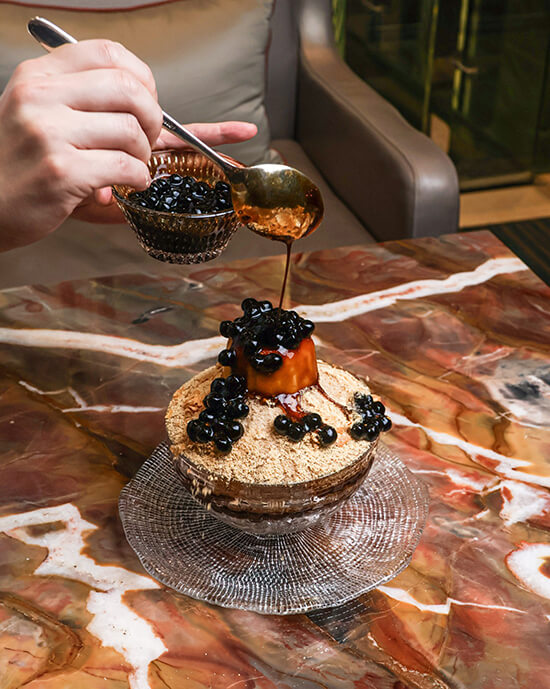
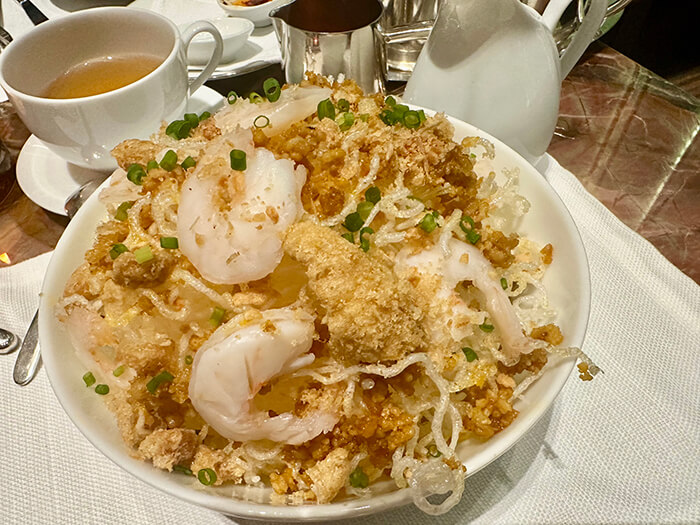
The return of the celebrated pancit palabok on the menu compelled a serving of the noodle dish with shrimp, pork belly, smoked fish, pork crackling, and egg. Another favorite, the Korean dessert bingsu, was given a twist using bubble tea, milk tea shaved ice, sea salt ice cream, roasted soybean powder, and caramel pudding served with brown sugar boba on the side.
Live stations offered beignets, the deep-fried French pastry, with a choice of raspberry, mango, chocolate, or caramel sauce. Other sweet options are the banana flambé, mango sans rival espuma, The Grand Hyatt’s signature strawberry cheesecake, chocolate cake, mocha hazelnut, and pistachio kataifi.
The mid-afternoon ritual would not be complete without arguably the best scones in the city, served with the most authentic clotted cream. According to chef de cuisine Alexandre Esnaud, it is the fastest-moving item on the buffet. It takes almost a day to prepare the clotted cream made with cream cheese, mascarpone, and whipping cream.
Alchemy of memory
Any preoccupation is best appreciated with preferred company. Time slows to a saunter as cups are refilled and conversation extends to evening. Every sip can be enhanced by pleasant circumstances or bring calm to disquietness. Whether it is the warmth of a hot cup or the alchemy of compounds that soothes and relaxes, a sense of well-being soothes overactive minds and wearied spirits. Then, too, the flavor of a good memory leaves an aftertaste that lingers beyond the last drop. This is tea at its very best.