Is it game on, or game over for ‘Tron: Ares’?
It’s rather ironic that a Disney film highlighting the importance of being “real” and “alive,” with all its built-in limitations, is largely set in a programmed digital Grid, as is the case with all Tron movies, but particularly the latest installment, Tron: Ares.
There are meta levels to this. There’s our aspiration for entertainment that feels “real” and life-affirming, but which itself is actually a dizzying matrix of super-powered CGI settings and a lead actor—Jared Leto—who, on a good day, registers as a hipster cyborg.
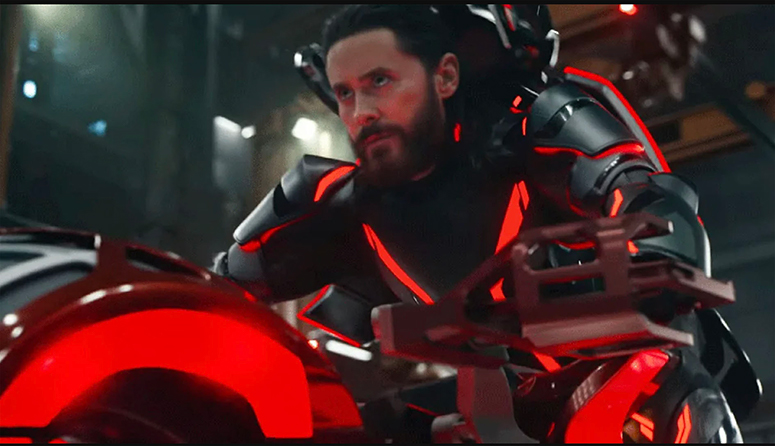
Leto (who co-produced this standalone entry) plays a new version of the warrior program first introduced in 1982’s Tron, which blew the world’s mind with its cutting-edge computer graphics and imagery, but was, to be honest, a bit clunky, despite the presence of young Jeff Bridges. Leto’s program, built from A.I., is called Ares, as in the God of War, and he’s brought into the real world by tech baddie Julian Dillinger (Evan Peters), who pitches him to military generals as the perfect super soldier—instantly replaceable, with all kinds of cool toys that will guarantee victory over opponents.
But things get complicated when Ares begins to discover that he has a built-in expiration date of 29 minutes in the real world. Despite constant imperatives to simply “follow orders,” Ares starts raising questions.

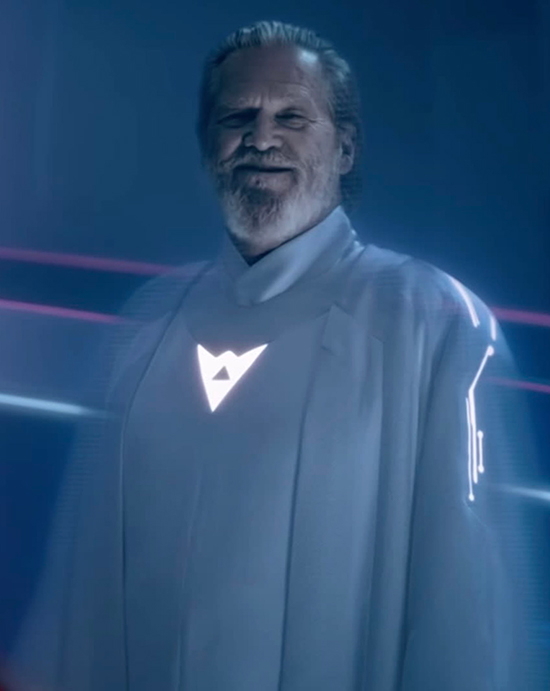
The toys are, indeed, cool. Leto is also cool, to be honest, and more likable in this role than, say, Niander, the weird-eyed replicant designer he plays in Blade Runner: 2049. He even admits to Tron inventor and fellow Grid occupant Kevin Flynn (Jeff Bridges) that he prefers Depeche Mode to the surface complexities of Mozart, though it’s a choice he can’t fully explain because “It’s… just a feeling.”
Along a separate path, a considerably more altruistic tech company, Encom, is run by Eve Kim (Greta Lee). She wants to locate a “permanence code” that will allow Tron creations to exist outside the Grid with a normal lifespan, so they can help solve problems like world hunger and cancer. You know: good stuff.
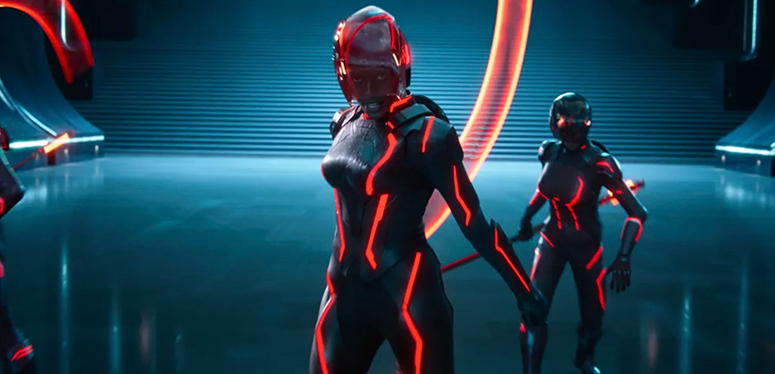
Their paths cross as Dillinger starts using his short-lived Ares soldiers to hack into Encom systems and steal the permanence code. Failing that, he has Ares and his lethal sidekick Athena (Jodie Turner-Smith) track Eve down in the real world, and this leads to dazzling LightCycle chases through cityscapes. It’s that, plus some killer Ares warrior battles using those Lite-Brite Identity Discs they hurl around, that really turn this movie up to “11,” especially viewed on IMAX screens with 3D glasses.
Given that Tron movies are more a showcase for evolving Disney technology than strong narrative, the latest outing, directed by Disney staple by Joachim Rønning, is action-driven, relies on decent chemistry between Lee and Leto (who looks more grunge than synthetic), and revolves around a simple enough parable about A.I.’s misuse and its threat to society.
Above all that, it features a fizzing, bone-crunching soundtrack by Nine Inch Nails, which is all you really need to accompany a LightCycle chase sequence. When the film’s upcoming release was announced at 2024’s Disney convention in Los Angeles, D23, the crowd was met with a simple walk-on by Trent Reznor and Atticus Ross, wearing Tron-like sunglasses under a huge red TRON: ARES marquee. They gazed out at the hooting crowd, then silently walked off, like the true rebel cyborgs they are.
As director, Rønning’s function is not to get in the way of the action, and he mostly does this. As Ares adjusts to the real world, though still on a time limit, he pairs up with Kim, on the run from Dillinger’s synthetic goon squad. Shades of Terminator movies, of course, but also Blade Runner in its more ruminative moments. Those moments often involve wistful reflections on rainfall and mortality, much like the Replicants in Ridley Scott’s classic (which also came out in 1982).
The irony of this tightly-controlled digital smorgasbord of dizzying effects, cutting-edge technology, and surface-level characters being asked to present a message about A.I.’s creeping mission to dehumanize us all was not lost on this viewer. You can’t say the message is particularly deep, but it slips through in moments of connection between Ares and Eve.
Lee, so good in Past Lives, and even her sly side role in Netflix’s Russian Doll, does her best to play a real-life human being paired with Leto (though I admit, in the opening TV screen version of her promising technology “for the people,” I thought she was A.I.). Yet Leto’s range, despite some decent one-liners, tends to be restricted to the level of Data from Star Trek: Next Generation.
Tron: Ares did make me think about the ominous path of A.I., and specifically the final scene of Blade Runner: that wonderful moment where Roy Batty (Rutger Hauer), before breathing his last breath, says: “All those moments will be lost in time… like tears in rain…” You later realize that actor Hauer, in the midst of filming this elaborate Ridley Scott production, with its endlessly polished script based on Philip K. Dick, chose to improvise those final poetic lines. In other words, he went off-script. And that should remind us that, no matter how much A.I. inches towards replicating humanness, the essential ingredient that is still missing is that ability to improvise: that bit of human soul.
It’s something not even Disney can fake.