REVIEW: Is 'One Battle After Another' 2025's best film?
If combining multiple narrative elements into a magnificent, almost entirely unrecognizable whole with clockwork precision were a sport, director Paul Thomas Anderson would be an S-tier level athlete. Kicking off his career in the late 90s with critically acclaimed fare such as Hard Eight, Boogie Nights, and Magnolia, Anderson solidified his reputation in the aughts with Punch Drunk Love and There Will Be Blood. By the time he got to the 2010’s with The Master and Phantom Thread, Anderson had well and truly established himself as one of cinema’s most potent creative voices.
Anderson’s latest, One Battle After Another, marks the director’s second adaptation of a Thomas Pynchon novel, following his success with Inherent Vice in 2014. Taking elements from the famously reclusive author’s Vineland, the new film tells the story of Bob (Leonardo DiCaprio), a revolutionary whose exploits sent him and his daughter Willa (newcomer Chase Infiniti) into hiding when the latter was an infant. The relative peace of their exile is shattered sixteen years later, when Bob’s de facto nemesis (Sean Penn as the amazingly named Colonel Steven Lockjaw) decides to eliminate any loose ends that could threaten his career advancement. With time running out, Bob will need to step up from his now-sad sack existence to keep Willa safe.
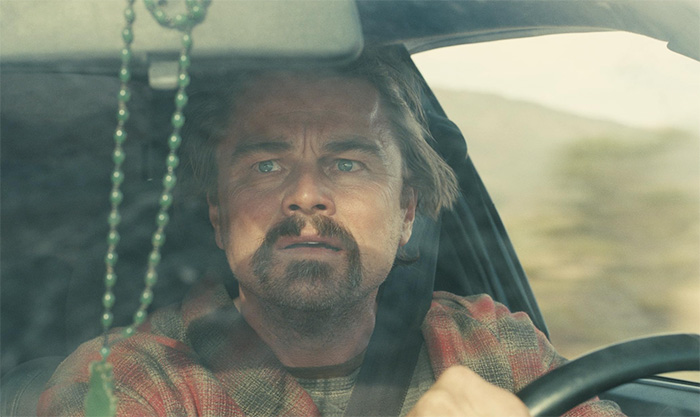
Led by DiCaprio and Penn, the story plays out against a fictional American landscape of racial tensions, forced deportations, and the threat of armed military response, before pivoting into a roller-coaster of hilariously absurd coincidences, plot twists, and double crosses that will have the audience on tenterhooks while leaving them in stitches. As he did with Inherent Vice, Anderson’s ability to find the beating heart in a wholly unconventional story proves a perfect fit for Pynchon’s postmodern sensibilities.
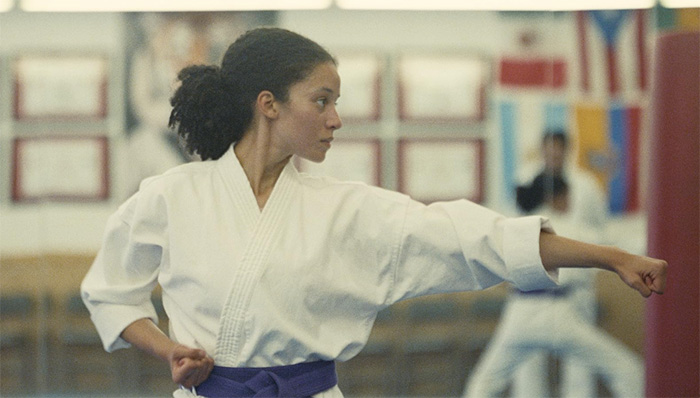
While less outright whimsical and/or reliant on the blockbuster flourishes favored by some of his contemporaries, Anderson’s work has its share of sentimentality, often buried between layers of pitch-black comedy. Here, the father-daughter dynamic keeps things anchored with a level of believability, personified by Infiniti’s exceptional turn as Bob’s daughter. Raised with the full reality of their situation in mind, Willa is tough and resourceful, boasting a fortitude that makes her easy to root for. At the same time, Infiniti has an easy chemistry with DiCaprio that makes them a believable father-daughter duo, despite the latter’s infamous real-world dedication to bachelorhood.
That DiCaprio is one of the best actors working now goes without saying; that he’s even better when removed from the pressures of looking like a movie star, even more so. Clad in a ratty old bathrobe for the bulk of the film, and likely in need of a shower, DiCaprio’s Bob is utterly pathetic, having all the charm (and likely smell) of a used ashtray. His wits being dulled from years of drug- and alcohol-abuse notwithstanding, Bob’s devotion to protecting his daughter is clear (even if he has no idea how he’s going to do it). Anderson’s script gives Bob an inexplicable ability to fail upwards, which the film mines for equal amounts of tension and comedy. Indeed, DiCaprio’s character doesn’t so much drive the plot as he stumbles into it through sheer force of luck.
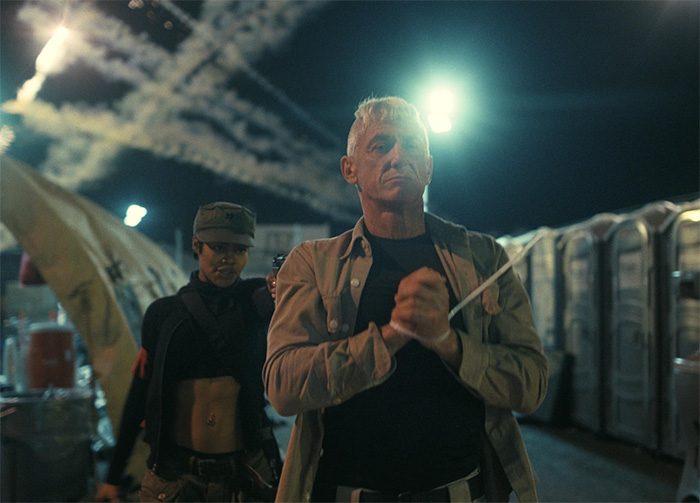
As the perpetually pissed-off Steven Lockjaw, Sean Penn’s military man is cut from an entirely different (ie. cleaner) cloth: from his meticulous crewcut and exaggerated posture to the undersized t-shirts showing off his physique, this is a character built to intimidate. While Penn may have gotten in shape for roles in the past, it was never to the level of Vince McMahon’s ‘roided out stunt double (complete with ludicrous power walk). Nearly unrecognizable, Penn’s exaggerated physique and mannerisms help sell Lockjaw as the angriest man in the room, willing to crush everything standing between him and the completion of his mission.
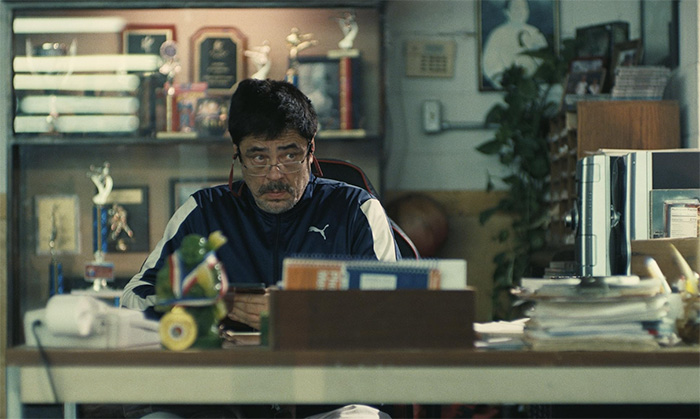
Special mention must be made of Benicio Del Toro as Sergio, who is—hands-down—the single best character in a movie filled with brilliant characters. Whether he’s closing his Karate studio for the night or single-handedly hiding a multitude of refugees from the military, Sergio can be trusted to have a plan, a comforting word, and/or a beer at the ready. As Sergio, Del Toro is effortlessly cool, calm, and collected whenever he appears on screen, and one would be genuinely surprised if he weren’t a lock for Best Supporting Actor nods in the coming awards season.
Shot by cinematographer Michael Bauman (Licorice Pizza) on the same venerated VistaVision film format as last year’s The Brutalist, One Battle After Another promises an extraordinary visual experience for those lucky enough to see it as intended. For Philippine media, the film was previewed in the slightly larger IMAX format, which made for unprecedented clarity, stunning detail, and textures, especially in sequences showcasing the California desert. Bauman and Anderson designed this film for the big screen, and it shows.
Which brings us to the million-dollar question: Is One Battle After Another the (so-called) best film of the year? With big ideas and bigger laughs, a compelling story rooted in current events, and a fearless cast delivering some of the best performances of their careers, Paul Thomas Anderson may very well have delivered the best crafted, most satisfying film of 2025, thus far. There may be two months left to the year, but in the race to Best Picture, the bar has been immeasurably raised, and—as of this writing—nothing else comes close.
S-tier, indeed.
Watch the trailer below.