Muscle memory as magic
"Good God, why am I telling you all this?"
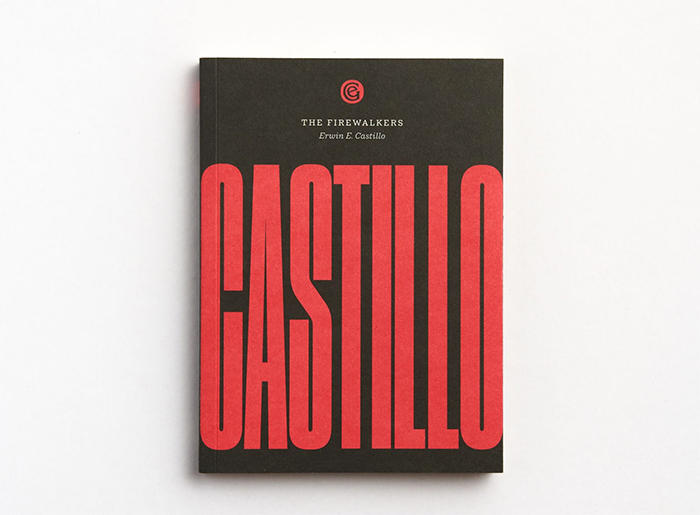
That’s the last line in Erwin E. Castillo’s debut novel The Firewalkers, which was first released in 1992 by Anvil Publishing Inc. I failed to attend that historic launch, a merry affair as I heard, with Fernando Poe Jr. as the premier guest, sparking talk that the book would be turned into a classic action film. Reading the masterpiece once I returned from abroad, I recall imagining Ronnie Poe as the taciturn hero.
That line, however, actually ended Castillo’s long story, “The Watch of La Diane,” written much earlier, in 1972, but which has been the companion narrative to The Firewalkers novella. That early, the preceding sentence for that story somehow established it, so presciently indeed, as the postlude in what the author has claimed as “intertwined narratives.”
“And I was growing, a burr of static, a dizzying height of fire, right into my mouth with its sea-taste, and when I blew it was a bramble of lightning, endless as the sea, endless as China, exploding in my eyes.”
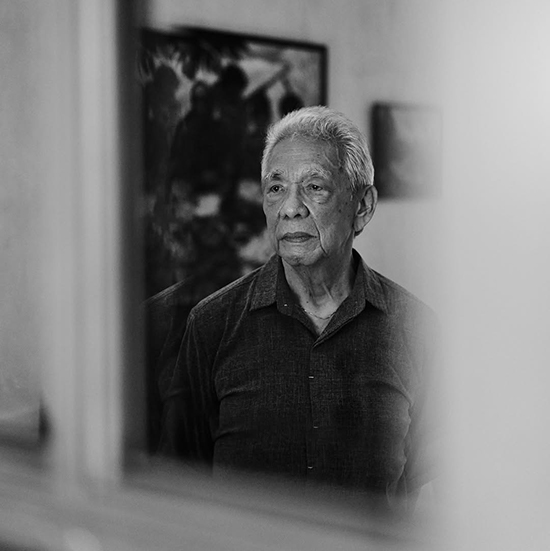
It’s easy to see that Castillo’s highly heralded prose, elegantly muscular and privileged with memorable, powerful details that marry magic and realism, has given him the right to dance with time zones. Exposition has always been transformed into rhythmic song, dialogue into lessons on the bravery of characters’ memories, and sleight-of-hand into a solid skill that mesmerizes with its command of illusion.
All these years, fellow writers have wished to be entertained further by Castlllo’s succeeding works. We might not have to wait much longer,

For now, we have Mara Coson and Exploding Galaxies Books to thank for publishing “lost classics” of Philippine fiction—Wilfrido Nolledo’s But for the Lovers and Linda Ty-Casper’s The Three-Cornered Sun. The 2025 reprint of The Firewalkers is the third in that exalted series.
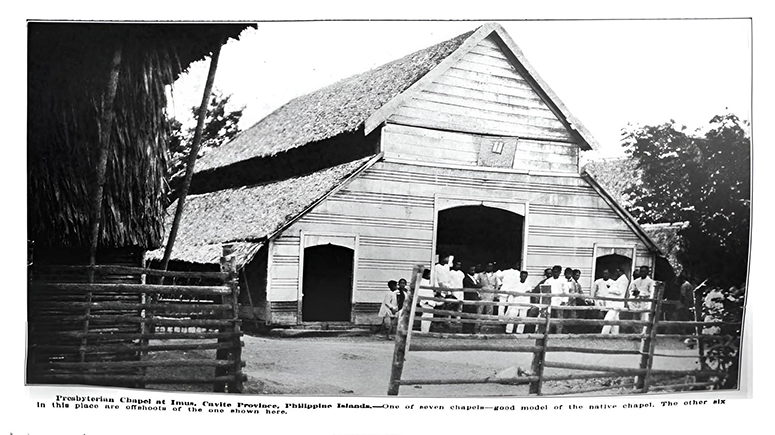
Cavite of 1913 provides the historic setting.
“Like many of the chieftains of the Revolution, before they were warlords, they were shamans, though looking at them now you could scarce believe they could will themselves into creatures of splendor, that they could pass unsinged through flames.”
The young hero is championed as an early warrior, exemplary in hand-to-hand combat.
“Though slim, Gabriel Diego was quick, clever, and without mercy: stomping on fallen men to break their ribs or holding them by the hair and banging their heads against the ground until they coughed up blood and rolled the blacks of their eyes upward and behind. For this, Gabriel Diego was rewarded with bottles of beer, leavings from whiskey bottles.”
He is conscripted as a scout by the Americans to figure in battles, ambushes, and massacres in Mindanao. He returns to his hometown of Lakambaga in Cavite, where he takes over as a police sergeant, the only law in town, with a halfwit named Buso as his deputy. He loses his wife and son, but carries on with his job as the town’s protector. He continues to engage manfully with opportunity. He makes love in a river with the desirable Reinamaria Fenol.
“He burrowed into the largeness of her breasts, licking and sucking, grasped them and fondled them, swept his hands into the soft round of her buttocks, squeezing. He was sniffing, sniffing every hollow his nostrils could reach, filling his lungs with the sulfur and the woman. He stirred her between her thighs and entered, but where before she led him quickly to relief, she now commanded him, placing his hands where she wanted to be touched, and then thrusting on him without restraint or shame, so the leaves on the surface of the green water, riding the frenzy of their coming, circled respectfully, devoutly, farther and farther away.”
The American Major Edwards turns up occasionally to remind him of who’s still in command, against bandits and former revolutionaries. Across the Pacific too ventures the Apache Kid, fading star of the circus tent featuring sharpshooting frontiersmen, now searching for the Firewalkers he had heard about. His throwaway partner Littlefeather takes care of an old tiger in a cage when she’s not entertaining any man.
Gabriel Diego’s constant company is an Augustinian priest he plays chess with. He also expects support from his aging uncles, twins named Apollo and Castor Olfato, former revolutionary generals spurned by the Supremo Gen. Emilio Aguinaldo. They are still seen as municipal officials who can help resolve the mystery of murdered children attacked by a mythic beast. Other cameo characters include the actor El Boging Secundo who leads a comedy troupe, a Dr. Segovia from Manila, and a firewood gatherer and his wife.
Heroes, legends, and mythical figures gambol with different accents, lording it over the continuum of characters, along with the poetry of rifles and pistols, recurring flora and fauna, the changing of permanent sky.
Castillo’s strength as a storyteller relies on cyclical, nearly echolalic refrains of motifs and metaphors while priding on rhythm and rapture. He quietly parallels five fingers for the strings of a guitar with those poking into the five chambers of a revolver. Scars of battle are reviewed as repeat recordings. So are a white rock, a lightning-blasted tree, a green sulphuric river, hardtack, roasted rabbits and goats, spirits for drinking and revival, burning huts, familiar patches of jungle, trapping vines, mirrors in bedrooms and streams, variable winds, the constant imploration of sea, the quick furtive rigodon of lovers.
In contrast with the laconic Gabriel Diego—at least until his climactic aria of invocations—extended sermons, directives, and family annals are served, respectively, by the priest, the uncle Apollo, the major Edwards. Throughout the circling arcs of narrative, the qualifying phrase enhances the mystery of unnamed terrors, ghosts of the past and future.
Gabriel Diego’s fantasy is served in style:
“… (A)nd as they come he opens his eyes and sees the beast in the window, in the lightning, watching him.
“Sooner or later, the monster said, it comes to this: an old man waving his penis at ghosts.”
This second edition comes with a new preface from the author, and a Foreword by Erwin T. Romulo, EIC of Esquire Philippines, which has serially published Castillo’s follow-up novel, Port Engaño, whose thickness yet delays its completion. Then there can be Castillo’s memoir Cycling Chronicles, to also look forward to by next year.
For now, readers should be intrigued by Romulo’s Foreword, by way of explaining Castillo’s spheres of musical tempo:
“But the world he described to us in The Firewalkers is even more distant. On my worst days, I feel most of it is lost, especially its better virtues. Some aspects have remained though—like the preening machismo of its hero. I wish it didn’t.
“It is still being read.
“The author told the story with an air of myth. Perhaps it always was.
“If so, it will outlive all of us.”