Two possessed hands, and a blind eye to history
Two films I’m glad I caught at the recently concluded KinoFest German Film Festival at Shangri-La Plaza were historical in nature.
One was Köln 75, directed by Ido Fluk, concerning Vera Brandes (played by Mala Emde), a determined young woman in Berlin who strives to put on a Keith Jarrett concert at the Cologne Opera House. The film is really about the recording of an album (The Köln Concert) that went on to become one of the best-selling solo jazz recordings in history.
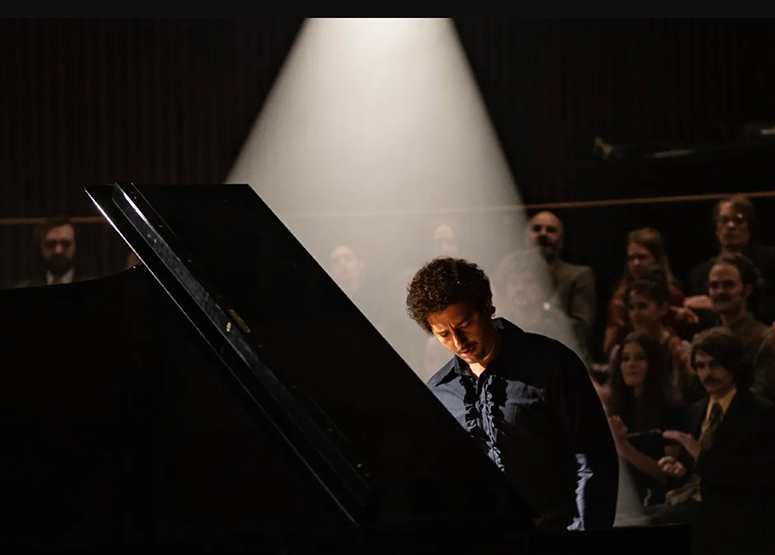
It was only a matter of time before somebody from Germany documented the jazz scene of Berlin in the mid-‘70s. Not only the rise of ECM artists, electric Miles, and jazz-adjacent Krautrock, but the spirit-moving improvisation of former Davis sideman Jarrett himself, who got under the skin of young concert promoter Brandes, telling the story through her own eyes of bringing the temperamental American pianist to play in Cologne.
Köln 75 serves up this tale with lots of rock ‘n’ roll energy, sprinkled with motorik bits from Can and Neu, not to mention, sex and drugs, in order to underline the revolutionary nature of all of this. The fourth wall-breaking by narrator Brandes and frenetic style will remind you of 24 Hour Party People, that ode to Factory Records and the Manchester sound told by a possibly unreliable narrator.
John Magaro turns in a mesmerizing performance as Jarrett, and even though the film skips the actual tightrope feat—improvising a series of introspective sketches and hypnotic passages, performed on a damaged piano the jazz artist vowed not to touch—it shows us the scaffolding that led up to it.
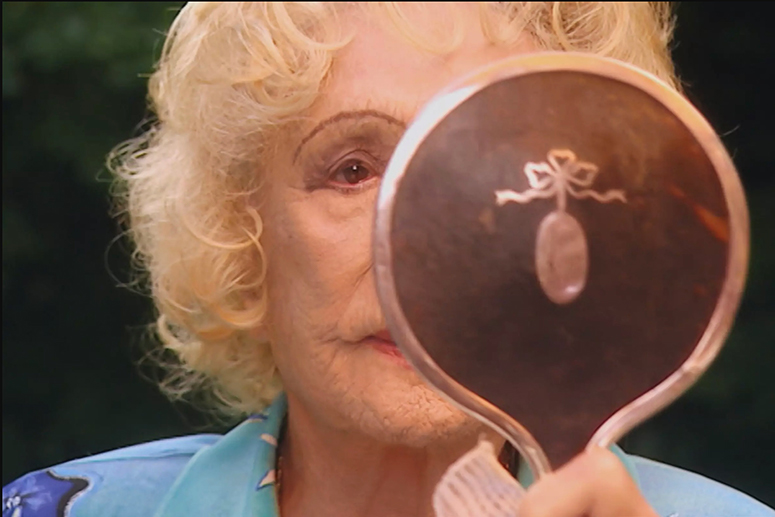
Meanwhile, the legacy of Nazi propagandist filmmaker Leni Riefenstahl is relitigated in the Andres Veiel documentary Riefenstahl. One would struggle to find a more defiant chronicler of evil. Enthralled by early Hitler speeches (“I got hot sweats when he spoke”), Riefenstahl was tapped to film Nazi Nuremberg rallies—enormous, staged spectacles with precise goosestepping—and always chose to film the Nazis from a lower angle, presumably to give them a majestic glow and dominance. Triumph of the Will, her 1935 advertisement for the coming Third Reich, is still shocking. “I was asked to film for the Fuhrer. What could I do?” Riefenstahl shrugs into cameras after the war, long after the death camps became history: “I could not say no.” Rather, the aesthete in her prefers to blot out the sight of gypsy children being led away from her set, sent to Dachau trains, while preferring to focus on the beauty of German physiognomy, the “deeper level of art” rather than its meaning or message. Until the end, she claims she never heard of such evil things inside the charmed circle of Hitler.
Clearly a fan girl, despite her claims of ignorance about what the Third Reich was up to, Riefenstahl lived her life in Denial City, with fierce tirades against journalists who implied her complicity; and yet, we also hear many recorded phone calls from German “fans,” even up until she died in 2003, still viewing her work as “truthful” and reflective of Germany’s “preordained destiny.” It’s shocking, until you realize how such nostalgic whitewashing of history’s worst moments can persist and resurface in a democracy, even one such as the Philippines.