New year, new signs
The year has barely begun, and many Filipinos, like countless others across Asia, are already busy reading the signs.
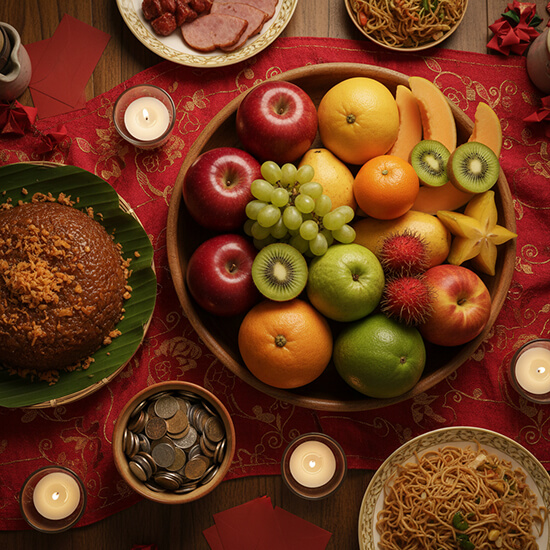
On New Year’s Eve, tables were carefully arranged with lechon and/or ham for abundance, noodles for long life, round fruits (preferably a dozen kinds) for prosperity, and sticky rice cakes for family togetherness. Rice, salt and sugar were stocked to keep the larder full, so to speak. Wearing red was expected. Pockets jingled with coins. Debts were settled (a tall order after the bonus had been spent long before Christmas). Lights in every room were turned on, and doors and windows were opened wide to let good luck rush in, preferably without the toxic fireworks smoke.

These rituals may differ slightly for folks all over the world, but the impulse is universal: start the year right, avoid bad omens, and stack the odds, cosmic or otherwise, in our favor.
When the calendar resets, we pursue the good signs and avoid the bad ones. And once the daily grind resumes, we turn to Western astrology for daily guidance and Eastern beliefs to plan the year.
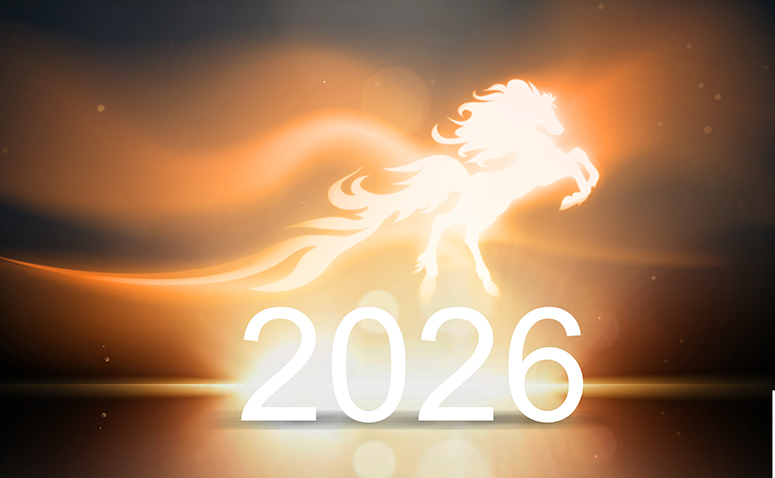
On Feb. 17, the lunar cycle ushers in the Year of the Fire Horse, a rare once-every-60-years cosmic event known for human failings and triumphs. In Japan, superstition ran so deep in 1966 that births plunged by a quarter, driven by the belief that women born under Hinoe Uma would be too headstrong, too fiery, and generally hazardous to matrimonial health. That same year also witnessed China’s Cultural Revolution, while an earlier Fire Horse cycle coincided with the 1906 San Francisco earthquake.
Yet, from the fire, creativity and innovation arose: the first moon landing; the first automated teller machine (so, please, stop saying ATM machine) was unveiled; the first artificial heart was implanted in a human patient; Indira Gandhi became the first female Prime Minister; and Star Trek premiered on NBC. Not surprisingly, a host of personalities in entertainment, media, and sports were born as Fire Horses: supermodel Cindy Crawford; actors Halle Berry, Helena Bonham Carter, Salma Hayek, John Cusak, David Schwimmer and Patrick Dempsey; director Jon Favreau; boxer Mike Tyson; and celebrity chef Gordon Ramsay.
The fascination with signs is hardly new.
In 1998, English artist Des’ree released her Supernatural album, featuring What’s Your Sign?—a song that explored astrology as an icebreaker, a flirtation, a way of making sense of one another. Its message remains surprisingly profound: belief aside, we all shine with our own light. We’re “stars on earth.”
For as long as humans have gazed at the sky, watched animals, or tried to decode patterns in behavior, we’ve been searching for meaning. I used to rely heavily on such signs when choosing lottery numbers—a faith reinforced when I won on my very first try using numbers I dreamed of. I believed—and still do—that there’s a kind of “force” around us: angels in disguise, moon phases, recurring numbers like 11:11.
Personality frameworks like the Myers-Briggs Type Indicator (MBTI) have also stepped in to fill the gap left by skeptics and disillusionment with fortune-telling.
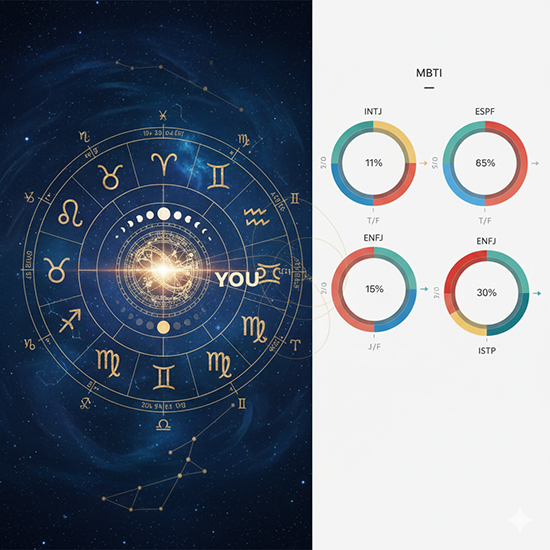
Taken seriously or playfully, all these systems reveal a shared human urge: the need to find patterns in chaos.
Naturally, astrology and MBTI clash, not just with each other, but with their proponents and critics. Astrology believers argue that personality is written in the stars. MBTI adherents counter that psychology offers a more grounded explanation. The tension itself is revealing. The believer seeks meaning. The skeptic seeks evidence. The pragmatist floats somewhere in between, checking horoscopes or personality tests “just in case.”
Confusion only deepens when systems overlap. Your Western zodiac might brand you fiery and impulsive. Your Chinese zodiac might call you stubborn and restless. Your MBTI profile insists you’re coolly rational. That combination could describe almost anyone at a bad Monday meeting, or every character in Succession.
Taylor Swift leans into Sagittarius optimism and turns it into a billion-dollar empire. J.K. Rowling makes Harry Potter a Leo, aligning him neatly with courage and reckless loyalty.
So, which is correct? All of them? None?
Reconciling them feels like inviting Gandalf, Confucius and Freud to the same New Year’s dinner party. Each arrives with authority, each has quirks, and none is likely to let the others have the last word, or split the bill.
Still, patterns do emerge. Western astrology looks upward, toward the heavens. The Eastern zodiac looks cyclically at time, using the connection among numbers, animals, and planetary elements as a roadmap to destiny. MBTI looks inward, mapping how the mind processes the world. Together, they form a cosmic–lunar–psychological buffet.
Popular culture thrives on these lenses. Taylor Swift leans into Sagittarius optimism and turns it into a billion-dollar empire. J.K. Rowling makes Harry Potter a Leo, aligning him neatly with courage and reckless loyalty. Marvel’s Doctor Strange is practically a Jungian archetype wrapped in Eastern mysticism and Western magic.
Even entire eras get astrological branding. The so-called Age of Aquarius—popularized in the 1960s and immortalized by Hair’s Aquarius/Let the Sunshine In—promised a time when “peace will guide the planets and love will steer the stars.”
MBTI fuels similar debates online: Is Darth Vader an ENTJ or INTJ? Is Eleven from Stranger Things an INFJ or INFP? These questions are half-serious, half-entertainment, yet deeply human. We love mapping ourselves and our stories onto grids of meaning. Personally, I’m still trying to understand why Superman wears red briefs over blue tights.
Why do we cling to systems that contradict one another? Perhaps because no single framework can capture the full messiness of being human. So, we mix and match. One sign gives us drama, another structure, another heritage. Where they overlap, we create our own Venn diagram of identity.
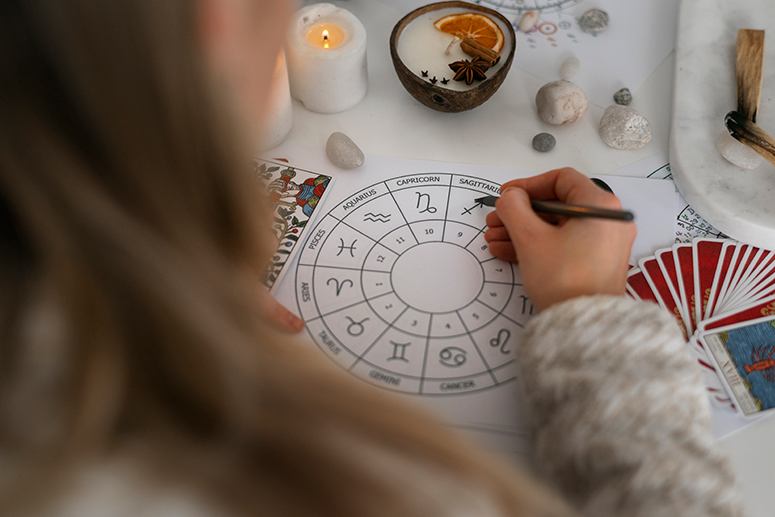
Maybe the real task at hand is deciding which traits to cultivate and which labels to leave behind. Every incongruity becomes less a flaw and more a feature, which is a stark reminder that people can’t be boxed in.
Besides, it’s hard to ignore the signs when they get it right half the time. Horoscopes, like weather forecasts, are unreliable yet addictive: you don’t fully believe, but you bring an umbrella anyway.
Some may call it destiny, others psychology, others coincidence. But if the universe really does have a plan, it clearly comes with a wicked sense of humor, and possibly a TikTok account.
As Des’ree sang, “We’re the stars on earth.” But maybe some of us aren’t stars at all. Maybe we’re constellations in motion, still figuring out how to connect the dots.