The patient lens: Alvin Lee’s floral poetry
From documenting the gritty human landscapes of Smokey Mountain in Tondo, Manila, to waiting hours for a single petal to catch the perfect light, veteran artist Alvin Lee’s journey culminates in “Nature’s Bloom.” This exquisite photo exhibit transcends traditional photography to become a vivid meditation on color, memory, and place.
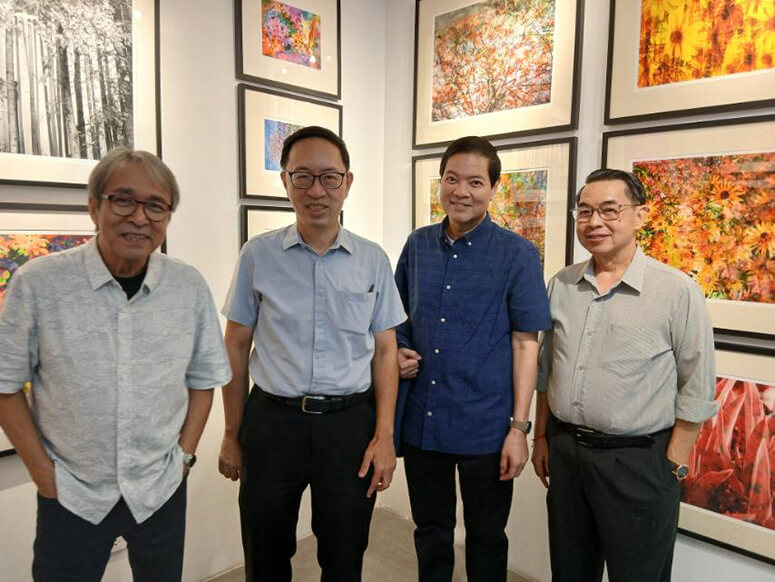
On display from Sept. 9 to 21 at The Crucible Gallery, 4th Floor, Megamall A, the collection invites viewers on a global journey through the vibrant, living poetry of flowers, showcasing Lee’s unparalleled ability to elevate photography into a fine art form through patience, technical precision, and an extraordinary artistic vision.
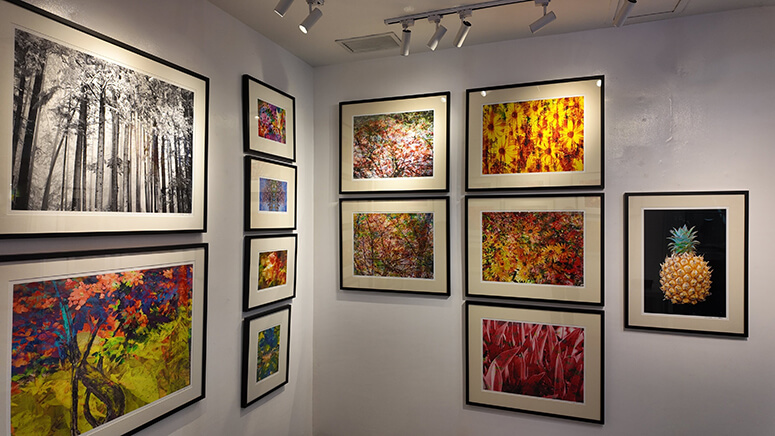
Lee’s work exemplifies the ethos of masters like Ansel Adams, who famously stated, “You don’t take a photograph, you make it.” Each image in “Nature’s Bloom” is a testament to this philosophy, reflecting hours of meticulous composition and waiting for the perfect interplay of light and subject.
Like wildlife photographer Mainak Halder, who waited three hours for the ideal frame of a bird, Lee demonstrates unwavering dedication, often lingering for hours to capture nature’s transient moments—whether it’s the soft glow of dawn illuminating a lotus or the golden hour highlighting the delicate veins of an orchid.
His images are not merely taken; they are crafted, embodying Robert Capa’s principle that “If your pictures aren’t good enough, you aren’t close enough.” Lee’s intimate proximity to his subjects, both physically and emotionally, allows him to reveal details often overlooked by the casual observer.
Lee’s artistic journey is deeply influenced by his mentor, legendary photojournalist Honesto Vitug. Vitug, who emphasized that “a great photograph must whisper to the heart before it speaks to the eyes.” This instilled in Lee a profound respect for narrative depth and darkroom craftsmanship. Lee also admired the humanistic style of W. Eugene Smith, whose profound compassion and meticulous composition sought to reveal the soul of his subjects.
Lee channels this same empathetic approach—not towards people, but towards nature, infusing each floral study with a sense of personality, place, and emotion, transforming blossoms into compelling characters with their own silent stories.
Lee’s artistic style also draws from iconic photographers Henri Cartier-Bresson, whose concept of the “decisive moment” resonates in Lee’s patience for ideal lighting, and Elliot Erwitt, who believed photography is “about finding something interesting in an ordinary place.” Through this confluence of influences, Lee finds profound narratives in the natural world.
Elevating photography as fine art
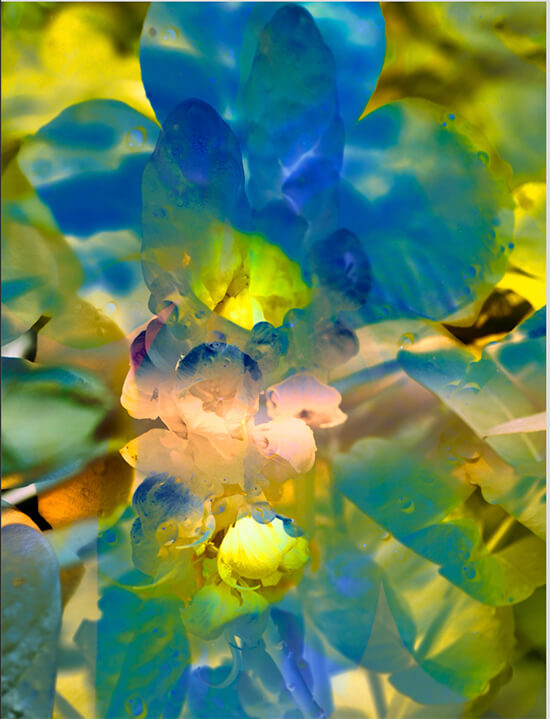
Lee’s work blurs the boundaries between realism and abstraction, achieving a painterly aesthetic that rivals watercolor or oil pastel paintings. His mastery of light and color echoes David Alan Harvey’s advice: “Don’t shoot what it looks like. Shoot what it feels like.”
In one stunning frame titled “Celebration,” the humble Philippines’ Santana flower is juxtaposed with exotic Birds of Paradise; through Lee’s lens, this pairing is magically transformed into an exquisite work of art, vibrating with harmony and color.
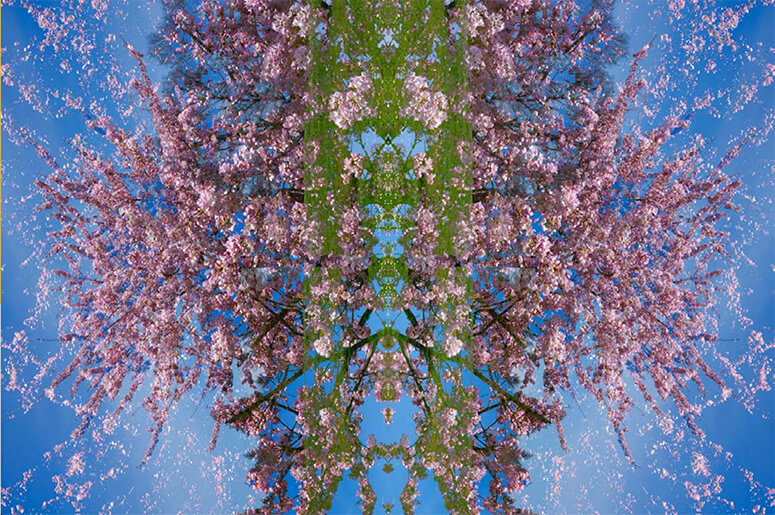
Each photograph in “Nature’s Bloom” vibrates with such emotional resonance, from the fiery hues of a Monte Carlo tulip to the serene pastels of a Gulangyu isle blossom. Lee’s technical prowess is further underscored by his use of Ilford archival paper, ensuring each print meets the highest standards of longevity and vibrancy—a practice akin to Ansel Adams’ dedication to archival quality.
Lee’s creative process is a meditation in itself. He told me that he often waits for hours, allowing nature to dictate the perfect lighting conditions, much like wildlife photographer Hardik Shelat, who waited eight years for a single shot of a lion.
This relentless pursuit of the sublime moment reflects Lee’s belief that photography is not merely about capture but about completion through printing and framing. His purist approach honors the full artistic cycle, from composition to physical presentation, ensuring each piece is a cohesive work of art.
Over four decades of experience, Lee has cemented his legacy as a photographer who elevates the craft into a form of visual philosophy. His early social documentaries, such as those on convicts and Smokey Mountain, showcased his ability to find beauty and dignity in hardship—a skill deeply informed by a humanistic perspective and now channeled into his floral photography.
His work encourages viewers to “savor life intensely every hundredth of a second,” embodying Marc Riboud’s belief in photography as a celebration of existence. By merging technical excellence with profound emotional depth, Lee inspires a renewed appreciation for the natural world and the boundless artistic potential of photography.
From the gardens of Monte Carlo to the parks of Canada, Lee’s lens captures the universal language of blossoms, urging us to see the world through his eyes. It is an experience to absorb, a reminder that every petal tells a story, and that every image is a testament to the artistry behind the lens.